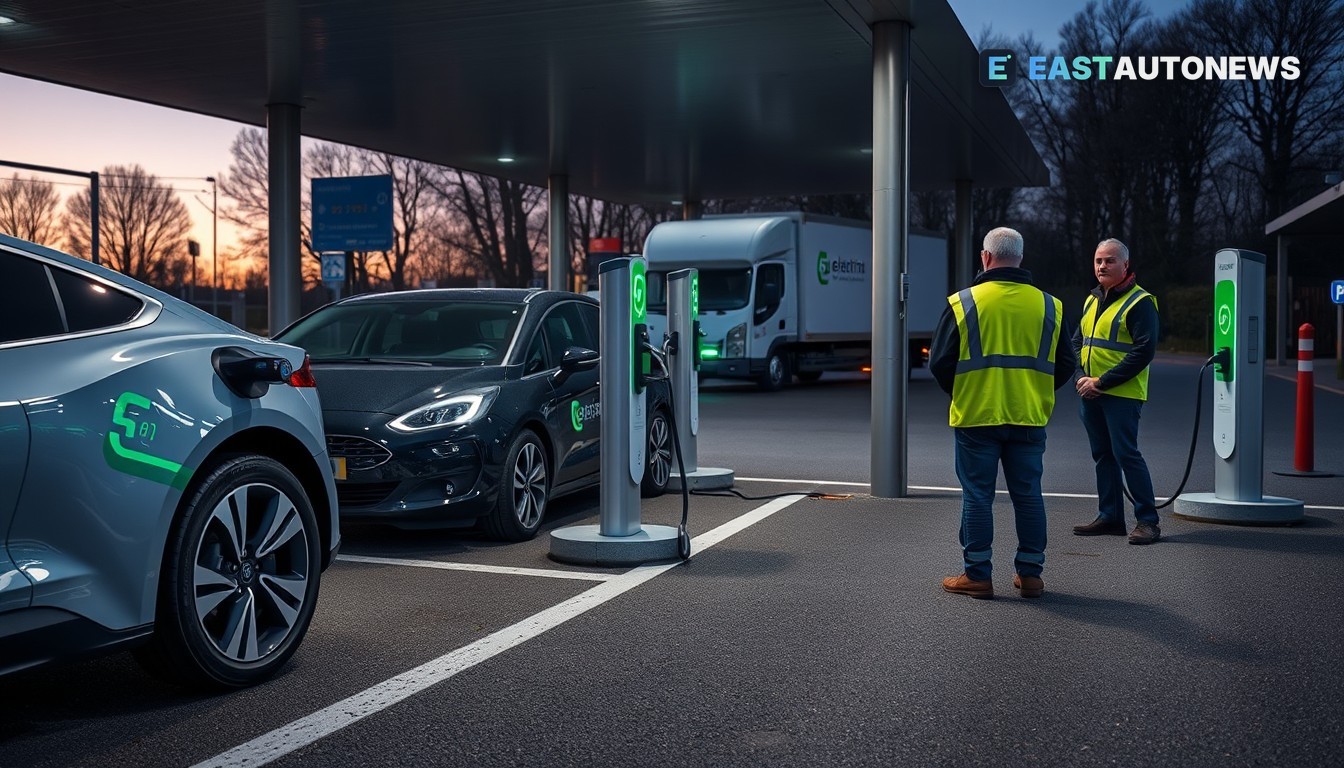
Petrol has put 18 new ultra‑fast EV charging points into operation on Croatia's A1 and A3 motorways, expanding high‑power coverage on two of the country's busiest corridors. Six of the new plugs deliver up to 400 kW and are explicitly intended for heavy electric trucks as well as high‑power passenger cars.
New sites and technical specs
The new connections were commissioned on 29 October 2026 and installed at four motorway rest areas: Janjče (west), Dragalić (south), Dragalić (north) and Desinec (north). Petrol says the additions bring its Croatian network to more than 300 charging points in the country, including over 70 ultra‑fast sockets, and that its regional network across Petrol Group totals about 1,300 connections.
Operators and local press note the significance of the 400 kW posts: they are designed to reduce charging time for heavy‑duty EVs and to support the emergence of electric freight on major transit axes towards the Adriatic and between Slavonia and Zagreb. Total Croatia News and Poslovni reported the installations and emphasised the freight focus of several locations.
EU funding and corridor strategy
Petrol frames the rollout within the CROSS‑E project, co‑financed by the EU's Connecting Europe Facility (CEF). In its announcement the company said the CROSS‑E scope foresees 98 charging points at 22 locations across Croatia and Slovenia under this tranche of work, with part of the infrastructure specifically allocated to electric trucks. The company also linked the investment to compliance with the EU Alternative Fuels Infrastructure Regulation (AFIR).
What this means for the market
Faster, high‑power chargers on major routes reduce a key barrier to longer EV trips and heavy‑truck electrification in Croatia. The arrival of 400 kW posts on the A1 (Adriatic route) and A3 (east–west route) should improve corridor reliability for tourists travelling to the coast and for freight operators moving between eastern Croatia and Zagreb. The infrastructure also strengthens Petrol's OneCharge network footprint ahead of the 2026 peak travel season and aligns local motorway coverage more closely with AFIR corridor targets.
Practical limits remain: vehicle battery chemistry, state of charge and on‑board power electronics determine the actual charging rate a vehicle will receive from a 400 kW station. Operators and fleet planners will need to match truck and bus specifications to the new hardware to realise the time savings.
Electric vehicles for sale on WorldTrader24 →
Sources: Petrol, Poslovni dnevnik