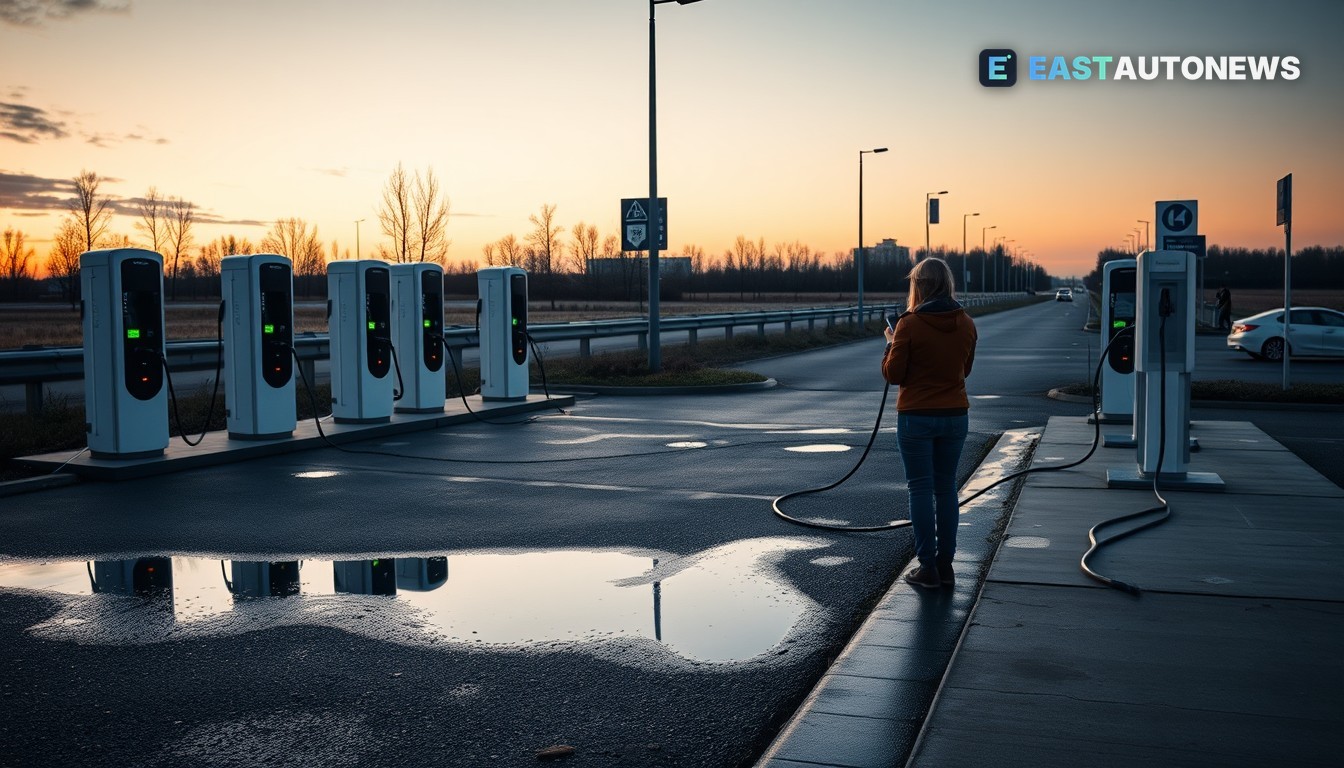
Ignitis ON, the largest fast‑charging network in the Baltics, has introduced a penalty charge for drivers who leave fully charged vehicles at DC and HPC chargers beyond a 15‑minute grace period. The fee is €0.10 per minute and takes effect across the operator’s Lithuanian network from 26 October 2026, the company and Lithuanian media reported.
Details of the new rule
Under the new policy, once a charging session ends the driver has 15 minutes to return to the vehicle, disconnect the plug and close the session in the Ignitis ON app; after that period an idle fee of €0.10 per minute will be applied to DC (fast) and HPC (ultra‑fast) connectors. Ignitis ON says the charge will not apply while the battery is still actively charging; it only begins once charging has completed and the grace window has elapsed. The company points drivers to the Ignitis ON app and its notification settings so users can receive alerts when a session is finishing.
Ignitis ON’s announcement and local reporting quote the network’s head, Eimantas Balta, saying the measure is intended to speed turnover at busy fast‑charging locations and make public chargers more available as EV numbers grow. Media outlets covering the change published the company statement and its effective date.
Charging network and fleet context
Ignitis ON operates the largest public fast‑charging footprint in the Baltics; Lithuanian coverage figures cited in reporting note the group manages more than 2,100 public charging points across Lithuania, Latvia and Estonia and that the network reaches roughly 98% of Lithuania’s territory (the company says a station is normally within 30 km). At the same time, Lithuania’s electric‑vehicle fleet has been expanding rapidly: Regitra‑cited data published in national outlets recorded some 49,316 electric light vehicles on the register as of 1 April 2026 (26,016 battery‑electric and 23,300 plug‑in hybrids), underscoring rising demand for public fast chargers.
What this means for the market
The move formalises a growing global practice among charge‑point operators to discourage “plug‑blocking” at high‑power sites. For fleet operators, long‑distance travellers and owners of vehicles that charge quickly (high‑power BEVs), the change raises the operational importance of in‑app notifications and session management; drivers who cannot return within the 15‑minute window will face a clearly specified per‑minute cost. For charging‑network economics, faster turnover should improve utilisation of scarce DC/HPC sockets at peak locations, potentially reducing congestion and the need for some drivers to detour to secondary chargers. The measure may slightly raise average session bills for some users, but Ignitis ON frames it as a tool to increase fairness of access rather than a general price rise.
The change also signals the sector response to faster EV uptake: with tens of thousands of electric light vehicles on Lithuania’s roads and a public‑charging stock that is still catching up, operators are moving from simple per‑kWh pricing to behaviour‑sensitive tariffs and penalties to manage scarce high‑power assets. Industry watchers will be watching whether other Baltic or CEE operators adopt similar idle‑fee structures.
Electric vehicle listings on WorldTrader24 →
Sources: Ignitis ON, Made in Vilnius