More than a dozen members of the European Parliament have asked the European Commission to assess whether cars made by China’s BYD pose cybersecurity and national‑security risks and whether the company should be subject to restrictions such as exclusion from public procurement.
The written questions, filed on 4 November 2026 and initiated by French MEP François Kalfon, ask whether the Commission intends to involve the EU Agency for Cybersecurity (ENISA) and whether BYD could be classed as a “high‑risk” supplier with limited access to sensitive dual‑use infrastructure. The MEPs explicitly cited China’s 2017 national intelligence law as a reason for concern.
What prompted the move
The request follows a series of security actions elsewhere: in late October the U.S. military barred BYD vehicles from Kadena Air Base in Okinawa, saying the cars presented an “unacceptable and unmitigable risk” — a rationale relayed in reporting on 26 October 2026. BYD has told Reuters that “no data processed or stored, whether in the cloud or within a vehicle, can be remotely accessed from China” and that BYD Europe does not make such data available to BYD entities or third parties in China.
In France, Kalfon also wrote on 4 November to Prime Minister Sébastien Lecornu urging national steps — including banning BYD cars from some military and ministry sites and excluding the company from administrative fleets — and he cited an alert reportedly sent by France’s Directorate of Defence Intelligence and Security (DRSD) earlier in 2026. French automotive press and industry outlets carried Kalfon’s letter and the related demands on 4–5 November.
What this means for the market
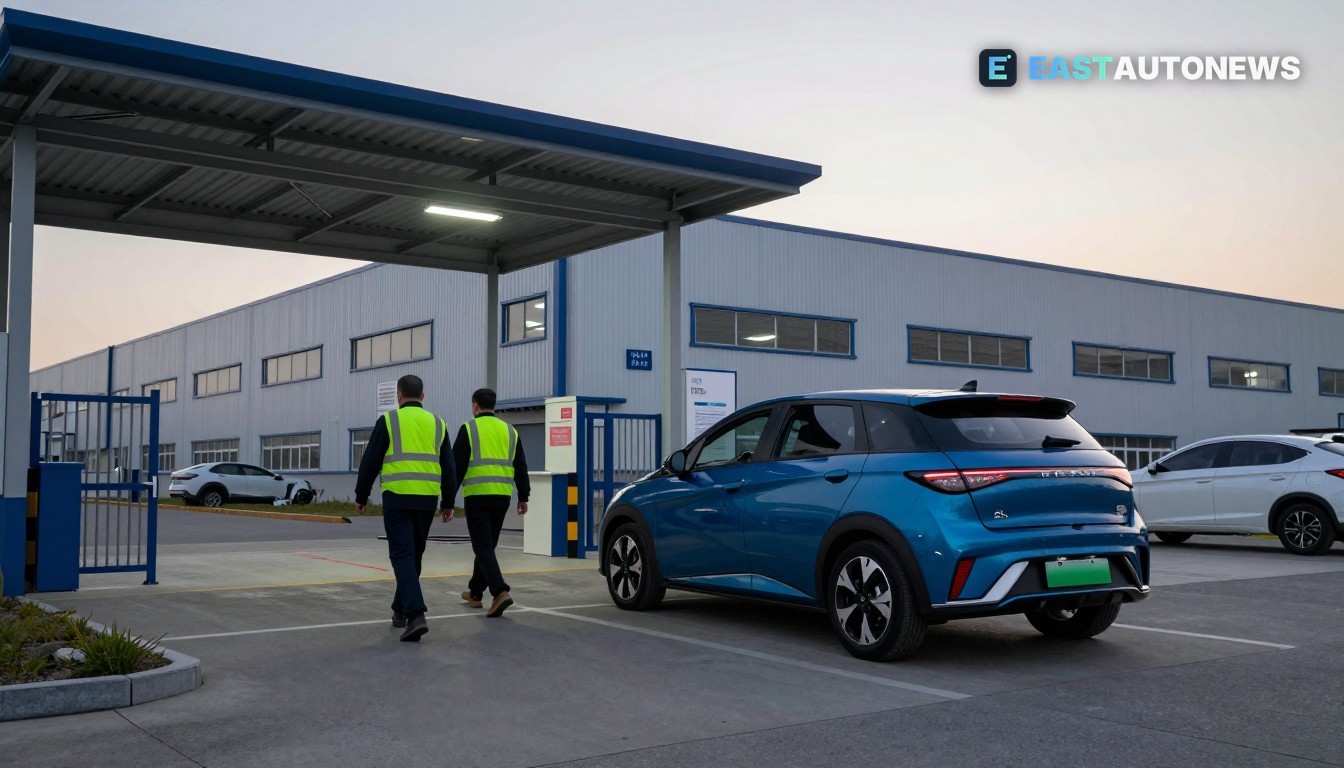
The political move has immediate market relevance for Central and Eastern Europe because BYD already operates a passenger‑car assembly facility in Szeged, Hungary. Trial production at Szeged began in late January 2026 and the site has been positioned as BYD’s first European passenger‑car plant; company executives have told reporters they expect series assembly to ramp later in 2026. Any bloc‑level decision to limit BYD’s access to public procurement or strategic sites would therefore affect locally produced cars and the economics of BYD’s Europe strategy.
Practical effects for the region could include tighter scrutiny of BYD vehicles used near military or dual‑use infrastructure, constraints on public‑fleet purchases, and heightened compliance checks at plants and logistics hubs. European Commission rules under discussion to favour “local content” in procurement would not automatically bar cars made in Hungary, but political pressure to restrict certain suppliers on security grounds could alter how tenders are run. The Commission typically has about six weeks to respond to written questions from MEPs.
For suppliers and dealers in CEE the short‑term impact is likely to be reputational and procedural rather than a sudden sales shock: private sales remain unaffected by the MEPs’ questions. But investors, fleet buyers and national governments will now factor security‑review risk into procurement and localisation plans — and BYD’s ability to use a Hungary‑made label to avoid EU countervailing duties gives added commercial importance to any regulatory outcome.
Electric car listings on WorldTrader24 →
Sources: Reuters, AutoSignal, Autoplus, Electric‑Vehicles.com