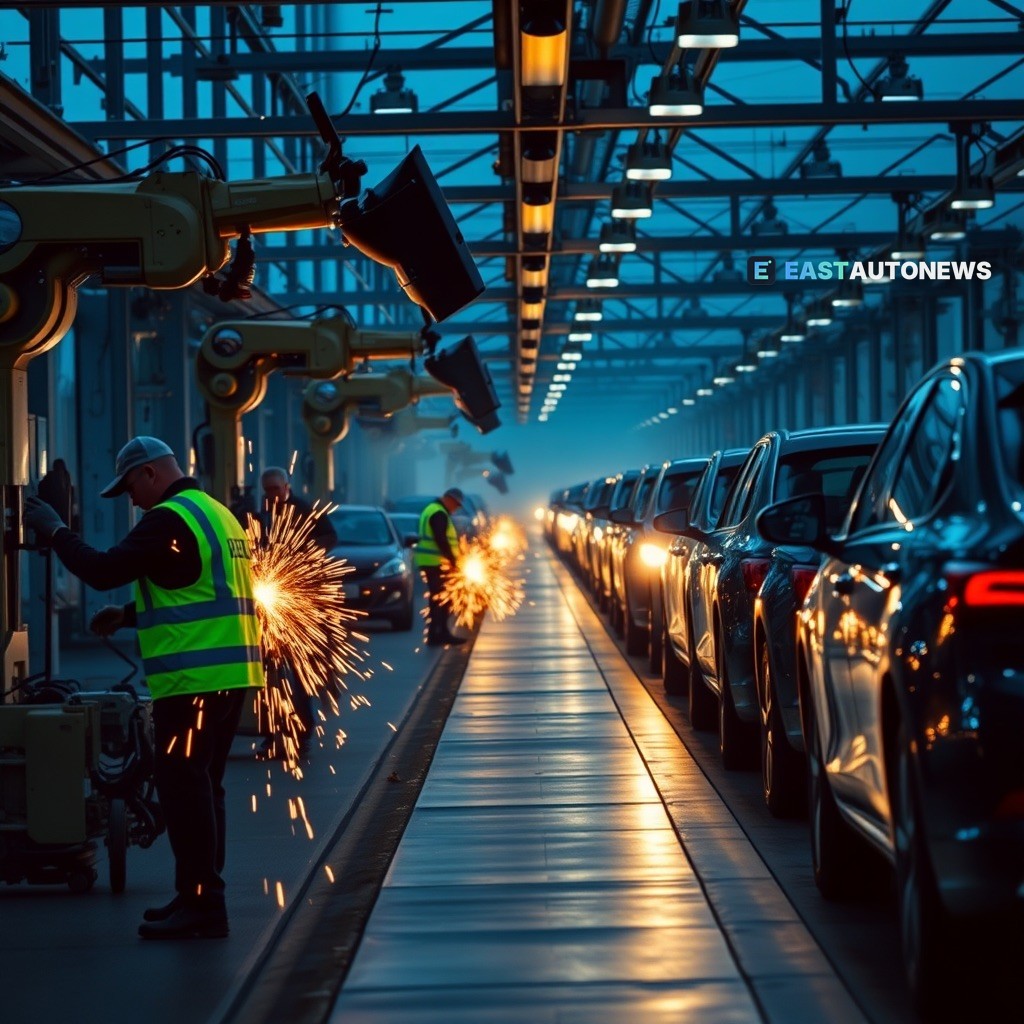
The hum on Czech factory floors has reached a pitch not heard in years. The S&P Global Purchasing Managers' Index for Czech manufacturing climbed to 55.0 in October, up from 53.5 — a 56-month high and the sector's strongest performance in over four and a half years. For a country whose industrial identity is written in sheet metal and assembly lines, the message from the shop floor is unambiguous: Czechia is expanding again, and with real momentum.
Few economies wear the automotive badge as proudly. The foundations were laid in the 1990s, when Volkswagen Group investment poured into Czech factories alongside the arrival of the Felicia in 1994 and the Octavia in 1996 — the first Škoda built on a Volkswagen Group platform, rolling out of a brand-new assembly plant. That wave of capital transformed the Czech Republic into a cornerstone of VW's European manufacturing footprint, with a dense web of component suppliers grown up around it.
Now a new force is reshaping the calculus: the EU's 'Made in Europe' plan, championed by Germany and France. Under the emerging framework, cars imported from Japan would not qualify for EU subsidies, while models built in France, Portugal and Eastern Europe would benefit — but only if enough of their parts come from Europe. For Czech-built vehicles, that fine print is everything.