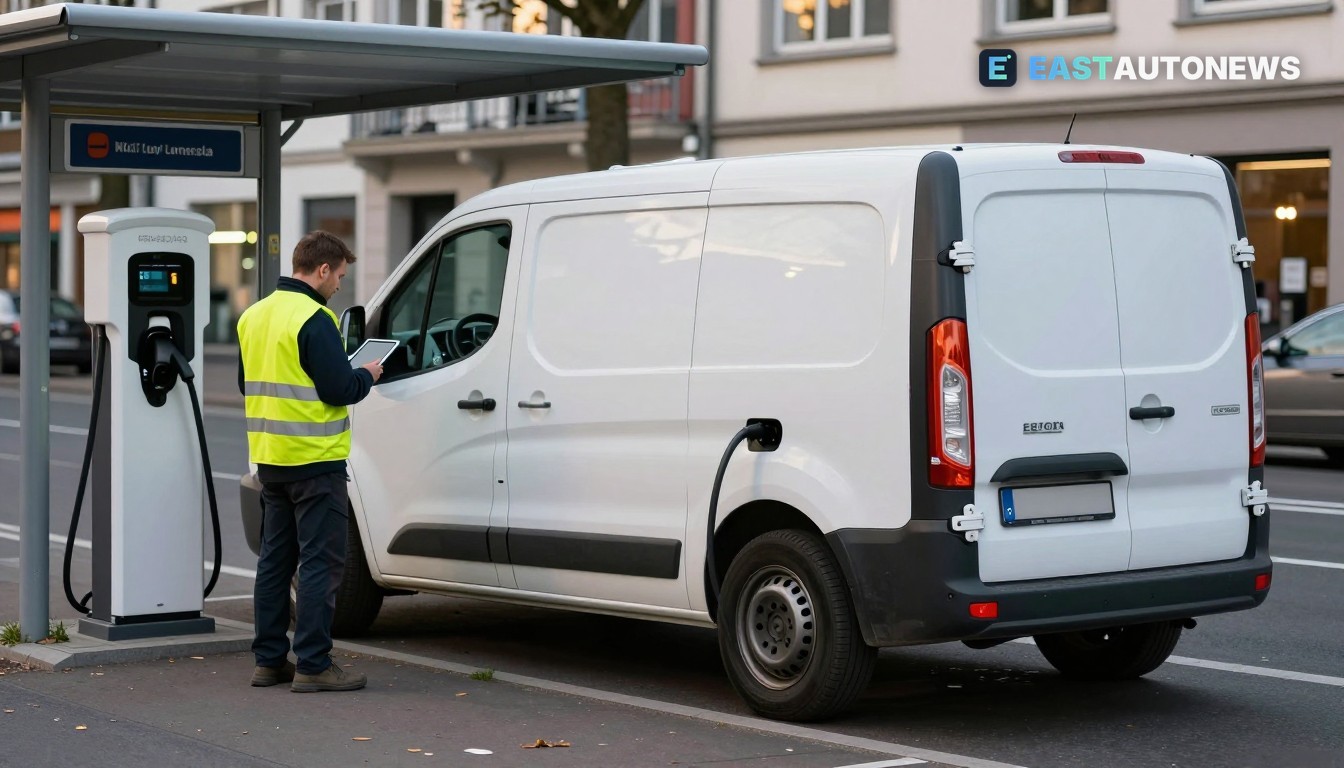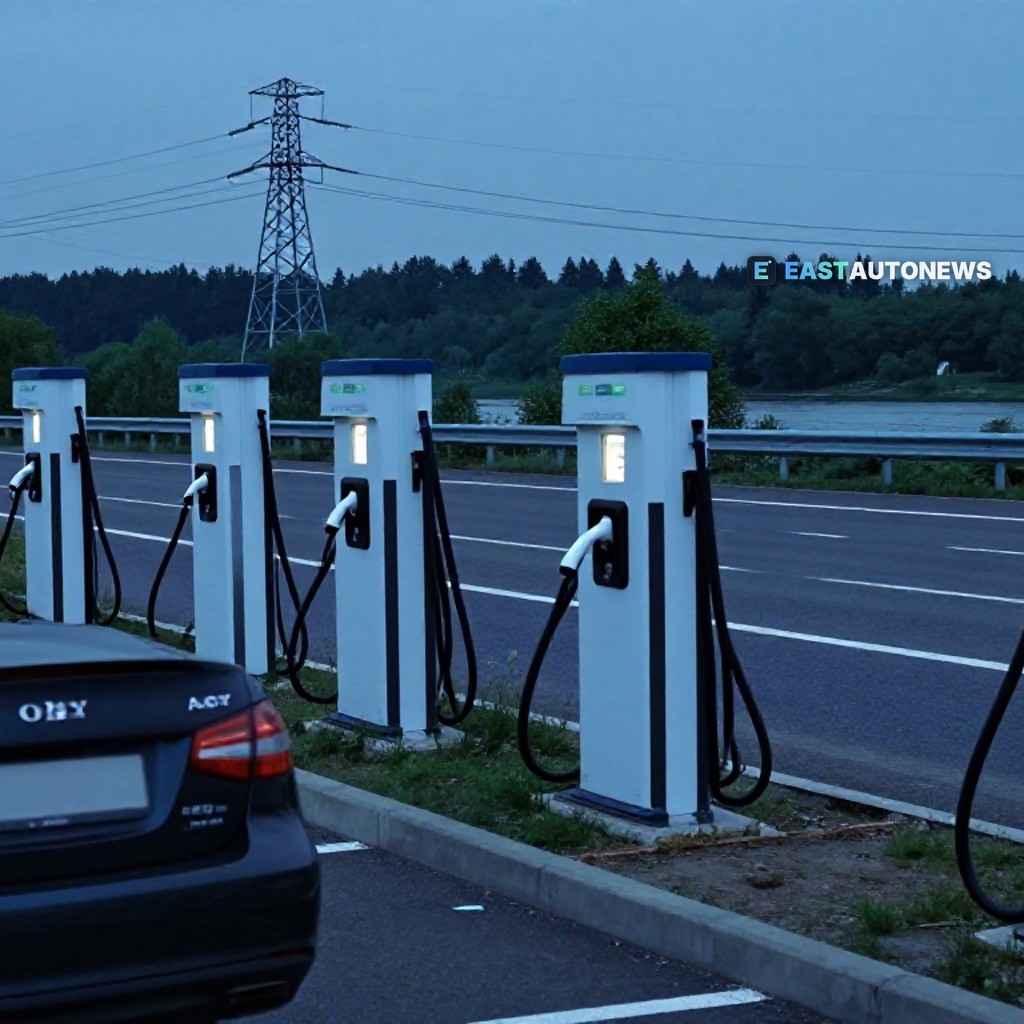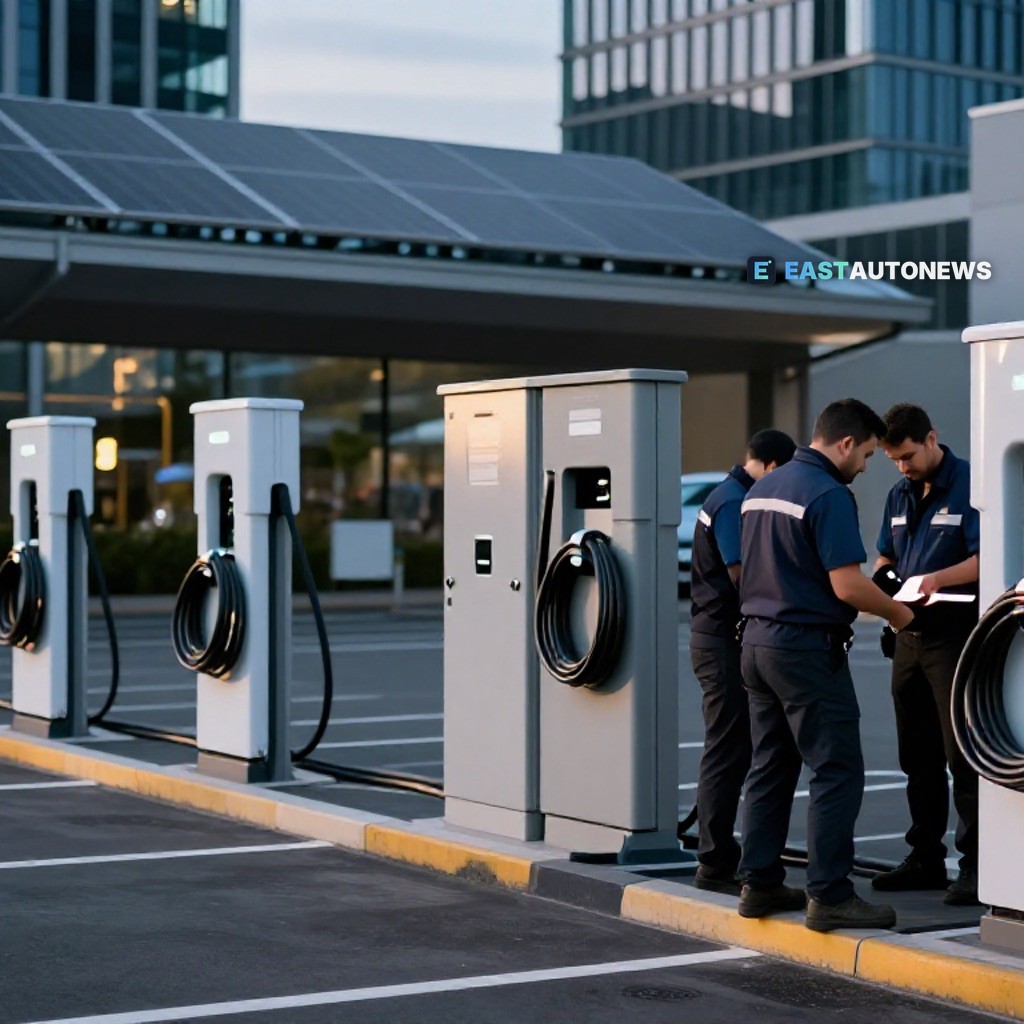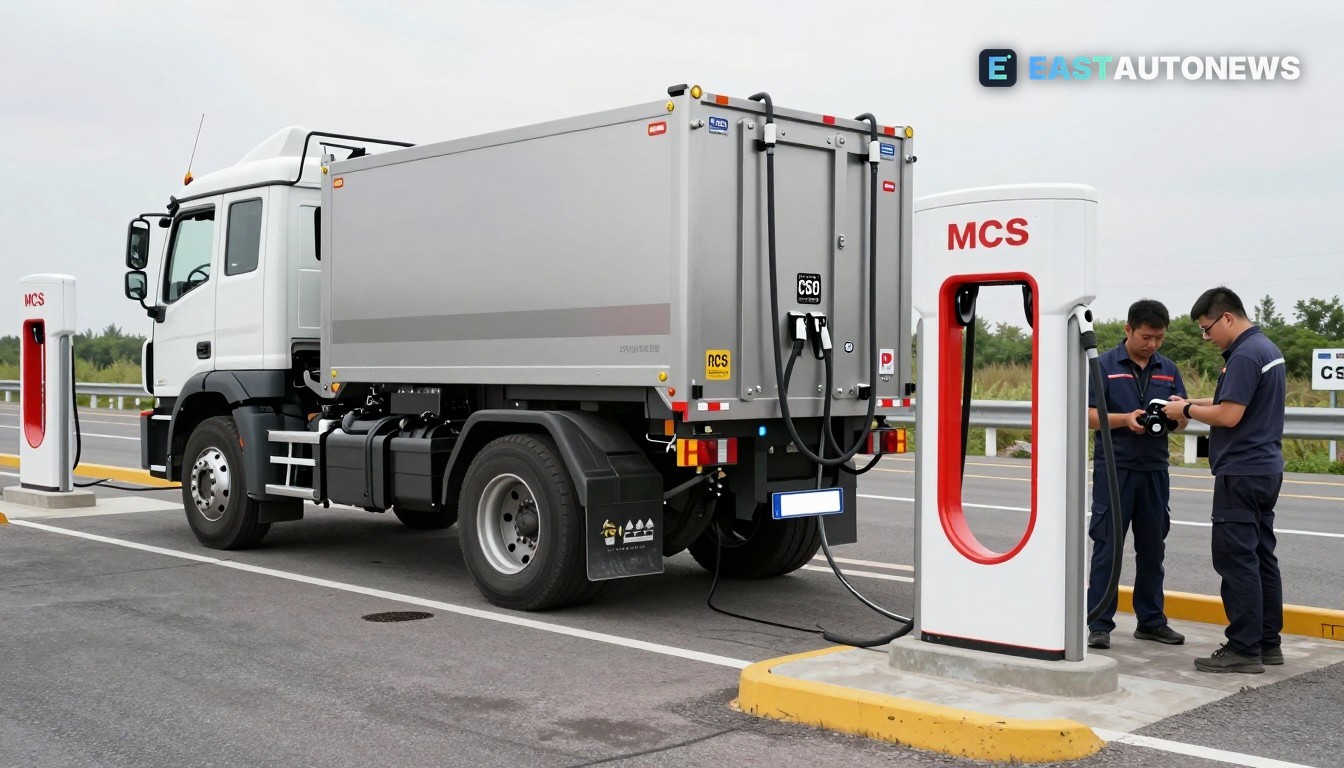
A new network of high‑power charging hubs is being built along Czech motorways that will include the country’s first Megawatt Charging System (MCS) points for heavy trucks. The project — developed by eHUBS Infrastructure and delivered by a Siemens–Equans consortium — foresees up to five hubs, the first currently under construction at Postřižín near Prague.
Project details and technical specs
Siemens and Equans say each hub will offer ten CCS2 Sicharge Flex points rated at 450 kW alongside one MCS bay capable of up to 1 MW, yielding a peak site capacity of 3.6 MW (about 2 MW from the grid plus a 1.6 MW battery storage able to supply three hours at full output). The scheme is designed to serve both high‑power passenger EV use and rapid charging of heavy goods vehicles.
The consortium names the first hub at Postřižín (D8), with Ostrovačice (D1) and other motorway junctions to follow; the delivery timetable cited by the consortium foresees completion of the initial wave by 2028. The project is supported under the Czech Program Doprava 2021–2027; project paperwork cited in reporting lists total costs of roughly CZK 495,495,000 with an EU grant of CZK 291,870,000 for the first phase.
Why MCS hubs matter
Megawatt‑class chargers using the MCS standard are intended primarily for long‑distance and heavy‑duty vehicles: they are specified for voltages up to 1,250 V and currents up to 3,000 A, enabling charging power in the megawatt range. In practice that should allow suitably equipped trucks to add hundreds of kilometres of range during a statutory driver break rather than requiring multi‑hour layovers. The Czech hubs will therefore be among the early public MCS deployments in Europe.
What this means for the market
For carmakers, suppliers and fleet operators in Central and Eastern Europe the eHUBS project marks a step toward operational corridors that can support heavy electric logistics as well as ultra‑fast passenger EV charging. The availability of coordinated, high‑power hubs on TEN‑T/major motorway links reduces a key infrastructure barrier for electrifying regional truck fleets and for manufacturers that rely on fast intercity logistics. Martin Cmíral of eHUBS (quoted by Siemens) underlined the strategic intent: “Megawattové dobíjení dnes využije jen omezený počet vozidel, ale … chceme, aby česká infrastruktura byla připravena dříve, než ji bude trh skutečně potřebovat.”
Beyond immediate operational benefits for trucking, hub projects with on‑site battery buffering and high simultaneous output are a template for reducing grid upgrade costs — a frequent bottleneck for rapid roll‑out of 350–450 kW and megawatt stations. That technical approach can ease siting close to factories, logistics parks and cross‑border nodes that are vital to CEE automotive supply chains.
Execution risks remain: building multiple 3.6 MW hubs requires complex civil and electrical works, long lead times for transformers and grid connections, and coordination with AFIR/regulatory frameworks — but the project is one of the clearest signals yet that CEE is preparing motorway infrastructure for heavy‑duty electrification.
High‑power electric vehicle listings on WorldTrader24 →
Sources: Autoscena.cz, Villanyautósok.hu, EQUANS CZ (LinkedIn)