The European Parliament's recent committee push on the so‑called "automotive omnibus" has put battery durability squarely at the centre of EU vehicle rules, creating the bloc's first legal minimum for how well an EV traction battery must hold up in service. The committees adopted a joint position (105 votes to 39, 21 abstentions) on 4 November 2026 as part of wider omnibus negotiations; the underlying Euro 7 regulation (Regulation (EU) 2024/1257) already contains detailed battery‑durability requirements and related timetable provisions.
What the rules require
Under Regulation (EU) 2024/1257, which defines Euro 7, new passenger‑car and light‑commercial‑vehicle types must meet the rules from 29 November 2026, and all new registrations must comply from 29 November 2027. The regulation sets minimum performance requirements for battery durability: for M1 passenger cars (BEVs and PHEVs) the traction battery must retain at least 80% of its initial energy for the earlier of five years or 100,000 km, and at least 72% up to the earlier of eight years or 160,000 km. Vehicles must also carry a state‑of‑health (SOH) monitor that can be read and compared across brands. Small‑volume manufacturers are given an extended deadline to comply until 1 July 2030; heavy vehicles follow a separate timetable.
Implementation and regulatory steps
The Parliament committees' 4 November vote advanced a negotiating mandate for the omnibus package; among other items, MEPs asked the Commission to adopt technical requirements to ensure EVs and plug‑in hybrids are compatible with charging infrastructure and the grid by 31 December 2027. That committee-level endorsement clears the way to plenary negotiations with member states in December and final trilogue talks thereafter.
What this means for the market
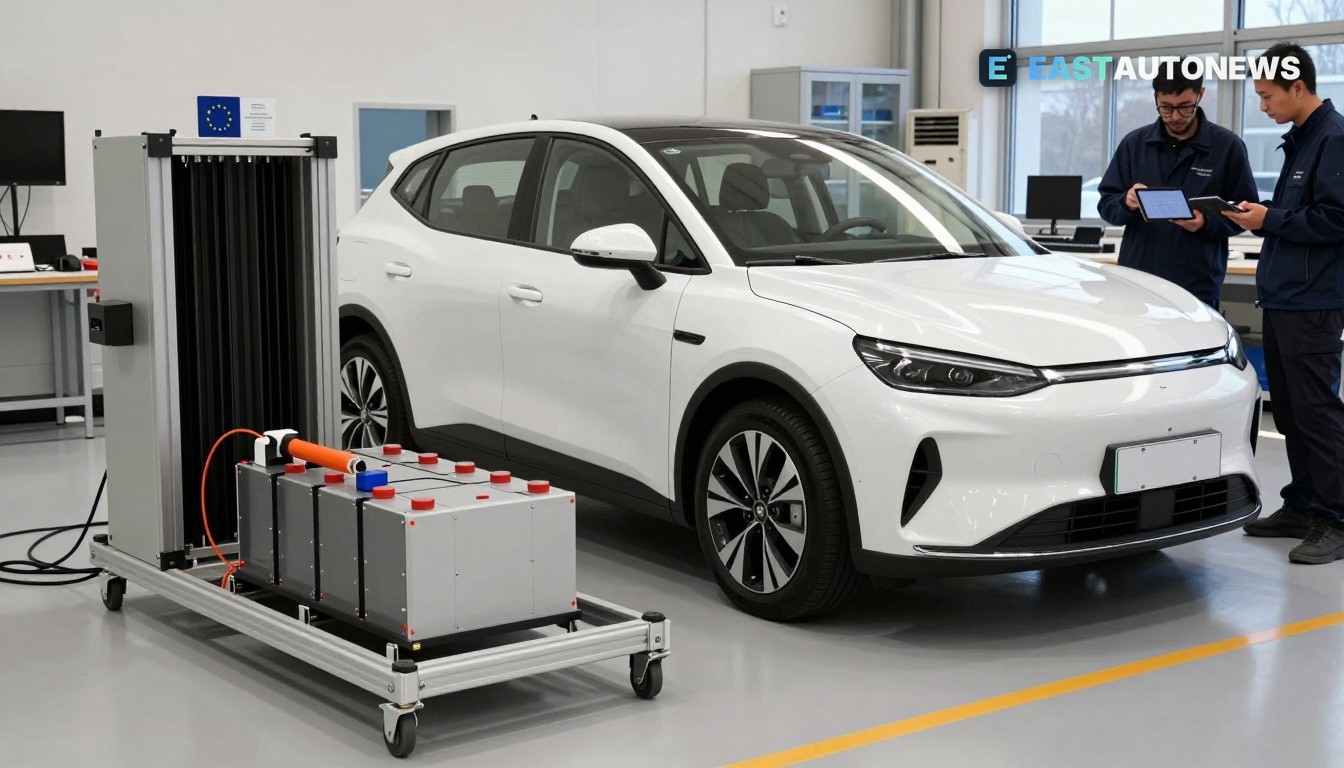
Automakers and suppliers manufacturing for Central and Eastern Europe now face concrete, near‑term obligations. The regulation's fixed retention thresholds and the requirement for a readable SOH monitor mean carmakers must be able to demonstrate measured battery endurance in conformity testing and to supply interoperable SOH data for type approval and in‑service checks. Certification labs, battery test houses and E/E‑software suppliers in the CEE region should expect demand for new test programmes, on‑vehicle monitoring systems and data‑integration services as manufacturers prepare type‑approval dossiers for new models. The timetable — type approval from 29 Nov 2026 and full registration compliance from 29 Nov 2027 — leaves limited lead time for changes in cell selection, battery management and warranty processes.
Manufacturers already selling in Europe will need to map existing model lines to Euro 7 durability rules and confirm whether current warranties and SOH outputs meet the new minimums; small‑volume players have more time but will still need clear compliance plans. For suppliers and local test laboratories across CEE, the new legal floor opens both compliance work and commercial opportunity — from laboratory and on‑road aging tests to middleware that standardises SOH reporting across brands.
Electric vehicle listings on WorldTrader24 →
Sources: EUR‑Lex, AutoSignal