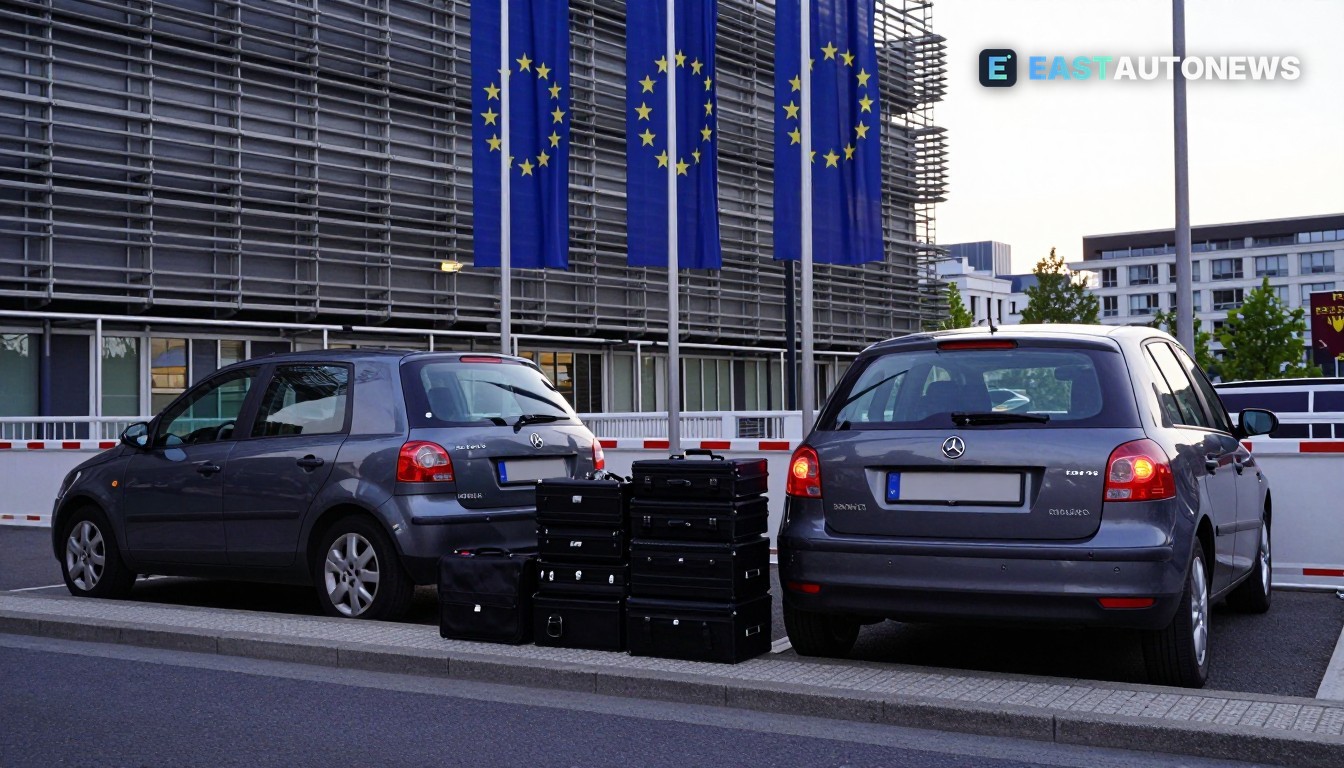
EU governments reopened a high‑stakes fight over the bloc’s 2035 car emissions rules this week, with national ambassadors meeting in Brussels on 11 November to consider competing proposals for how strictly the Union should enforce a post‑2035 effective phase‑out of internal‑combustion sales.
Where the institutions stand
The European Parliament’s Environment (ENVI) Committee adopted its position on 4 November by 48 votes in favour, 30 against and two abstentions. The committee backed a package that would set an 87.5% fleet‑level CO2 reduction for new passenger cars by 2035, with up to 95% of the remaining emissions potentially offset using credits for low‑carbon steel produced in the EU. The text also includes multipliers that reward small and energy‑efficient electric cars manufactured in the EU (small EVs up to 4.2 metres would count as 1.4 cars; energy‑efficient EVs as 1.2, rising in social‑leasing schemes). The ENVI position is due to be put to the full Parliament in December.
At government level, member states remain split. Paris and Berlin struck a political compromise in mid‑October proposing a 90% fleet reduction by 2035 and tougher "Made‑in‑Europe" conditions for public support—an approach that would not require manufacturers to offset the residual 10% of emissions. That Franco‑German paper has become one of the options on the table for member‑state negotiators.
November 11: ambassadors reconvene
On 11 November EU ambassadors (COREPER) met to consider three competing proposals from the Irish Presidency, the Franco‑German grouping and the Commission’s earlier drafting. The ambassadors’ session was reported as reopening the political dispute after the ENVI committee vote and is the latest step before the Council settles a negotiating mandate to enter talks with Parliament. Member states are still divided between preserving the 100% zero‑tailpipe objective, accepting a 90% target with or without offsetting, or backing the ENVI committee’s multipliers and credit mechanisms.
What this means for the market
For Central and Eastern Europe the stakes are practical. Any firm link between public money and "Made‑in‑Europe" content would steer subsidies and procurement toward EU‑based factories — a potential boon for CEE plants that host assembly or supplier operations, but a risk for regions that rely on low‑cost imports or non‑EU supply chains. Conversely, a weaker post‑2035 target that leaves room for plug‑in hybrids or e‑fuels could slow showroom electrification and change investment calculations at battery and component sites across the region.
The market context is already shifting: battery‑electric vehicle volumes have risen strongly this year (JATO reported BEV share at around 30.5% in September 2026), while Chinese brands continue to gain ground in European registrations — a structural pressure that informed Paris and Berlin’s push for industrial preference clauses. Those two forces — faster BEV uptake and stronger competition from non‑EU producers — help explain why the policy fight has become urgent.
Negotiators in Brussels now have to reconcile three different approaches before the Parliament’s December plenary and a Council position that requires qualified majority backing. The final text will determine whether CEE factories win fresh public‑money incentives and manufacturing preference, or whether looser rules preserve room for hybrids and fuels that could prolong combustion‑engine production at some sites.
Electric car listings on WorldTrader24 for electric vehicles →
Sources: Agence Europe, electrive, NotATeslaKiller, Auto News X, JATO