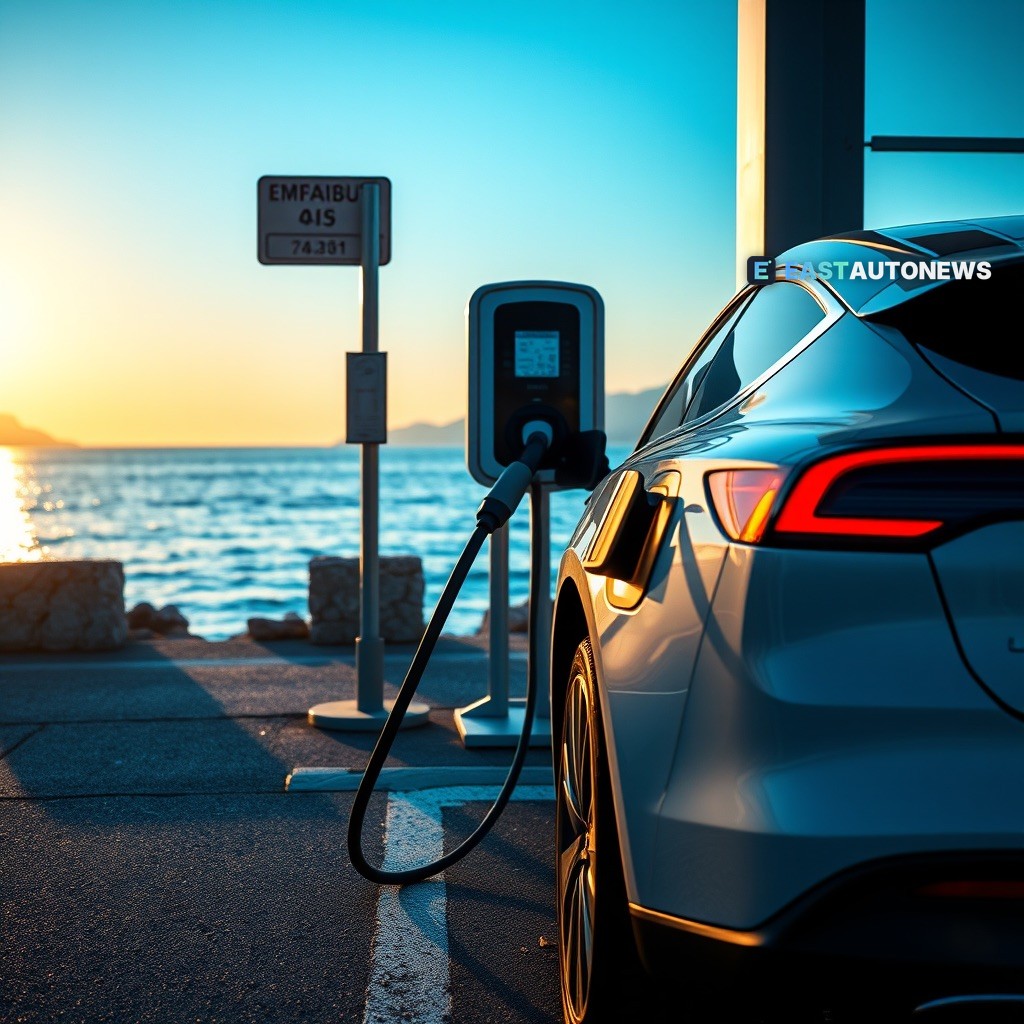
The road to the Adriatic just became a lot friendlier to electrons. On October 31, Croatia put a new wave of ultra-fast electric vehicle chargers into operation on two of its most important motorways, the A1 and A3 — and some of the new units deliver up to 400 kW, output that ranks among the fastest publicly available in Europe.
For drivers, the arithmetic is blunt: 400 kW is the class of hardware that compresses a motorway charging stop toward the length of a coffee break, at least for vehicles engineered to swallow that much power. The A1 is the artery that funnels traffic from Zagreb down toward the Dalmatian coast; the A3 carries it eastward through Slavonia. By placing top-tier capacity on precisely these corridors, Croatia is attacking the biggest psychological barrier to electric road trips in the region — the fear of a slow charger on a busy summer day.
Behind the rollout stands Petrol, the regional energy group that has brought the new stations online. It is a textbook case of the principle now reshaping charging markets: where charging is treated as an open, de-licensed activity rather than a protected utility business, private participation follows and deployment accelerates. Private capital, not public budget, is laying the metal — and it is choosing the locations where demand will be fiercest.