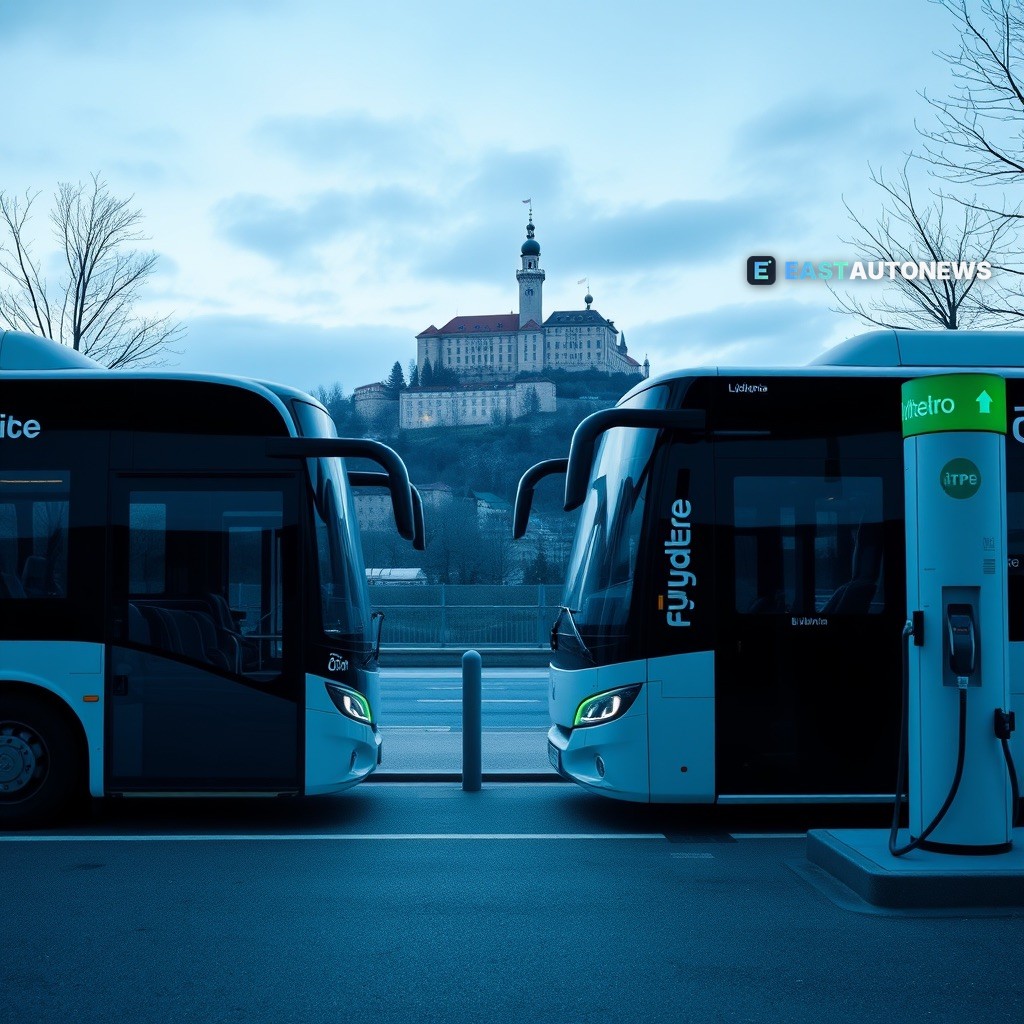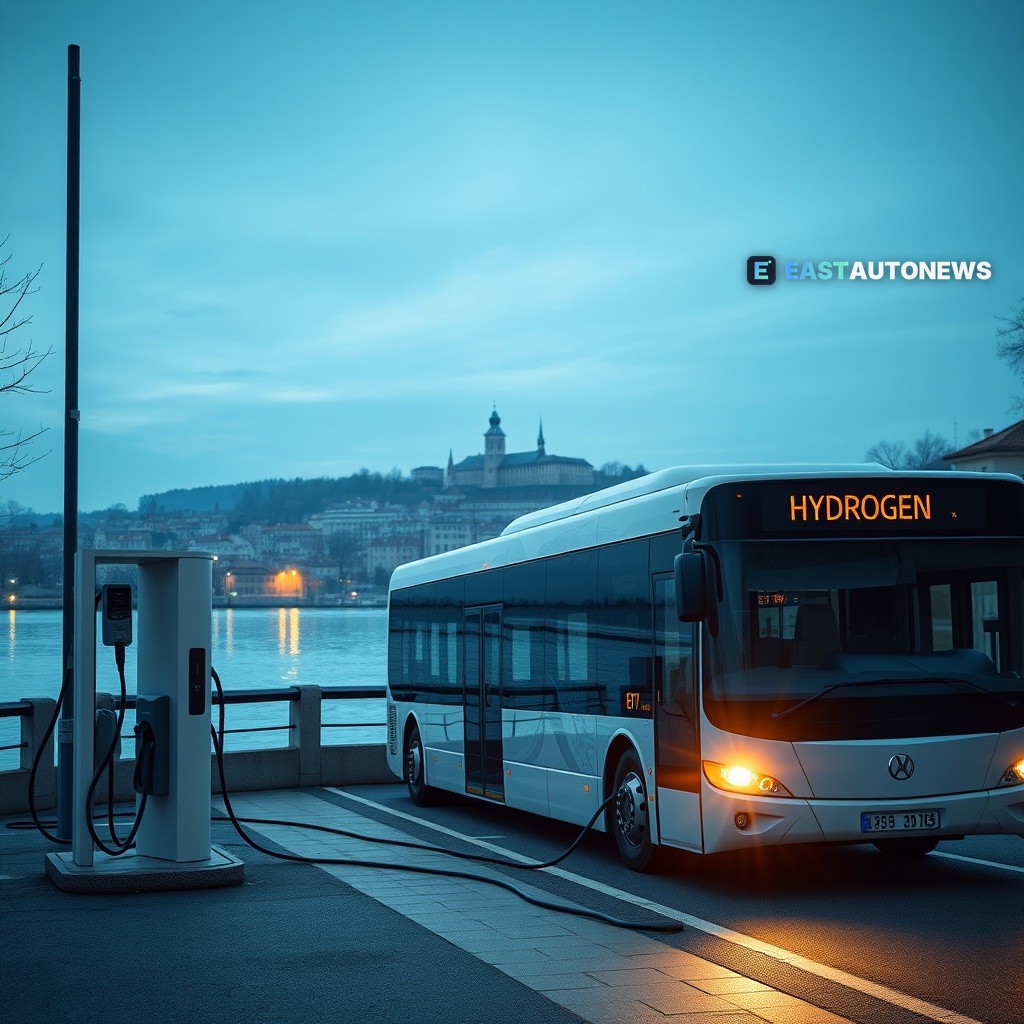
Ljubljana's bus network has taken a decisive step away from diesel. The Slovenian capital's municipal operator, Ljubljanski potniški promet (LPP), has put 35 zero-emission Mercedes-Benz buses into service: 25 battery-electric eCitaro rigid buses and 10 hydrogen fuel-cell eCitaro G articulated models. The deployment, confirmed by Daimler, amounts to one of the most technologically ambitious fleet renewals anywhere in Eastern Europe's public transport sector.
What makes the rollout compelling is not the vehicle count but the split. LPP aims to combine the advantages of both propulsion systems: the battery-electric eCitaro buses are being deployed on urban routes with predictable duty cycles and regular charging opportunities, with the fuel-cell articulated eCitaro G units rounding out the zero-emission fleet. Rather than wagering the entire network on a single energy carrier, the operator is hedging — a dual-track strategy that remains rare among European capitals and will be watched closely by peer operators weighing the same trade-off between plugs and hydrogen.
The buses themselves are only half the story. LPP has also established the charging and hydrogen infrastructure needed to keep the fleet moving, and has adapted its operational processes to accommodate the vehicles — the unglamorous depot-level reengineering that separates a showcase purchase from a fleet that actually runs on schedule. For B2B observers, that back-office overhaul is the real signal: Ljubljana is not piloting a technology, it is operationalising two of them simultaneously.