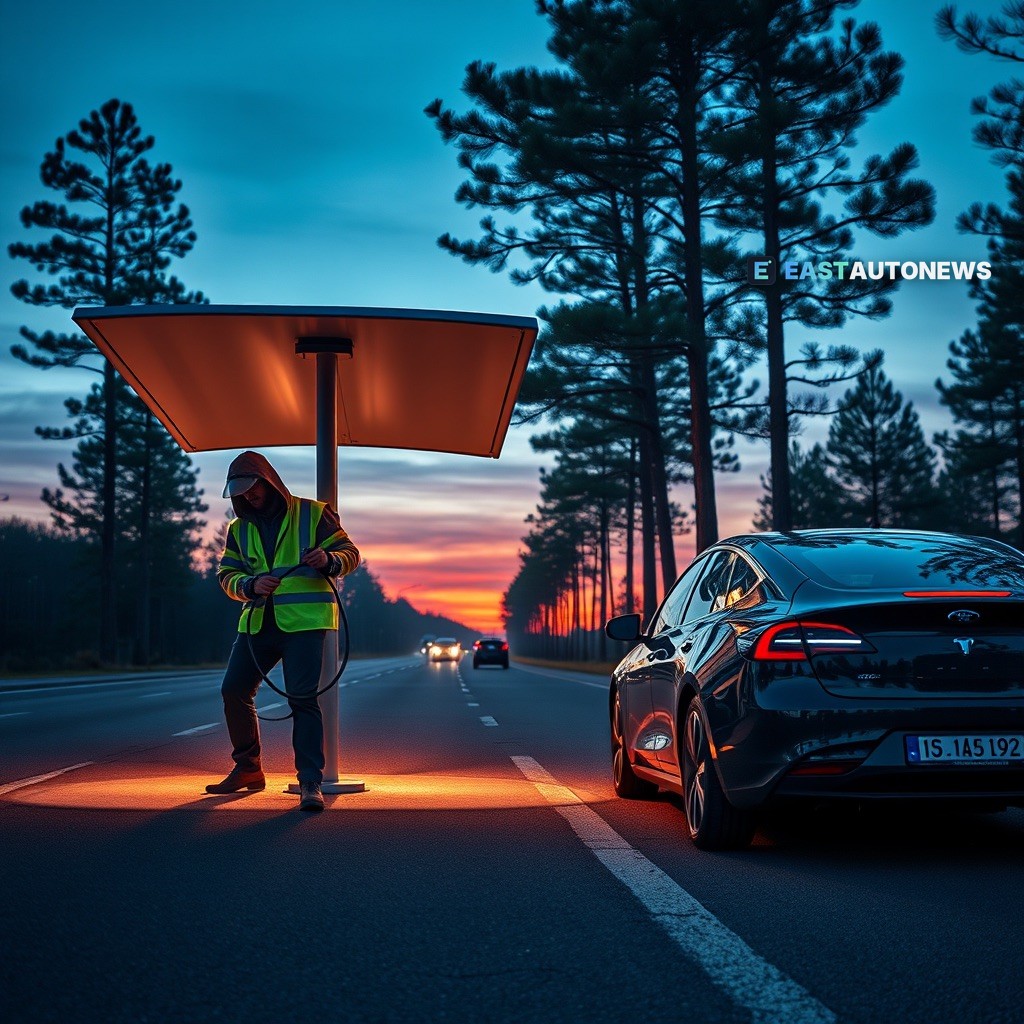
Out on Latvia's highway corridors, the electric road trip has lost its old drama. The Latvian automotive program Tavs Auto TV reports that high-power DC fast chargers are now widely available outside Riga, shifting the focus of long-distance EV travel away from maximum driving range and toward charging speed. The anxious range calculation is giving way to a simpler question — how long is the coffee stop? Yet while the hardware multiplies along Latvian routes, the business behind those plugs is being redrawn just as quickly.
The tremor comes from Stuttgart. Mercedes-Benz has concluded its direct infrastructure development business in Europe, selling the fast-charging network it operated itself to French charging provider Electra — a handover of 47 locations with 374 fast-charging points, as industry outlet electrive reports. What began as a bid to control the electric journey end-to-end is being reframed as a partnership, with the plugs passing to a specialist operator while the carmaker returns its full attention to the cars.
For Latvia, the timing could hardly be more consequential. European research on charging infrastructure expects the fastest uptake of electric vehicles in eastern Europe, albeit from a lower base — and Latvia's corridors are already fitted with the high-power hardware to meet it. When a manufacturer of Mercedes' scale decides that owning chargers is not its core business, it sets a template every emerging market will follow: specialist operators own the plugs, carmakers compete on how fast their vehicles can charge on them, and basics such as roaming, payment and uptime decide who wins drivers' loyalty.