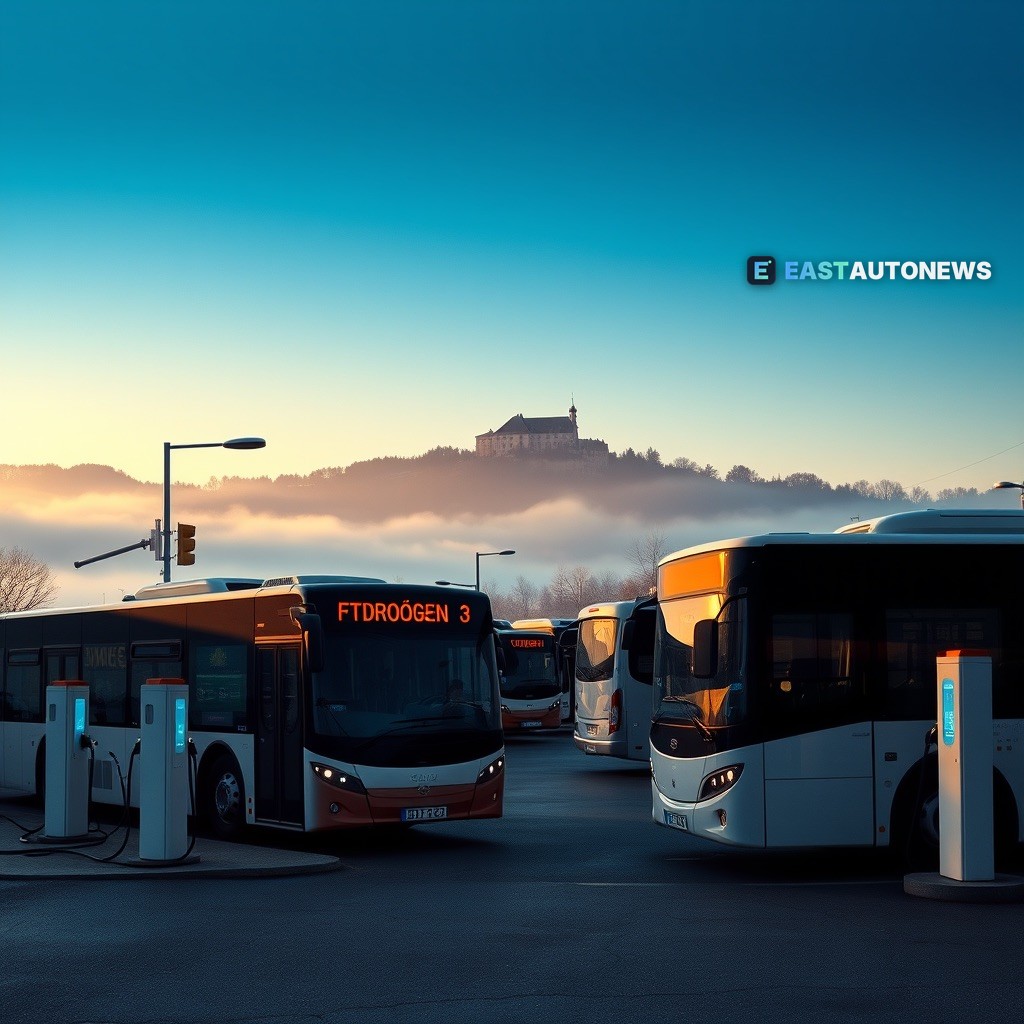
Thirty-five new buses have rolled into service in Ljubljana, and they do not all speak the same technological language. The Slovenian capital's municipal operator LPP has put 25 Mercedes-Benz eCitaro and 10 eCitaro G fuel-cell buses into service, according to Daimler — a dual-drivetrain deployment that puts Ljubljana among the most closely watched public transport electrification projects in Central and Eastern Europe.
The order's real substance lies beneath the sheet metal. LPP has established both charging and hydrogen infrastructure to keep the fleet moving, and it has adapted its operational processes to accommodate the vehicles — the kind of behind-the-scenes reengineering that usually decides whether an electric fleet succeeds or stalls. For other CEE operators watching from the sidelines, the Slovenian capital now offers a live case study in running battery-electric and fuel-cell technology side by side.
The fleet arrives as Slovenia sharpens its wider e-mobility rulebook. State Secretary Marko Dvornik has been blunt about where accountability sits: drivers using Tesla's FSD (Supervised) "remain fully responsible" — a clear line in a market where Tesla says the system is available in nine EU countries. Dvornik's stated priority, though, is the foundation beneath every electric bus and car: "Our priority is to strengthen the electricity grid to support the development of electric mobility and charging infrastructure." A thirty-five-vehicle electric and hydrogen fleet is exactly the sort of demand that will test that grid-first commitment.