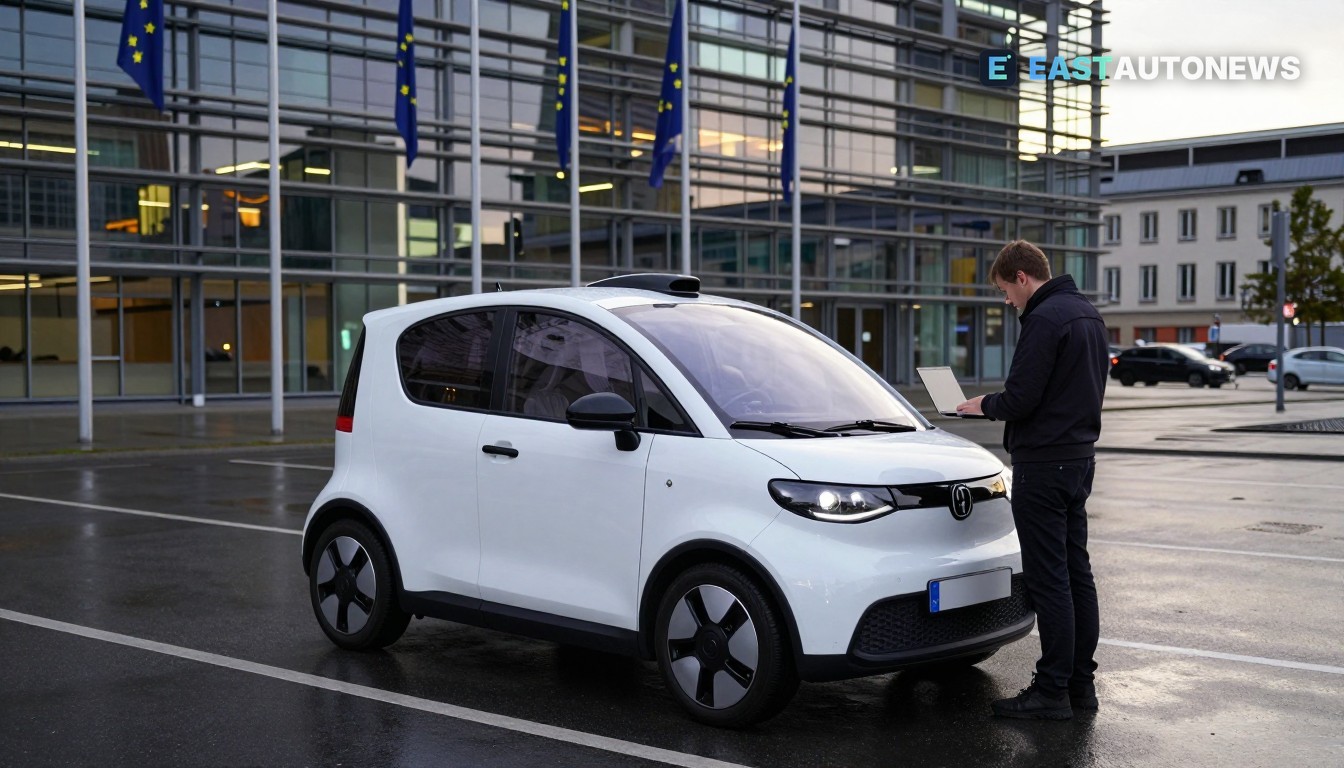
On 4 November 2026 the European Parliament’s Environment, Internal Market and Transport committees adopted a joint position on the so‑called "automotive omnibus" package by 105 votes to 39, with 21 abstentions. The text amends the Commission’s December 2025 proposal to add several safety measures and regulatory changes that directly affect automated and AI‑driven vehicles.
Key changes that affect autonomous driving
Among the committee additions are a requirement for mechanically openable door releases in emergencies and a mandatory child‑presence detection system for passenger cars and vans up to 3.5 t; the committees also set a new category for "small electric vehicles" (EU‑made passenger cars up to 4.2 metres) and proposed a super‑credit scheme for "highly efficient" EU‑made EVs. The committees want the Commission to adopt technical rules ensuring vehicle‑to‑charger and grid compatibility by 31 December 2027.
Crucially for AI & automotive players, the committee text calls for mutual recognition of national authorisations for testing and deploying automated vehicles, together with harmonised minimum requirements — in short, a permit granted in one member state would count in others if the final deal follows the committees’ mandate. The committees describe this as a way to reduce administrative barriers and speed up cross‑border pilots and commercial services.
What this means for the market
For OEMs, Tier‑1 suppliers and AV operators in Central and Eastern Europe the proposals could materially lower the cost and complexity of cross‑border testing and roll‑outs. Instead of applying for separate national permits or adapting to a patchwork of local rules, companies could scale pilots and regional fleets more quickly if mutual recognition survives negotiations. That matters for CEE hubs — from Hungary and Poland to Croatia and the Czech Republic — which host factories, R&D units and growing test programmes that depend on cross‑border validation and expanded operating zones.
MEP co‑rapporteurs framed the committees’ send‑off as a balance between safety and industrial clarity. Michael Bloss (Greens/EFA) described the vote as "a clear step towards cutting red tape for Europe’s automotive sector," while Andreas Schwab (EPP) welcomed the new small and efficient EV category as a boost to competitiveness and jobs in Europe. The committees’ text now goes to the full Parliament for a mandate vote expected at the December 2026 plenary, before negotiations with EU governments.
Next steps for the industry are practical: firms should track the December plenary and the subsequent trilogue talks, test how national regulators would implement mutual‑recognition clauses, and prepare evidence that harmonised minimums (safety cases, in‑service monitoring, cybersecurity regimes and data‑sharing protocols) can meet cross‑border expectations. If adopted, the changes could shorten time‑to‑market for robotaxi pilots and L3/L4 fleet deployments across multiple EU states — a meaningful accelerant for CEE regions already hosting AV testbeds and software development teams.
Electric vehicle listings on WorldTrader24 →
Sources: European Parliament, ECG Association, PubAffairsBruxelles