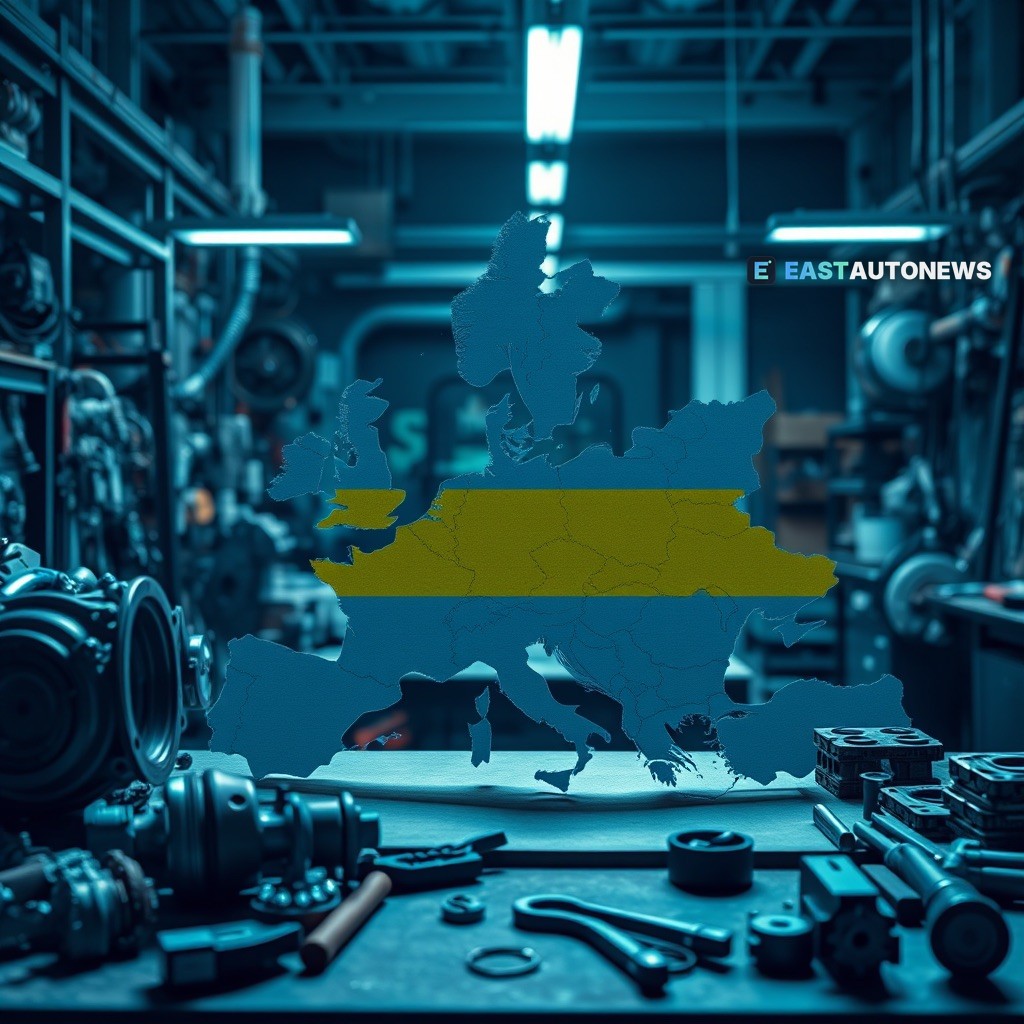
The news landed hard in Skalica and Kysuce: Schaeffler is adjusting capacity at both Slovak sites as part of a European restructuring that will eliminate 3,460 jobs, with Haguenau and Toulouse in France hit by the same program. Hundreds of positions in Slovakia are on the line, The Slovak Spectator reports, as the country's car industry battles through one of its most difficult stretches in years.
Behind the numbers lies a strategic pivot as much as a cost-cutting exercise. Demand for the combustion-engine components that long anchored Schaeffler's business is fading, and rather than doubling down on the old portfolio, the German supplier is investing in humanoid robots — and, according to CNBC, eyeing the defense sector. For Slovak workers, the subtext is stark: the product lines their plants were built around are being aged out of the market, and the technologies replacing them may not need the same hands.
The retrenchment reaches deep into the company's home base as well. Including earlier programs and 1,800 signed partial-retirement agreements, Schaeffler says roughly 18 percent of its German workforce is affected — a measure of how structural, rather than cyclical, this shift has become. Germany's wider auto sector is facing fresh cuts of its own, with CNBC framing the moment as nothing short of an 'industry crisis,' and Slovakia, an economy that leans heavily on car manufacturing, is absorbing its share of the shock.
The timing carries a bitter irony. Berlin and Paris are championing a 'Made in Europe' plan designed to pull automotive value back to the continent: cars imported from Japan would not qualify for EU subsidies, while models built in France, Portugal and Eastern Europe would benefit — but only if enough of their parts come from Europe. South Korean automakers are watching warily, and global suppliers warn the rules will raise costs and dent competitiveness. For Slovakia, the promise of European-content preferences arrives precisely as suppliers are trimming European capacity.