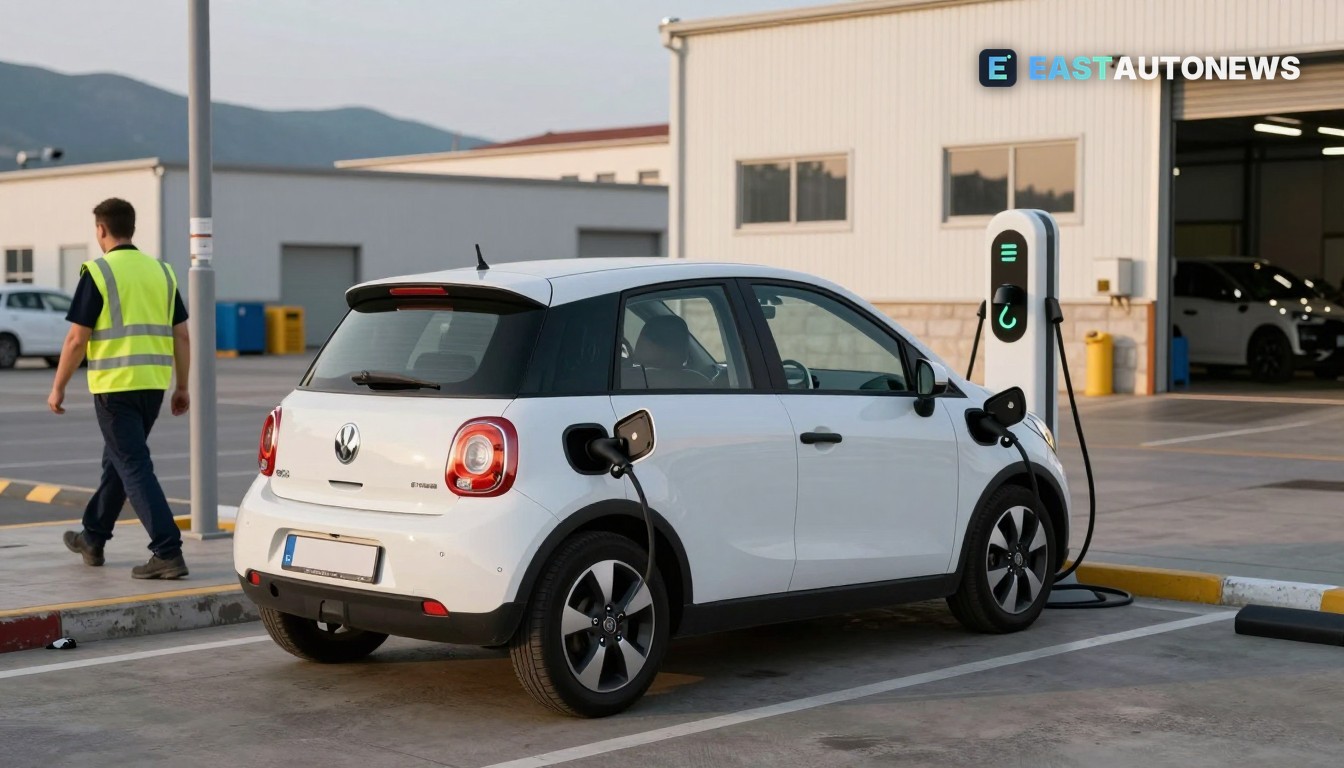
The European Commission’s review of the Alternative Fuels Infrastructure Regulation (AFIR) is advancing into its final weeks, with officials and industry now focused on whether obligations will be widened — in particular to shore power at ports — and on how compliance with new charger‑to‑vehicle standards will be enforced. The Commission must complete the AFIR review exercise by 31 December 2026, and stakeholders say the outcome will change infrastructure planning across Europe, including Central and Eastern Europe (CEE).
What Brussels is reviewing
The Commission’s impact assessment covers several areas beyond public EV chargers, and recent reporting highlights shore power for ships as one of six topics under consideration. The review could extend or tighten obligations originally set in Regulation (EU) 2023/1804, bringing port authorities and terminals into closer cooperation with national governments and operators. That shift would have implications for Ro‑Ro and ferry operators, logistics hubs and the vehicle import/export chains that are vital to many CEE economies.
At the same time, the industry is racing to understand how AFIR’s technical requirements will be implemented in practice. A delegated act (Commission Delegated Regulation (EU) 2025/656) makes the latest ISO 15118 family of communication standards — including ISO 15118‑20 — mandatory for newly installed or upgraded public charging equipment from 1 January 2027. But several industry bodies have warned that there is currently no agreed, widely available way to demonstrate and certify full conformance for all charger types. The lack of a clear conformity assessment pathway is prompting calls for additional guidance or a phased approach.
Timing and compliance
Brussels has opened a clarification process: DG MOVE set up an ad hoc working group under the Sustainable Transport Forum to draft Q&A guidance explaining how compliance will be demonstrated, verified and enforced. Industry sources report the Commission’s guidance is expected to be put before Member States for endorsement around 25 November 2026 — just weeks before the ISO 15118‑20 software mandate takes effect on 1 January 2027. That short window has fuelled industry concerns about test‑lab capacity and certification lead times.
What this means for the market
For carmakers, suppliers and charging operators in CEE the AFIR review and the ISO 15118 timetable matter for three immediate reasons. First, any widening of AFIR to ports or freight infrastructure will change where governments prioritise funding and grid connections, affecting vehicle flows and import/export logistics. Second, uncertainty about how compliance will be proven risks slowing charger roll‑outs because operators and equipment makers may wait for formal test processes or guidance before installing new hardware. Third, the short notice on technical enforcement could raise costs for smaller regional installers and slow the adoption of advanced features such as Plug & Charge and bidirectional charging — features that automakers increasingly include in new EVs.
The next weeks—culminating in the STF plenary and the Commission’s year‑end review—will show whether Brussels will clarify, delay or strengthen obligations. CEE industry players should watch the Q&A timetable closely and plan for scenarios in which certification bottlenecks or widened AFIR obligations shift investment priorities for 2027–28.
Electric vehicle listings on WorldTrader24 →
Sources: DTF Maritime News Desk, ChargerFeed, EV Magazine