China's Ministry of Commerce and the General Administration of Customs published Announcement No. 58 of 2026 on Nov 9, 2026, saying that six earlier export-control notices from 2025 will remain suspended from 11 November 2026 through 10 January 2027.
What the announcement covers
The package explicitly continues the pause on Notices Nos. 55, 56, 57 and 58 (MOFCOM & GACC 2025) plus MOFCOM Notices Nos. 61 and 62 of 2025. Analysts and trade trackers list items affected by the original 2025 measures as including super‑hard materials, certain rare‑earth equipment and inputs, a set of medium‑ and heavy‑rare‑earth items, and measures that singled out lithium‑ion cells and packs (high‑energy cells), cathode precursors and artificial graphite anode materials as controlled items.
Reuters summarised the ministry statement as describing the action simply as a two‑month extension of the existing suspension, with the notice effective from 11 November and ending on 10 January 2027. The ministry gave no further implementation details in the short announcement.
What this means for the market
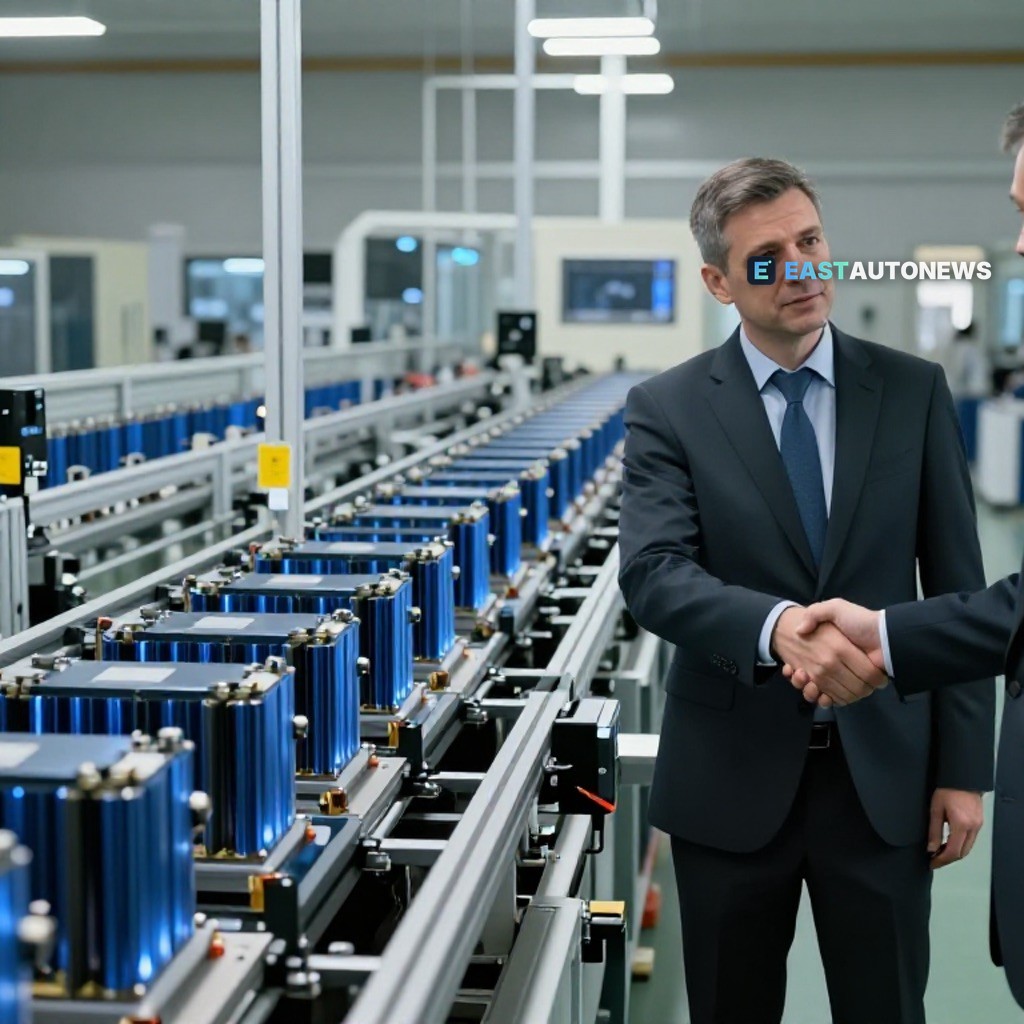
For Central and Eastern Europe — home to large battery‑cell and pack facilities and rising EV assembly capacity — the short extension preserves, for now, a two‑month window during which exports of the controlled items remain possible without the new licensing constraints originally scheduled to start in November. That provides near‑term continuity for supply chains that source specialised battery inputs or cell‑making equipment from China, including materials used in cathodes and artificial graphite anodes.
At the same time, commentators warn the suspension is temporary: the controls themselves remain on the books and could be reactivated after 10 January 2027 unless Beijing extends the pause or reaches a longer political agreement with trading partners. The pause has been described in coverage as part of a broader, time‑limited trade truce linked to high‑level US–China consultations. That continuing uncertainty matters for CEE battery and auto plants that are planning capital spending or negotiating multi‑year supply contracts.
Practical implications for carmakers and suppliers in the region are immediate but measured: procurement teams can continue deliveries of some China‑origin inputs through the pause, while purchasing and legal teams must prepare for a possible reinstatement of licensing or export restrictions after Jan. 10, 2027. Companies with localised cell production in Poland, Hungary and Slovakia still face the longer‑term policy environment in which carbon‑and‑local content rules and the EU battery regulation increasingly shape sourcing decisions.
Electric vehicle listings on WorldTrader24 →
Sources: Ministry of Commerce (PRC), Reuters