Apptronik has repositioned its Apollo humanoid robot toward warehouse and parcel‑handling applications, signalling a shift from broad manufacturing use to logistics-focused deployments that promise faster, measurable ROI for customers — and fresh implications for Central and Eastern Europe’s auto supply chain.
What Apptronik announced
On Nov. 7, 2026, robotics site Smartotics reported that Apptronik has adopted a new strategy for Apollo, introducing a revised torso with extended reach and a swappable‑battery architecture the company says is designed to support around‑the‑clock logistics work. The Smartotics piece described a multi‑site pilot with a major North American 3PL and said Apptronik now aims to prioritise trailer unloading, mixed‑SKU tote induction and parcel handling where operators can quantify labour savings and safety gains quickly.
The shift follows heavy investor backing earlier in the year: Apptronik raised a $520 million Series A extension on Feb. 11, 2026 — bringing total Series A proceeds to about $935 million — a round that included strategic partners such as Google and Mercedes‑Benz, according to contemporaneous reporting. Company statements at the time said the funds would accelerate production, training infrastructure and pilot deployments.
Why Central and Eastern Europe should pay attention
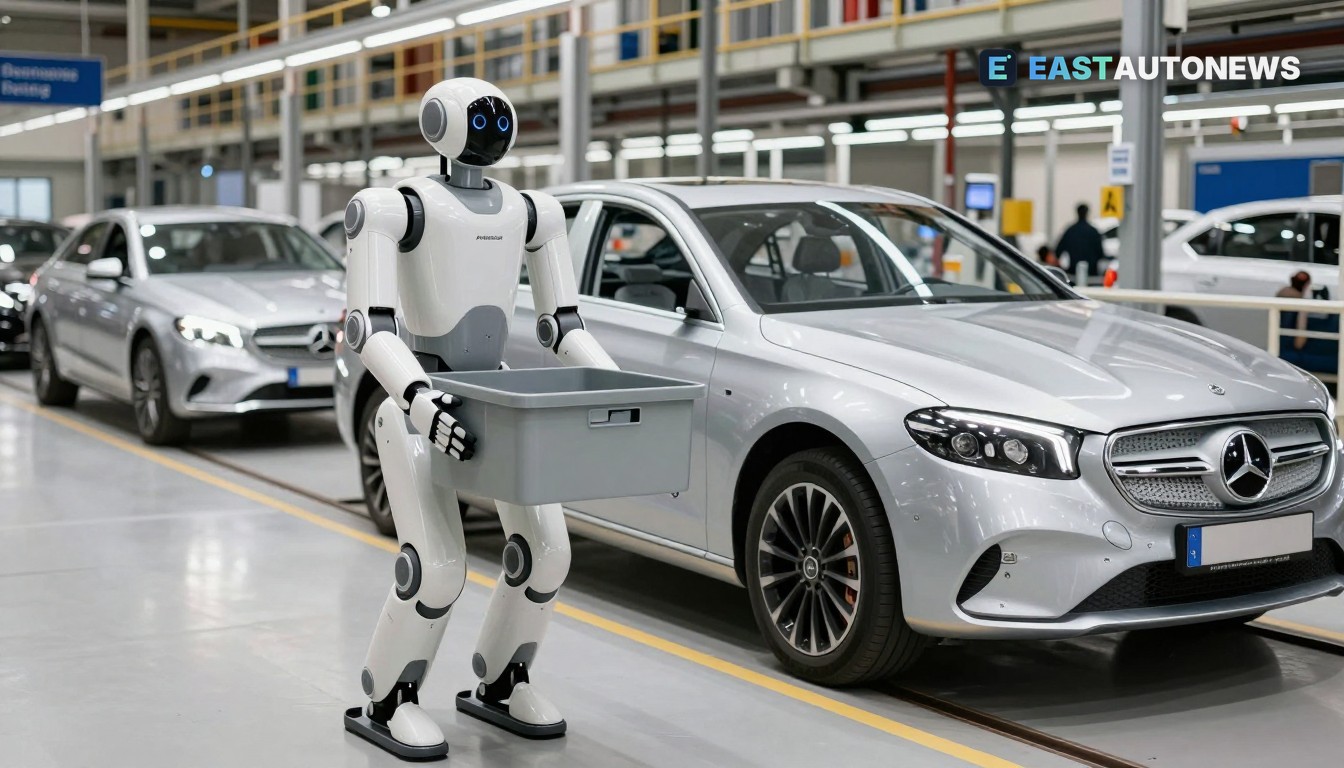
Apptronik’s repositioning matters for CEE because Mercedes‑Benz has been running Apollo humanoid pilots in the region. Deployment trackers and independent reporting note Apollos are active in Mercedes‑Benz environments including the company’s Kecskemét plant in Hungary (and at the Berlin‑Marienfelde Digital Factory Campus). Those pilots have focused on intralogistics tasks such as moving kits, shifting totes and early quality checks — precisely the class of work Apptronik now says it will target at scale.
For carmakers and tier‑one suppliers around Central Europe, the implication is practical: humanoid robots optimised for logistics could be deployed in parts kitting, inbound dock operations and packaging lines that feed assembly halls, reducing reliance on temporary labour and squeezing cycle times in mixed‑model plants. The technology’s commercial case will hinge on uptime, battery swap speed and measurable labour cost reductions — the very metrics Apptronik now emphasises.
What this means for the market
Short term, expect more pilot work at plants with existing humanoid evaluations — Hungary and nearby CEE hubs are likely candidates because they combine high‑volume assembly with chronic logistics bottlenecks. Suppliers that run kitting, packing and warehousing operations could be early customers if Apptronik’s revised Apollo proves durable and economically compelling.
Longer term, a successful pivot toward logistics would change procurement conversations: factories often treat kitting and inbound logistics as lower‑risk trials for automation, so wins here could speed wider adoption across final assembly and supplier sites in Poland, Czechia, Slovakia and Romania. But conversion to mass use still depends on real‑world metrics from pilots — not company roadmaps — and OEMs will scrutinise availability, service models and total cost of ownership before scaling purchases.
The strategic context is clear: big funding rounds and Mercedes‑Benz’s involvement give Apptronik both cash and a reference customer as it chases a commercial route where ROI is easier to demonstrate than complex on‑line assembly tasks. For Central and Eastern Europe, that could mean early access to new automation that addresses chronic labour and logistics pressures — so long as pilot data backs the claims.
Mercedes Benz models on WorldTrader24 →
Sources: Smartotics, Deploy.report, Built In Austin