European charging demand is moving behind the front door. Chargalytics estimates roughly 2.5 million AC (Type‑2) chargers were installed across Europe in 2025 — a central-case figure that sits between a 1.9–3.1m range and aligns with LCP Delta’s 2.4m unit count for 2025. The consultancy values the factory‑gate hardware market at about €1.1–1.6 billion and, once cabling and electrician labour are added, at roughly €3–6 billion.
Why numbers moved indoors
Chargalytics finds that almost four in five of the AC chargers installed last year went into homes, with one in seven placed at workplaces and depots and fewer than one in ten onto the public network. That shift follows a slowing of new public AC additions — net public AC installations in the EU fell from 193,000 in 2024 to 123,000 in 2025 — even as DC (fast) additions held steady.
The consultancy’s estimate is built from ACEA registrations, IEA forecasts and national data (for example the Netherlands and the UK) and assumes about one home charger per two new plug‑in cars as a central scenario. Chargalytics highlights that much of the short‑term market therefore sits with electricians, installers and building owners rather than traditional public‑network players.
What this means for the market
For manufacturers and suppliers in Central and Eastern Europe that matters in three ways. First, the hardware market is large but low‑margin: Chargalytics notes basic wallboxes have fallen from around €1,000 a few years ago to €200–500 at wholesale, pushing vendors to compete on installation, software and service bundles rather than the box alone. €450–650 per box at the factory gate is the range the analyst uses to value the 2025 hardware market.
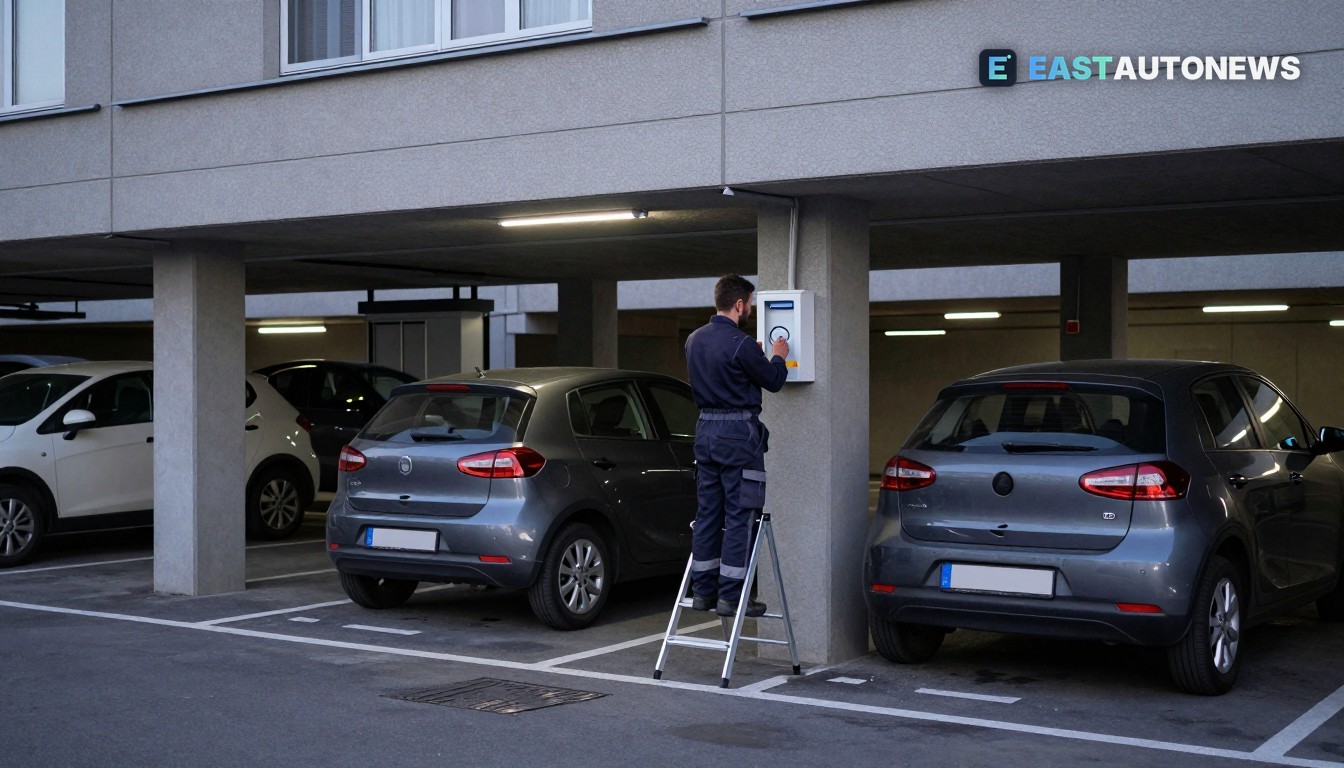
Second, regulation will drive demand into buildings. The EU’s recast buildings rules — implemented under the Energy Performance of Buildings Directive and related measures — require existing non‑residential buildings with more than 20 parking spaces to provide either one recharging point per ten parking spaces or preparatory cabling/ducting for at least half the spaces by 1 January 2027. That obligation (and similar “right to plug” provisions for residential buildings) is a near‑term demand lever for installers and municipal planners across CEE.
Third, the supply chain geography looks favourable to European suppliers. Chargalytics finds Chinese makers list about a quarter of AC models in its catalogue but account for a much smaller share of installed public AC hardware in some registries (for example 7% of named AC points in Greece and under 1% in Norway), suggesting established European vendors and local installer networks retain the edge in many markets. That gives CEE suppliers and electrical contractors a tangible opportunity — especially where large residential blocks and employer car parks need retrofits before the 2027 deadline.
For carmakers and dealers, the rise in home and workplace AC charging means buyers in CEE will increasingly expect roof‑to‑road charging offers — vendor‑supported installation, billing and load‑management packages — rather than a pure public‑charging rollout. The market’s money will flow into bundled services rather than the one‑off sale of a wallbox.
Electric vehicle listings on WorldTrader24 →
Sources: Chargalytics, European Commission (EAFO) / EU legal texts.