Munich-based battery optimiser and flexibility trader The Mobility House Energy has created a new chief executive role and appointed Peter Dworak as CEO as part of a strategic restructuring that re-centres the business on bidirectional charging (vehicle-to-grid, V2G) and expansion into Central and Eastern Europe. The management change and strategy shift were reported in industry press on Nov. 10, 2026.
New leadership, new focus
Peter Dworak, a German–Swiss physicist with more than 30 years’ experience in European energy markets and prior roles at Swiss utilities Atel and Alpiq, will take the helm of the Energy unit after working with the company on a project basis since mid‑2026. Company statements and reporting say Dworak led early commercial work to open The Mobility House Energy’s presence in Poland and Romania and will be tasked with scaling partner services and upgrading the firm’s algorithmic trading and optimisation software.
The structural change separates functions inside the group: the parent, The Mobility House (TMH), will concentrate on aggregating flexibility from electric vehicles and buildings (V2G and vehicle‑to‑home, V2H), while The Mobility House Energy will act as the market‑facing optimisation and trading partner, marketing that aggregated capacity alongside stationary batteries on wholesale and balancing markets. The reorganisation was framed by the company as moving V2G from pilot projects toward a tradable asset class.
What this means for the market
The move matters for Central and Eastern Europe because the Energy unit already manages and trades a stationary storage portfolio in excess of 1 GW — a platform that can be joined with distributed EV battery capacity to provide fast, local balancing and new revenue streams for drivers and fleets. Expanding partner services into Poland and Romania signals that commercial V2G is being positioned where grid flexibility and fast industrial demand growth intersect with rising EV registrations.
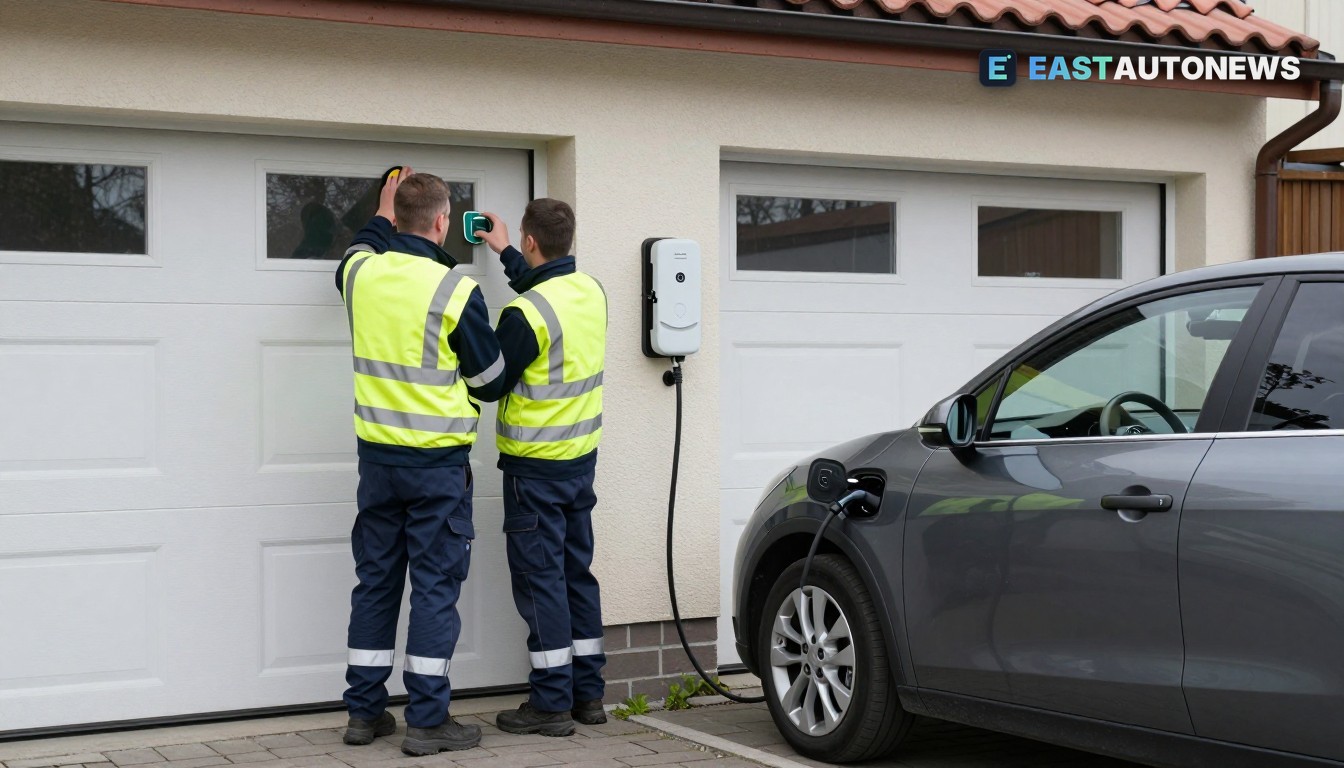
For automakers, fleet operators and suppliers in the region, a scaled aggregator with trading capability shortens the pathway to monetising parked EVs as grid resources. The Mobility House’s model — bundling vehicles, wallboxes and building batteries into a single optimisation pool — lowers the integration burden on OEMs and fleets, and could accelerate offers that tie home and depot charging to real‑time market prices and ancillary service contracts.
Company leadership framed the hiring as a capacity‑building step: the group said the appointment is intended to scale partner sales across Europe and to strengthen the commercial technology that drives battery‑as‑flexibility products. Founder Thomas Raffeiner noted the choice was made to grow the partner business in Europe. Marcus Fendt, a co‑founder who helped build the business since 2009, will remain during a transition period.
The development follows a wider trend in Europe where energy and mobility firms are moving from demonstrations to commercial trading of V2G capacity, and it complements OEM pilots and offers already visible in Western European markets. The Mobility House’s explicit push into Poland and Romania places CEE on the roadmap for commercially marketed bidirectional charging services.
Electric vehicles listings on WorldTrader24 →
Sources: pv‑magazine, ESS News