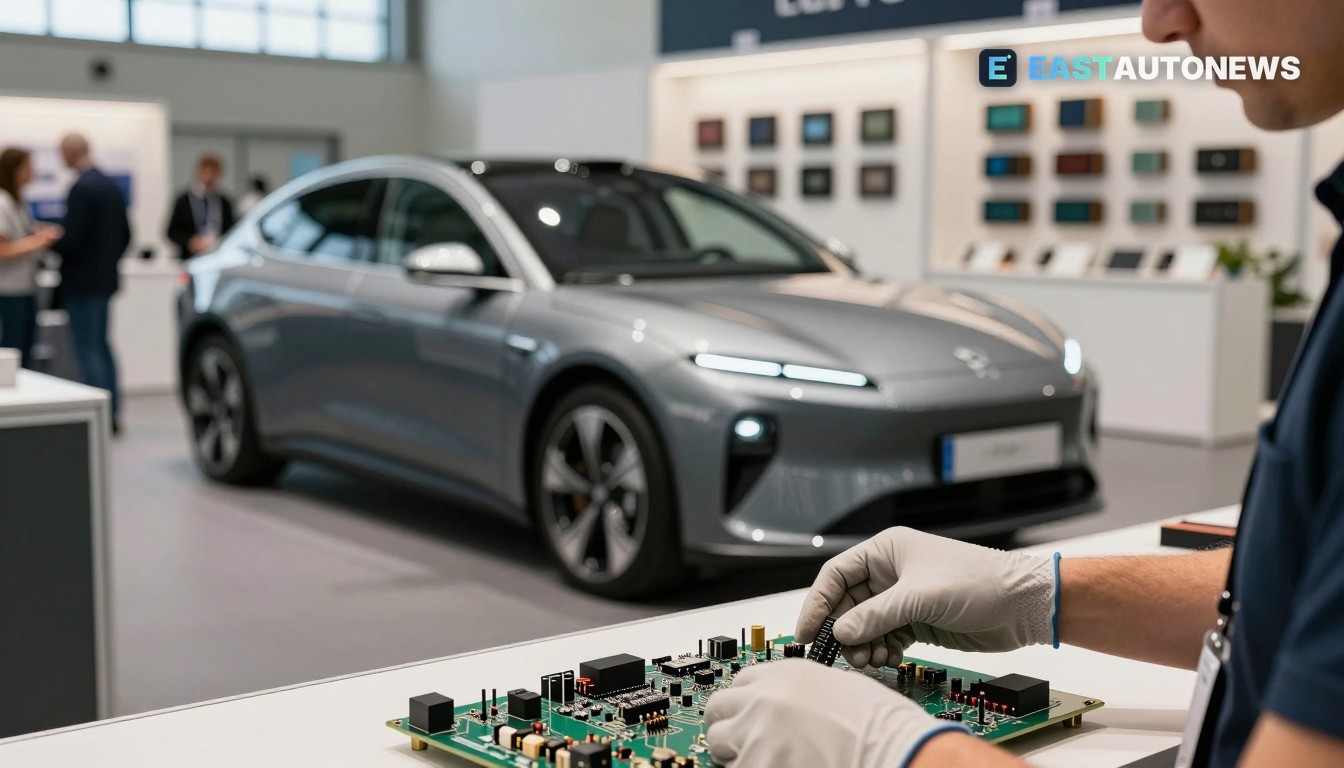
Two major semiconductor executives told journalists at the Electronica trade fair in Munich that the global AI datacentre build-out is drawing foundry, assembly and packaging capacity away from the mature-node chips that cars rely on — a development that could complicate EV and ADAS production across Europe, including Central and Eastern supplier chains.
What was said in Munich
On Nov. 10, 2026, Nexperia’s interim chief executive Stefan Tilger told Reuters that his company is "totally oversubscribed" as suppliers divert capacity toward fast-growing AI datacentres and robotics, leaving manufacturers of commodity semiconductors for cars short.
A day earlier, STMicroelectronics chief executive Jean‑Marc Chery told a CEO panel that foundries and assembly-and-packaging companies are increasingly shifting resources away from products used in automotive and industrial applications. "We see many bottlenecks," Chery said. STMicro said its own manufacturing footprint gives it some protection, but the wider supply ecosystem is under strain.
Where the pressure is strongest
Industry reporting and sourcing analyses point to tightness on mature-node parts — power-management ICs, automotive microcontrollers and other analog and discrete devices — rather than the bleeding-edge chips that power large AI models. Lead times for some power-management parts in Europe have been reported stretching beyond 50 weeks, and analysts warned in September of projections that AI‑led wafer allocation could cut global vehicle output materially if it continues. Those forecasts were framed as projections rather than confirmed production losses.
What this means for the market
Automakers and suppliers in Central and Eastern Europe (CEE) operate complex, high-volume production lines for EVs, battery systems and ADAS hardware; those lines use large numbers of mature-node semiconductors. If foundries and outsourced‑assembly-and‑test houses continue to prioritise higher‑margin AI-related business, CEE OEMs and tier suppliers face three near-term risks:
- longer component lead times and rising prices for key EV power and battery-management parts;
- short-notice allocation cuts that could force slower production ramp-ups or limited shifts at plants reliant on single-source parts;
- engineering and procurement workarounds (pin-compatible substitutions, software changes, multi-sourcing) that add cost and slow new-model introductions. Analysts and procurement platforms have already flagged these tactics as the primary short-run defence for OEMs.
In practice this means CEE supplier hubs — from electronics and wiring to battery‑management module makers — need to accelerate alternative sourcing, secure longer-term wafer reservations where possible, and plan production schedules with greater component contingency. The window for those actions is short: the statements at Electronica came during the industry’s autumn procurement and launch planning phase.
WorldTrader24 B2B vehicle marketplace for dealers →
Sources: Reuters (via Investing.com), DriveAgent / SourceBySpec