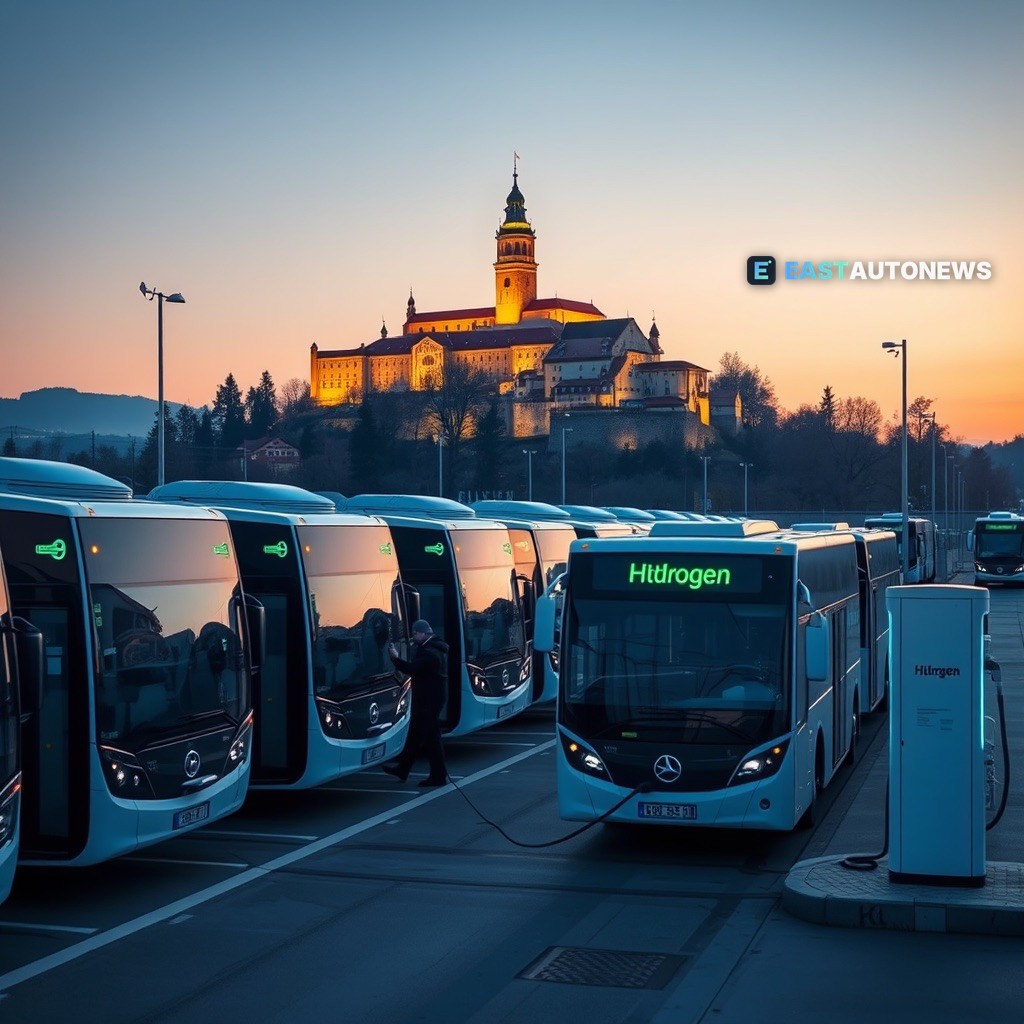
Ljubljana's morning commute has gone quiet. The Slovenian capital's municipal operator, Ljubljanski potniški promet (LPP), has put 35 Mercedes-Benz eCitaro buses into service — 25 battery-electric eCitaros joined by 10 articulated eCitaro G models running on hydrogen fuel cells. For a mid-sized EU capital, it is a strikingly assertive fleet commitment, and one that puts Ljubljana ahead of many larger Western European cities still haggling over their first zero-emission tenders.
The deployment, according to Daimler, goes well beyond swapping diesel drivetrains for batteries. LPP has established dedicated charging and hydrogen infrastructure and adapted its operational processes to accommodate the vehicles — depot routines, maintenance scheduling and duty cycles all re-engineered around two different energy pathways at once. Running battery-electric and fuel-cell technology in parallel is precisely the kind of operational complexity many operators deliberately avoid; Ljubljana has chosen to embrace it.
The buses arrive as Slovenia's charging map thickens. A separate infrastructure project has put new ultra-fast chargers into operation on Croatian motorways, with the rollout explicitly covering important transport routes in Croatia and in neighbouring Slovenia — capacity designed for both passenger cars and electric trucks along the corridors that link the Adriatic coast with Central Europe. For fleet planners, the message is that vehicle commitments and corridor infrastructure are now advancing together across the region.