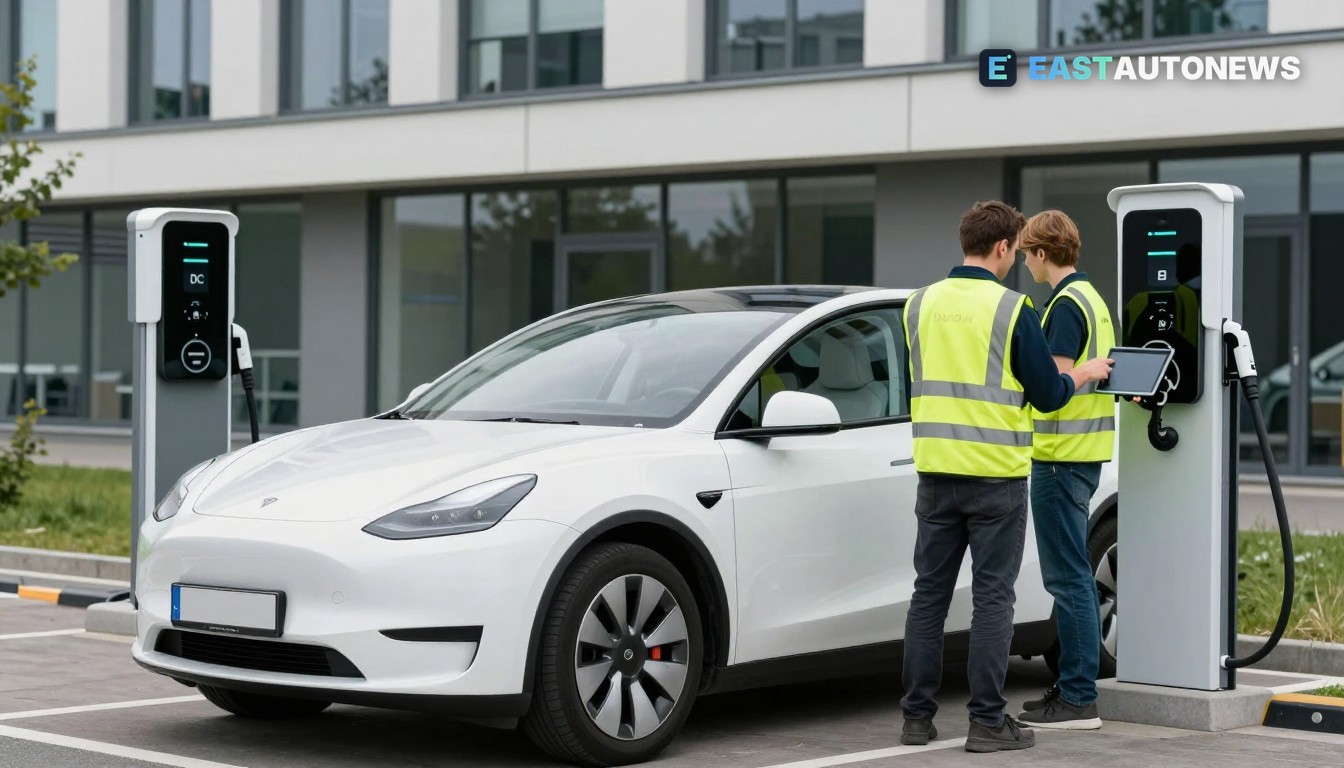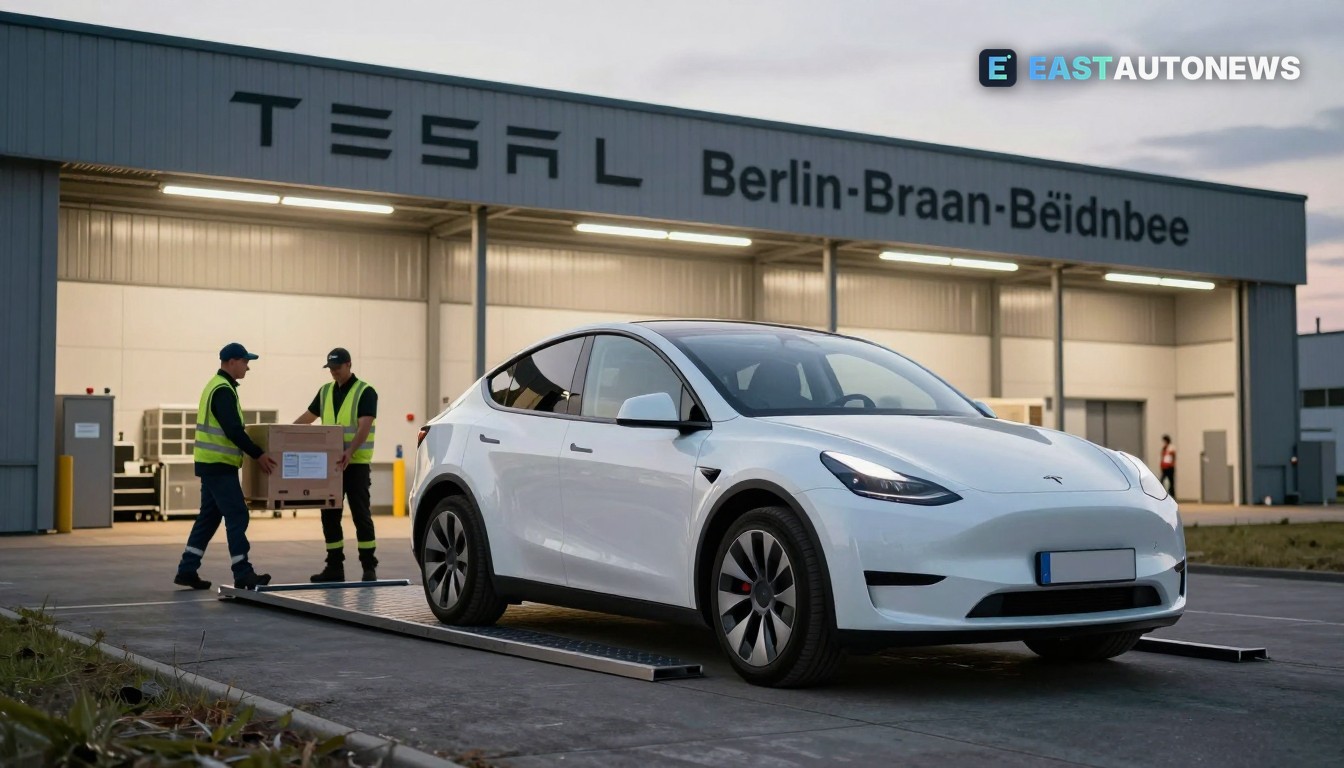
Tesla has scheduled up to six additional production shifts at its Gigafactory Berlin‑Brandenburg (Grünheide) through early December 2026 to increase Model Y output, according to industry reporting and internal memos seen by the press. Two shifts — on 20 and 21 November — are confirmed; four further Friday‑night/Saturday‑morning shifts (27–28 November and 4–5 December) are conditional on how production develops. The memo reported that staff working those shifts will receive a 35% overtime premium plus an extra 25% for night work.
Numbers and context
The extra shifts follow an October run in which Grünheide produced 7,000 Model Ys in a single week, short of Tesla’s 7,500‑per‑week target. Industry observers estimate that each extra shift could add roughly 450 cars; if Tesla runs all six special shifts that would increase output by about 2,700 Model Ys before year‑end — an estimate attributed to community trackers and shared with reporters. Tesla itself has not published an official incremental figure.
Tesla’s plant manager and the company have been quoted in recent weeks describing an ongoing ramp at Grünheide and, separately, Tesla announced a major planned expansion of the site in mid‑November (a planned new production building and ancillary works), underlining that the company is scaling both short‑term shifts and longer‑term capacity.
What this means for the market
Grünheide’s extra shifts matter beyond Germany. Central and Eastern Europe (CEE) plays a significant role in Europe’s battery and parts supply: Poland was estimated to account for about 125 GWh of European battery cell capacity in 2023, with Hungary (about 37.5 GWh) and Germany (about 23.4 GWh) also significant producers — figures that underline how a German production surge ripples across regional suppliers, logistics and rail/sea freight lanes. Additional weekend production at Giga Berlin can raise near‑term demand for modules, packs, electronic components and inbound logistics tied to European cell and pack plants.
Operationally, the confirmed and conditional nature of the shifts shows Tesla is using a flexible, short‑notice lever (weekend overtime) to close a year‑end gap rather than immediately expanding permanent capacity. That reduces the near‑term risk of long lead‑time capex but increases pressure on temporary labour, third‑party logistics and just‑in‑time suppliers — many of which are based in CEE and route parts into German and Central‑European assembly lines.
For fleet and retail buyers, a short burst of extra shifts can modestly improve delivery odds for some markets, but Tesla’s conditional scheduling and the company’s broader production targets mean allocation remains fluid into 2027.
Model Y and other electric vehicles on WorldTrader24 →
Sources: EVwire, Drive Tesla Canada, Handelsblatt, Europeum