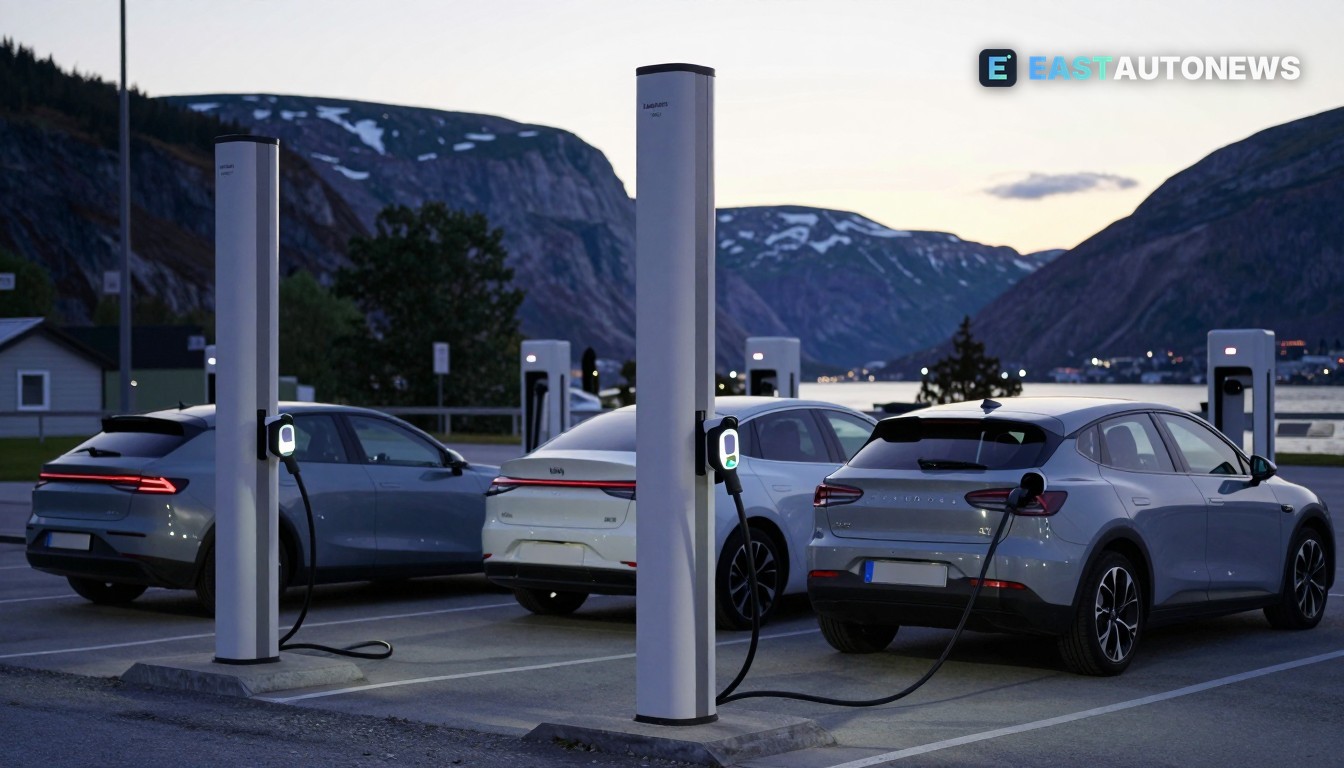
Ionity has removed Ekoenergetyka charging hardware from its Elverum fast‑charging park in Norway and installed Huawei equipment, the operator’s first publicly confirmed use of Huawei chargers in the Ionity network. Electrive reported the swap on 9 November 2026 after an Ionity spokesperson told the outlet the original hardware showed a technical defect and had been fully replaced.
What happened at Elverum
The Elverum park opened late in 2025 as a technology showcase and used Ekoenergetyka’s “shared‑power” architecture: two DLBS power cabinets sharing about 800 kW and dynamically distributing energy across six fast‑charge points, in 66.7 kW steps, to allow very high peak per‑point power when vehicles were alone on a bay. The shared‑power trial suffered repeated incidents during 2026 that left vehicles unable to drive after charging sessions because their single‑use pyrotechnic safety fuses had been triggered. Ionity reported receiving six incident reports from the site.
Norwegian and Polish reporting — echoed by the Polish site EVkurier — says insurer Zurich concluded its investigation in mid‑October and found the damage to the affected vehicles resulted from a fault in the charging equipment; Zurich agreed to cover repairs. Those accounts say several cars had to be towed and one owner’s vehicle remained in a workshop for months.
What Ionity installed
Electrive and local coverage report the new installation comprises three Huawei dispenser units providing six charging points in total, with Ionity’s site listing showing four points rated up to 600 kW and two points up to 500 kW (an Ionity spokesperson gave a slightly different split of 4x600 kW and 2x480 kW in comment to Electrive). The Elverum location still hosts other operators’ hardware including Tesla Superchargers and other public 200–400 kW units. Electrive says the Huawei swap is the first concrete output from the Ionity–Huawei cooperation announced at Power2Drive in Munich in mid‑2026.
What this means for the market
The removal of a Polish supplier’s pilot at a high‑profile Ionity hub is significant for Central and Eastern Europe because Ekoenergetyka is one of the region’s best‑known fast‑charger manufacturers. The episode underlines two market realities: operators are under commercial and reputational pressure to deliver highly reliable HPC systems on busy corridors, and European/CEE suppliers face rigorous real‑world testing when their kit is deployed at scale. Ionity’s decision to instal Huawei hardware — and to cite a technical defect in the original system — will increase scrutiny on shared‑power architectures and on how vendors integrate power electronics, control firmware and vehicle compatibility testing.
For CEE suppliers and automotive groups that rely on regional vendors for charging infrastructure, the Elverum case is both warning and lesson: field failures that trigger vehicle safety devices quickly attract insurer, operator and media attention, and can shift buying decisions toward proven or alternative suppliers. Operators building cross‑border networks in Europe will likely demand longer, tougher acceptance trials and clearer contractual remedies for failures that damage customer vehicles.
Sources: Electrive, Elbil RADAR, EVkurier.