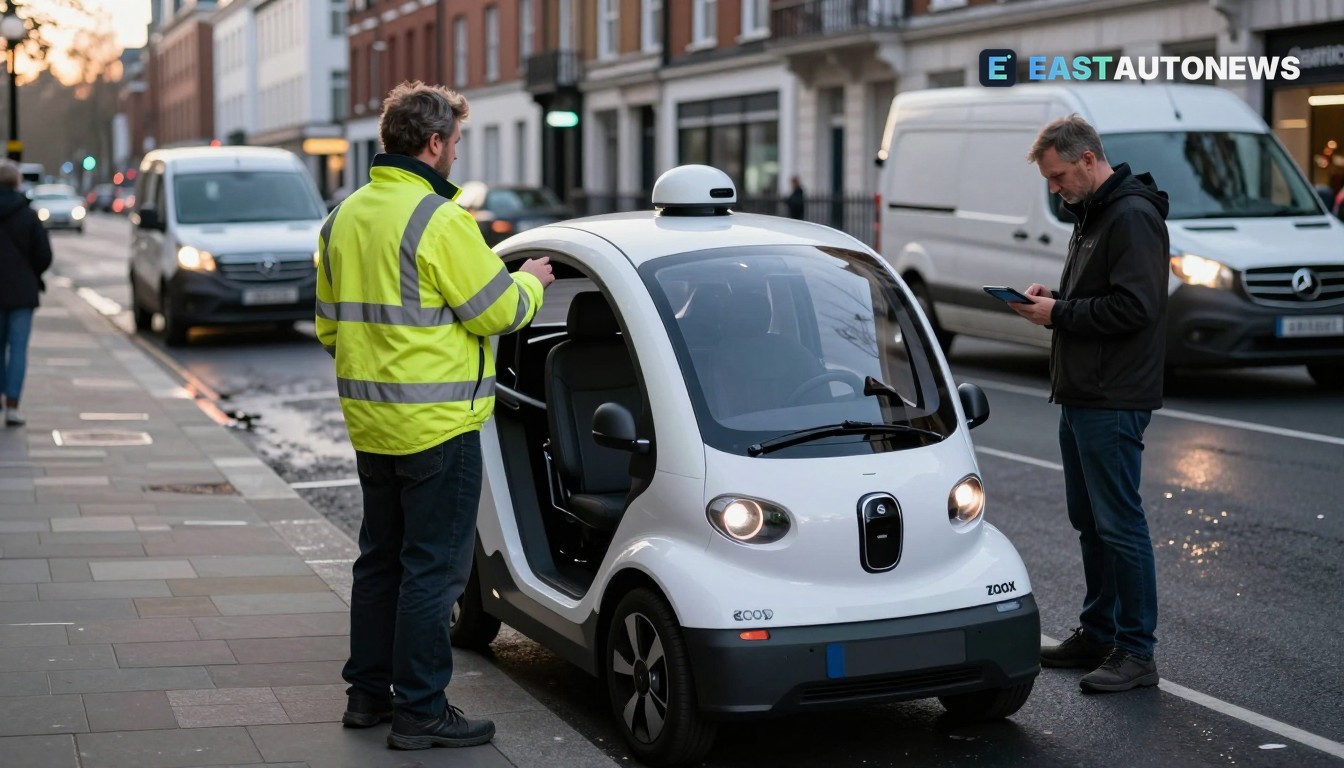
Zoox, the Amazon‑owned robotaxi developer, told the Wall Street Journal’s Tech Live audience that it will send a test fleet to Europe and Asia in early 2027 to begin collecting driving data and local scenarios ahead of any international service launch. The announcement came during an on‑stage interview on Nov. 4, and Zoox’s CEO Aicha Evans repeated the timing in a post the following day.
How Zoox will start abroad
Evans said the company will begin with exploratory, supervised testing rather than passenger services, sending sensor‑fitted mapping cars before its purpose‑built, steering‑wheel‑free robotaxis follow. Reporting from the WSJ transcript and subsequent industry coverage notes Zoox often starts new markets with Toyota Highlander SUVs equipped with the company’s sensors to map streets and traffic signals before shifting to its own vehicles.
Zoox currently operates a U.S. fleet of roughly 150 robotaxis in several cities, and Evans framed the overseas push as a step to prepare for “international expansion” rather than an immediate service launch. The CEO emphasised the move is about collecting scenarios and building maps; she did not name exact European cities beyond citing London and “EU countries” as targets.
Why the announcement matters now
Automated‑vehicle firms typically map and validate local driving behaviour, signage and intersections before applying for national or municipal test permits. Zoox’s statement that data‑collection drives will start in early 2027 therefore signals a formal cadence toward overseas testing and regulatory engagement — a necessary precursor to trials or commercial robotaxi services. The company also reinforced the timeline publicly on social media in a post on Nov. 5.
What this means for the market
For Central and Eastern European supply chains and policy makers the move underlines that the robotaxi wave now extends beyond a handful of global hubs. Zoox joining other operators that have already put test cars or limited services in Europe increases pressure on local authorities to clarify testing and permitting rules, and it heightens the need for local mapping, telecoms and AV‑grade maintenance skills. At industry level, the step also reinforces demand for sensors, compute hardware and field‑validation services that European suppliers and engineering centres can provide — but the company’s statement makes clear the immediate priority is data and scenario collection, not a commercial rollout.
Zoox’s planned exploratory testing will be watched closely by incumbents and regulators across Europe. The company arrives after rivals including Waymo, Pony.ai and others have already staged tests or trials in European markets; Zoox’s public timeline — early 2027 for data drives — gives European stakeholders a clear window to prepare for permit requests and technical discussions.
SUV listings on WorldTrader24 →
Sources: The Wall Street Journal (onstage interview), EVwire, Driverless.news, Zoox (X post)