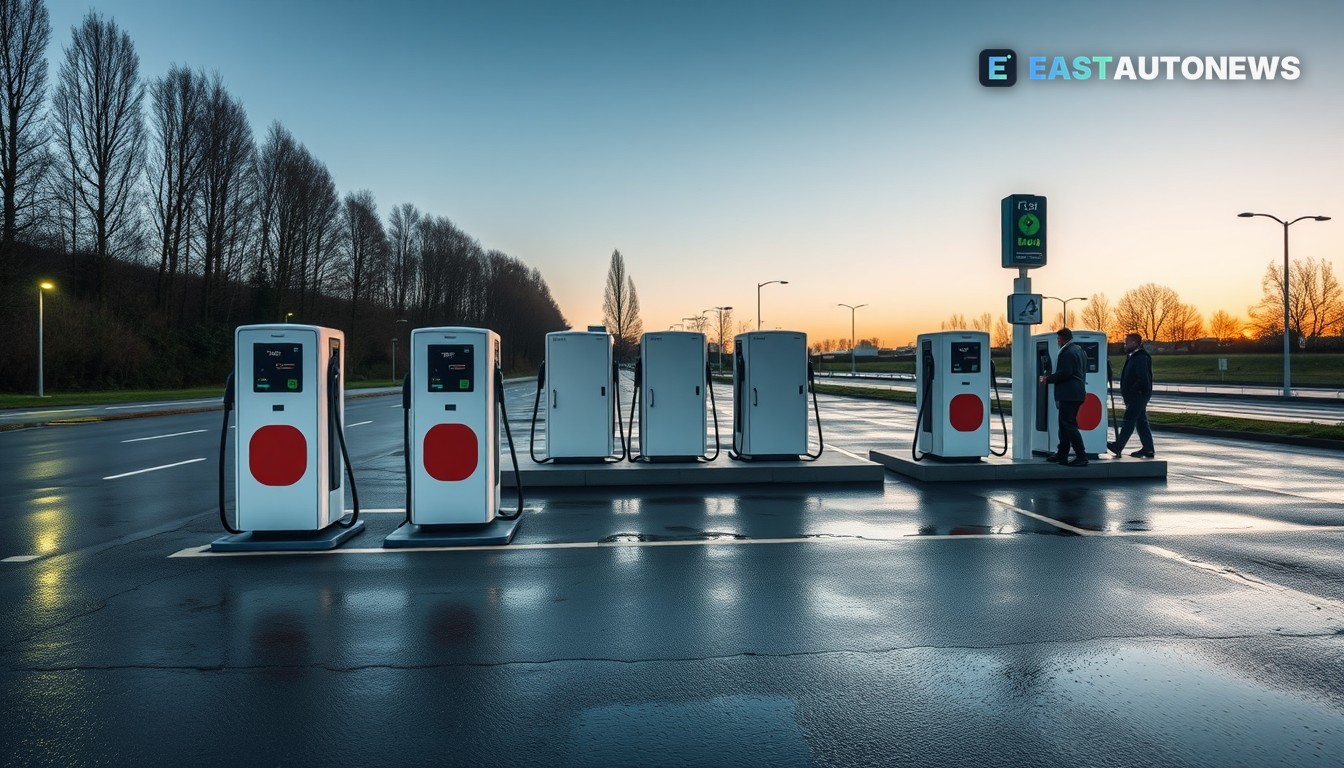
Fast‑charging network Ionity has commissioned its first battery‑buffered charging park at Wertheim, Germany, and told industry press it plans to deploy roughly 50 battery energy storage systems (BESS) across Europe in 2027 to accelerate charger roll‑outs where grid upgrades are slow. The Wertheim installation uses four Sungrow modular units totalling 1,028 kWh of storage with a peak output of 500 kW and has already allowed the site to expand from four active charge points to six, with two further ABB units (up to ~350 kW) planned.
Technical fix for a widespread bottleneck
According to the operator, the battery at Wertheim acts primarily as a bridge while the medium‑voltage connection is upgraded — a process Ionity says can take up to three years in Germany — and as an active power source during peak demand. The site uses an energy‑management system to split available power between the grid, batteries and vehicles so more chargers can run without waiting for costly and time‑consuming network reinforcement.
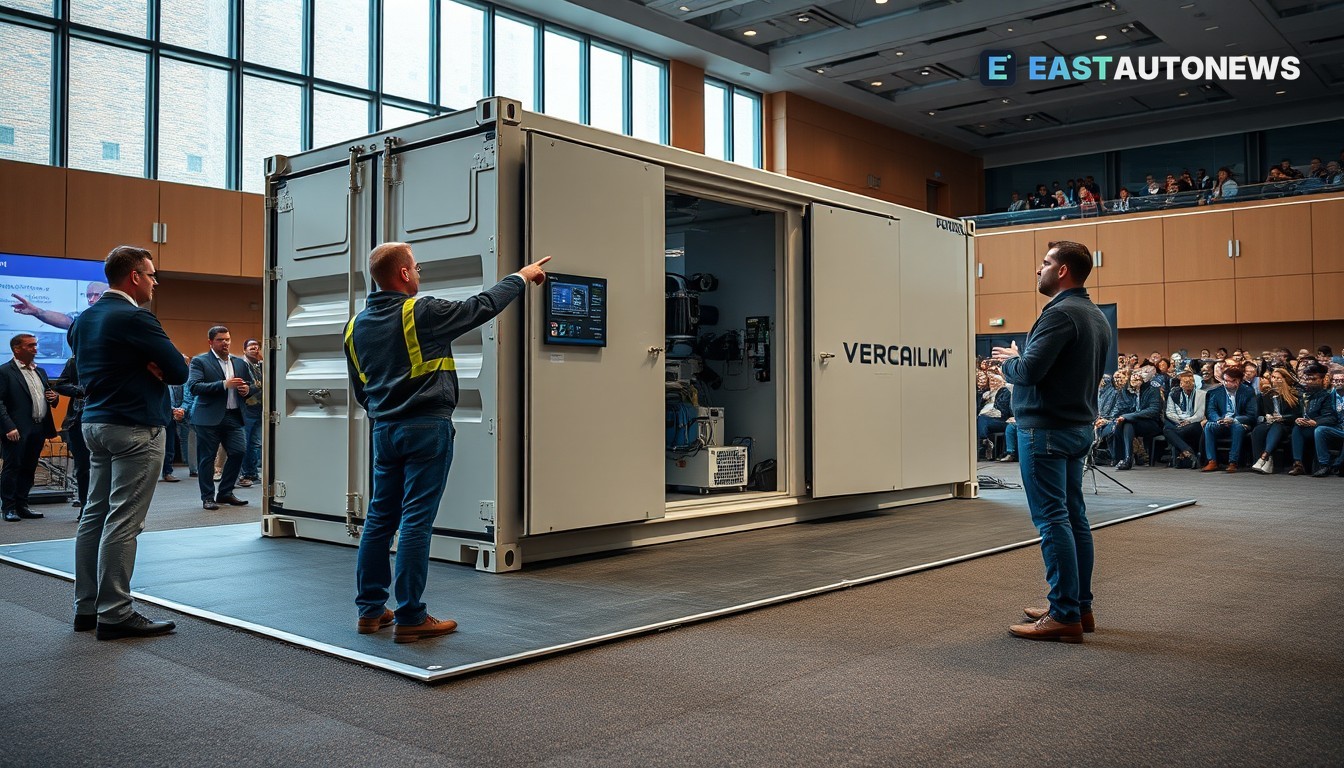
Ionity described the storage as an external cabinet‑style BESS rather than integrated batteries inside dispensers; external units can feed multiple chargers and are easier to retrofit at existing parks. The company told electrive the Wertheim system comprises four Sungrow modules and enables immediate capacity gains while the grid work proceeds.
What this means for the market
Ionity’s move is significant for Central and Eastern Europe because many CEE charging projects face long waits for grid reinforcement and constrained medium‑voltage connections. By using BESS to decouple peak charging demand from the immediate grid capacity, charge point operators (CPOs) can bring sites online earlier, increase point counts at motorway stops and reduce dependence on local distribution upgrades. Ionity says it plans some 50 BESS units in 2027, representing more than 20 MWh of cumulative capacity — a scale that, if replicated in CEE, could unlock dozens of sites otherwise stalled by network limits.