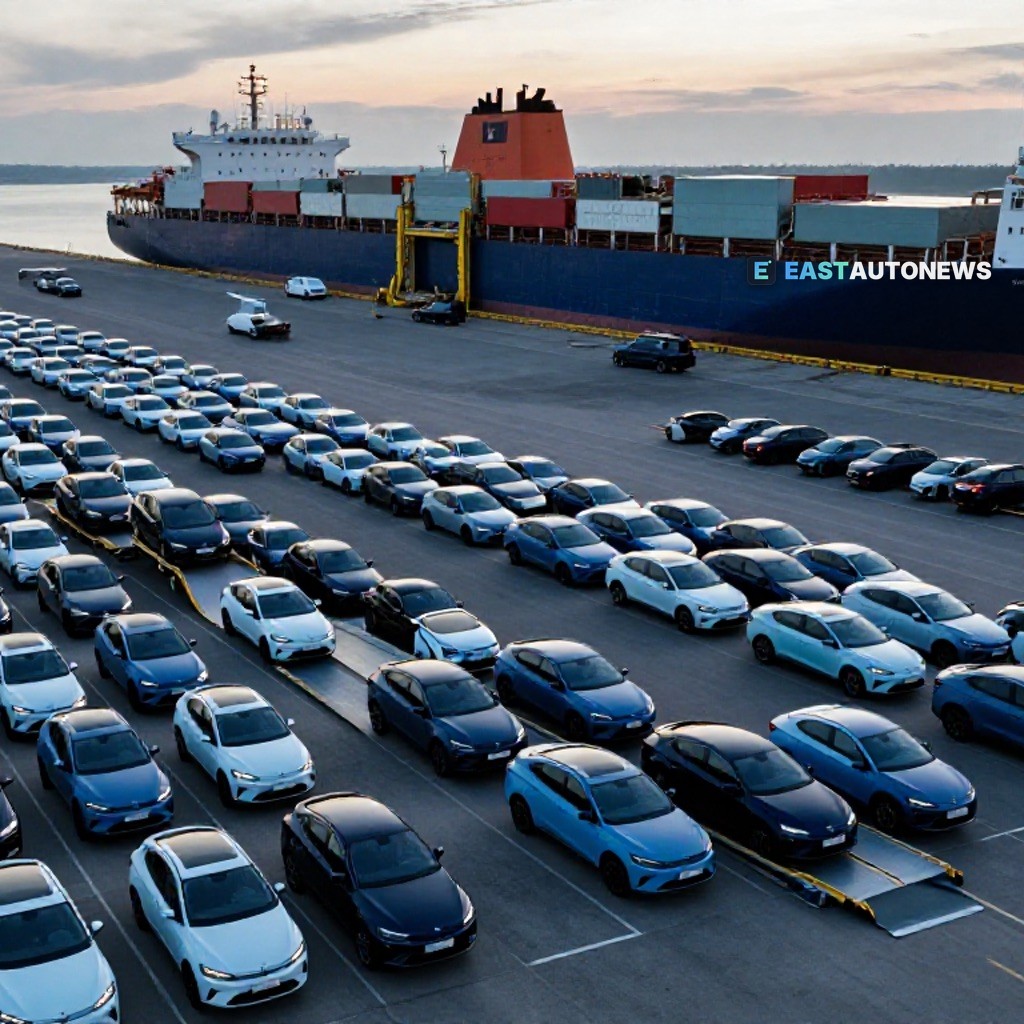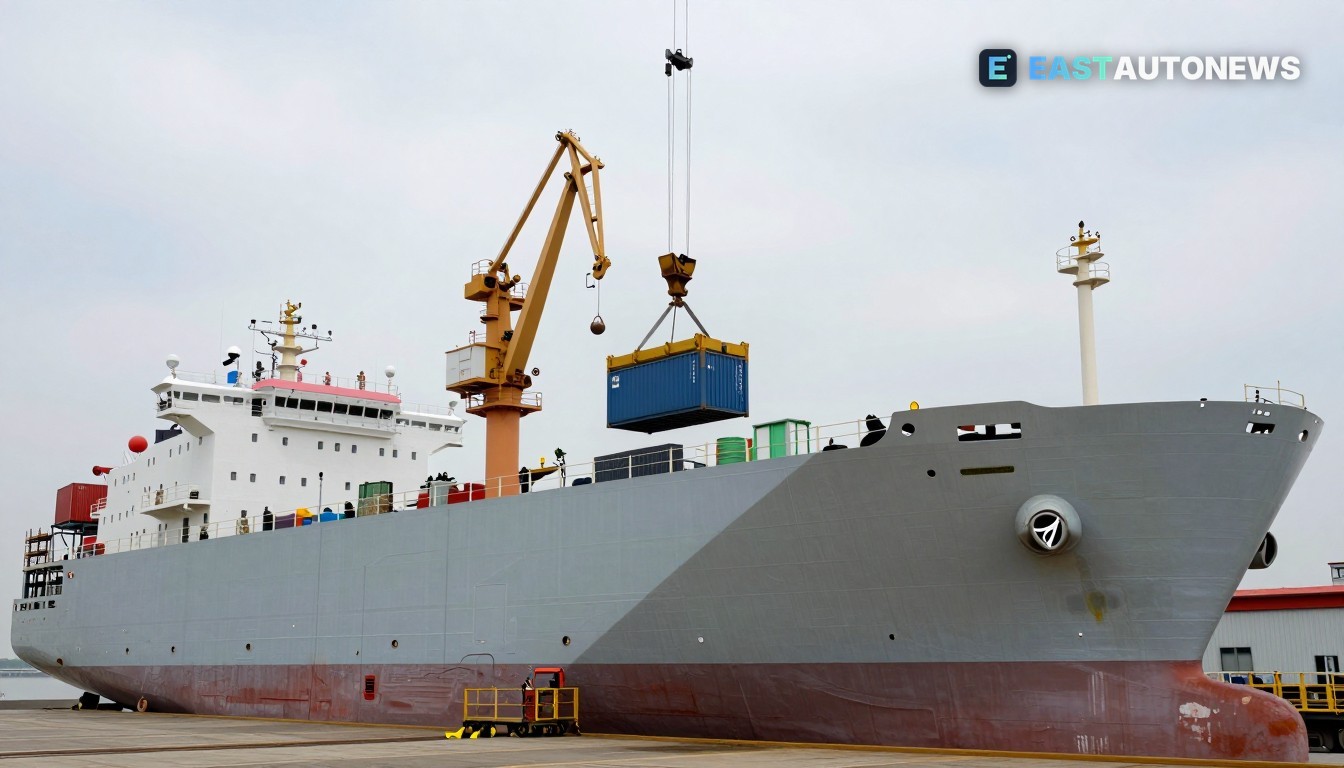
Norwegian car‑carrier specialist Höegh Autoliners has signed a strategic and technical cooperation agreement with China’s BYD Energy Storage to fit marine battery systems to Aurora No. 12, the final unit in its Aurora‑class newbuild series. The deal was announced during the COP31 climate conference in Antalya, Türkiye, and covers containerised battery storage that will operate alongside a shaft generator and deck solar panels on a ship built to run on ammonia from delivery.
The deal and the ship
According to company notices and trade reporting, Aurora No. 12 is a deep‑sea pure car and truck carrier (PCTC) with roughly a 9,200 car‑equivalent unit (CEU) capacity and a scheduled yard delivery in May 2028. Höegh says the vessel will combine four energy systems — an ammonia main engine, BYD containerised battery units, a propeller shaft generator and deck‑mounted solar arrays — to optimise onboard power and reduce fuel burn.
Höegh described the configuration as unique for a deep‑sea car carrier. CEO Andreas Enger said the project “shows that shipping can take the lead in the green transition,” language released in the company’s announcement and picked up by maritime press. The carrier group calculates that the integrated energy system will cut greenhouse‑gas emissions by about 1,000 tonnes of CO₂ equivalent a year for the vessel.
Build, timeline and suppliers
Aurora No. 12 is under construction at China Merchants Heavy Industry (Jiangsu) as the last ship in a 12‑vessel Aurora programme that Höegh contracted in recent years; the company has positioned the class as its low‑emissions flagship. Industry reporting notes the battery equipment will be containerised for marine use and that commercial terms for the transaction were not disclosed. The ship is due for delivery in May 2028.
What this means for the market
For carmakers and logistics providers in Central and Eastern Europe the deal signals two practical trends. First, Ro‑Ro line operators are accelerating technical steps to meet port emission rules and future cost pressures from green marine fuels and FuelEU‑type rules; hybrid battery systems let vessels reduce auxiliary engine use while at berth and shave peak electric loads on voyage, improving voyage economics and port access credentials. That matters for routes serving CEE ports because many vehicle imports and exporters rely on deep‑sea PCTCs that must meet stricter port emissions standards to avoid local restrictions or fees.
Second, BYD’s entry as a third‑party marine battery supplier highlights growing competition in specialised maritime energy‑storage equipment. If Chinese battery suppliers win share of marine ESS (energy storage systems), European yards, operators and ports may see a broader pool of suppliers — with implications for retrofit costs, delivery lead times and the origin of equipment used on ships calling at CEE hubs. That could influence choices by carmakers and logistics managers when negotiating long‑term shipping contracts for finished vehicles or vehicle components.
Operationally, the immediate effect on vehicle logistics will be modest: Aurora No. 12 is one ship and will enter service in 2028. But the announcement matters as a signal: large PCTC owners are blending alternative fuels and onboard batteries to reduce lifecycle emissions and berth fuel consumption — an advance that will shape port handling rules, slot availability and total landed cost for cars shipped to and from Central and Eastern Europe over the remainder of this decade.
WorldTrader24 B2B vehicle marketplace for dealers and fleets →
Sources: East Asia Brief, Bunker Index, gCaptain, Ship & Bunker