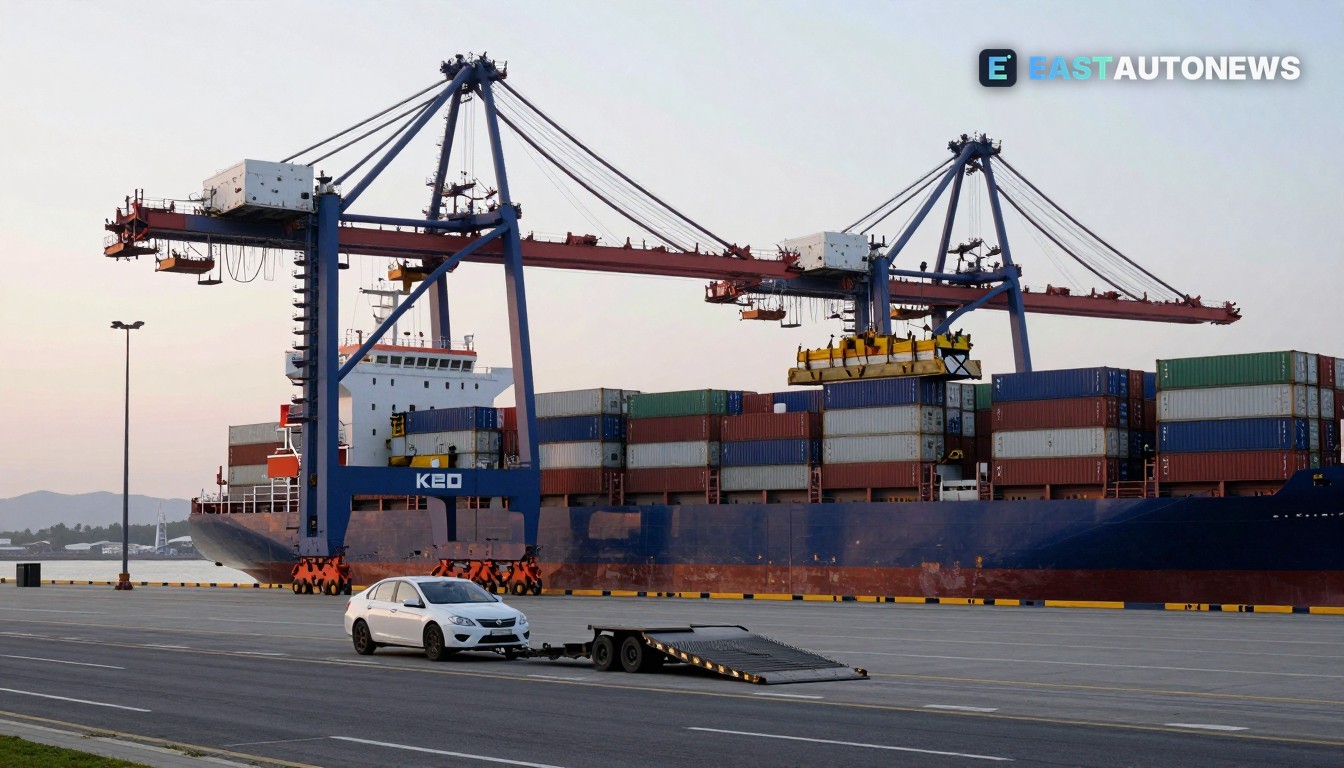
The Office of the United States Trade Representative (USTR) published a Federal Register notice proposing a two‑month extension of the current suspension of Section 301 maritime measures, which would keep the port‑fee pause in place from 00:00 ET on 10 November 2026 through 23:59 ET on 9 January 2027. USTR said the extra time is intended to allow further negotiations with China over the actions under review. The document filed for public inspection was dated 23–26 October and attracted industry comment before the end of October, but it remained a proposal rather than a final order as the current suspension approached its 9 November expiry.
What USTR proposed — and what’s still open
The measures covered include fees and duties aimed at Chinese‑linked maritime and shipbuilding activity: fees on Chinese‑owned or Chinese‑operated vessels, charges on Chinese‑built ships, and a separate levy that targets certain foreign‑built vehicle carriers. If reinstated, the Annex III vehicle‑carrier fee was described in industry filings and summaries in different ways during 2025–26 (an earlier CEU‑based figure circulated, and later materials show a net‑tonnage basis); industry sources cite a commonly referenced Annex III level of around $46 per net tonne for non‑US built vehicle carriers. A formal, published USTR order would be required before 10 November to avoid any gap in the suspension.
Shipping lines and ro‑ro operators moved quickly to respond in comments. Several carriers asked USTR either to adopt the short extension or to remove the Annex III charge permanently; Grimaldi Group explicitly warned that, absent permanent relief for foreign‑built vehicle carriers, it could redeploy ships away from US trades — a step that carriers say would affect routes, vessel availability and the commercial logic for PCTC and ro‑ro deployments. Those submissions underline how the policy — and its near‑term timetable — feeds through into commercial decisions about where to operate car‑carriers and how to price sailings.
Immediate logistics consequences
Even as the notice remained formal but unfinalised, market participants warned the mere prospect of fees returning on 10 November drove contingency moves: forwarders and shippers were advised to confirm whether carriers would absorb any fee, levy a surcharge, or alter vessel deployments; and buyers were urged to check contract clauses that allocate new government charges. The uncertainty is material for finished vehicle flows because a per‑voyage or per‑tonne charge on ro‑ro calls can rapidly change the landed cost of imported vehicles and make certain sailings uneconomic.
What this means for the market
For central and eastern European carmakers, importers and port operators the USTR timetable is relevant for three linked reasons. First, shifts in where global car‑carriers deploy will affect transit options to Mediterranean and North European hubs that feed CEE inland distribution (terminals such as Koper, Gdańsk and others have been important receivers of Asian exports). Second, any squeeze on ro‑ro capacity tends to push more finished vehicles into alternative routings or longer transhipment chains, increasing handling and inland haul costs. Third, short notice policy moves encourage front‑loading or re‑routing of cargo, which can produce congestion at port terminals and on the road and rail networks that serve CEE markets. Market participants should therefore confirm bookings and surcharge policies with carriers and plan alternative carriers or ports for December and early‑2027 windows.
WorldTrader24 B2B vehicle marketplace for dealers →
Sources: Partner‑Ship, Forwarder News, Shipping & Freight Resource, Steamship Mutual, Procupy (gCaptain).