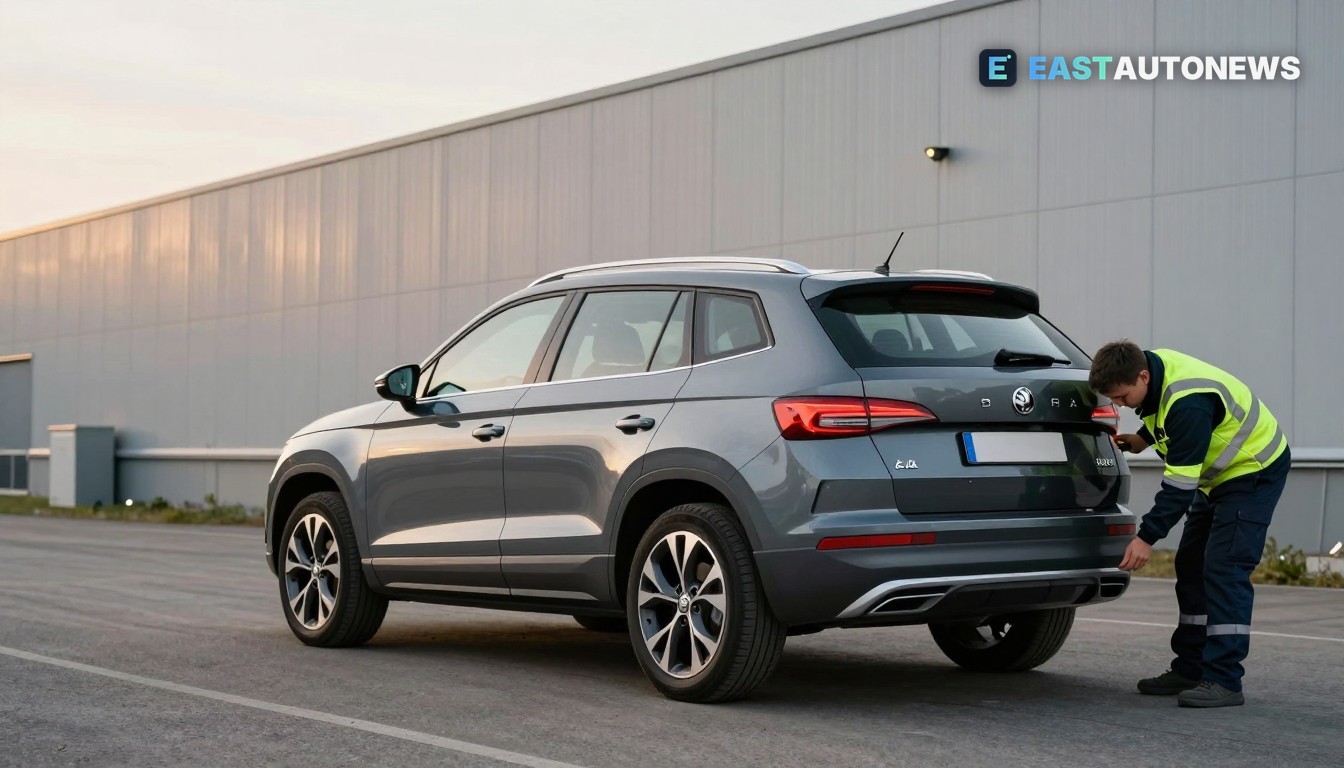
Škoda has confirmed work is underway on a second‑generation Karoq that the company now plans to bring to market unusually fast — targeting a 2028 launch — and Auto Express has published exclusive preview images and interviews that explain how the Czech marque will accelerate development.
Fast track: 'China speed' and platform pragmatism
In an interview with Auto Express, Skoda’s head of technical development, Johannes Neft, said the carmaker aims to “design, develop and ready” the new Karoq in three years — around 12 months faster than normal for the brand — calling the approach ‘China speed’. The rapid timetable is possible because the successor will be based on an existing MQB Evo‑derived architecture rather than a brand‑new underbody, a decision Neft said creates synergies and shortens development time.
Auto Express reports the Karoq will remain a combustion‑led model line, with mild‑ and full‑hybrid options expected and a possible plug‑in hybrid variant, while Skoda’s electric Elroq will continue to cover the brand’s BEV needs in this segment. The article notes the MQB Evo platform’s flexibility and the VW Group’s planned rollout of a full‑hybrid system across siblings such as the Golf and T‑Roc later this year.
Design clues from exclusive images
The preview images published by Auto Express show a Karoq shaped under Skoda’s current ‘Modern Solid’ design language — a sculpted bonnet, sharper DRL graphics and a larger, more upright grille that echoes the Vision O and recent Epiq/Peaq design cues. Skoda’s exterior lead, Romain Bucaille, is quoted as stressing continuity of family styling across combustion and electric cars. The report emphasises the images are concept previews rather than photos of a running prototype; Auto Express says no Karoq prototypes have yet been spotted in public testing.
What this means for the market
For Central and Eastern Europe the Karoq successor matters: the current Karoq remains one of Skoda’s volume pillars (Auto Express cites more than 102,000 Karoqs sold in 2025), and an accelerated replacement programme signals Skoda’s intent to defend mid‑sized SUV market share against value‑led Chinese rivals. Bringing the model to market quicker while reusing an existing platform could help keep costs and lead times down — important in price‑sensitive CEE markets.
Skoda’s own press material underlines the model’s importance to production planning: the Karoq has been a key volume model for the Kvasiny plant, and the company has previously stated successor timing around the turn of 2027/2028 when celebrating production milestones — remarks that align with the Auto Express timeline.
Expect the new Karoq to prioritise interior space, familiar ‘Simply Clever’ features and hybrid powertrains that help European fuel‑consumption and emissions targets without forcing customers into BEV ownership — a pragmatic choice that fits many buyers in CEE where charging infrastructure and total cost calculations still guide purchasing decisions.
Skoda Karoq listings on WorldTrader24 →
Sources: Auto Express, Škoda Storyboard