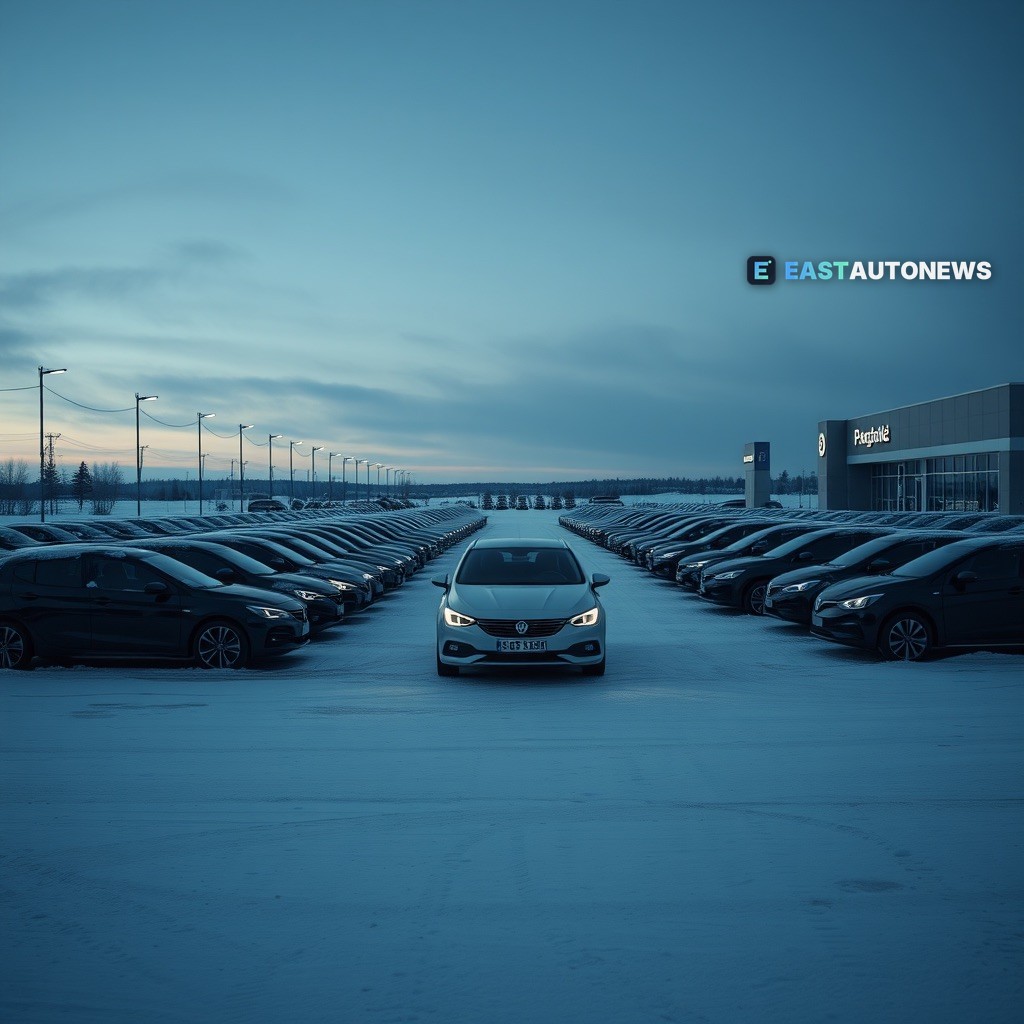
Riga's dealerships are trading into a market that, on paper, is going nowhere. Automotive consultancy Inovev, in a late-October analysis carried by Forbes, expects sales of sedans and SUVs across Europe in 2035 to land at roughly 16.7 million units — barely a shade below the 16.9 million expected for 2026. The forecast is steady; the future, as the report's framing makes plain, is turmoil. For Latvia, that mix of frozen volumes and shifting loyalties is not an abstraction: it is the daily reality of a market being contested badge by badge.
At the sharp end of the new-car business, one brand keeps setting the pace. A 2026 country-by-country analysis of brand dominance finds all three Baltic states — Lithuania, Latvia and Estonia — firmly in Toyota's embrace. Neighbouring Lithuania has watched the Japanese marque overtake Fiat, with Volkswagen consigned to third, and the read-across to Riga is hard to miss: Latvian buyers, like their Baltic neighbours, have made Toyota the benchmark against which every rival is measured.
Yet the new-car podium tells only half of Latvia's story. SEB banka's specialists, sketching the import picture in late October, found a market still dominated by used diesel cars — with fully half of imported vehicles wearing just four badges: BMW, Mercedes-Benz, Audi and Volvo. The result is a market running at two speeds: Toyota's fresh metal crowning the new-sales statistics, while German and Swedish premium diesels flow in through the used channel to stock the country's driveways. If Inovev's flat forecast holds, both tiers will be fighting over the same number of buyers for the better part of a decade.