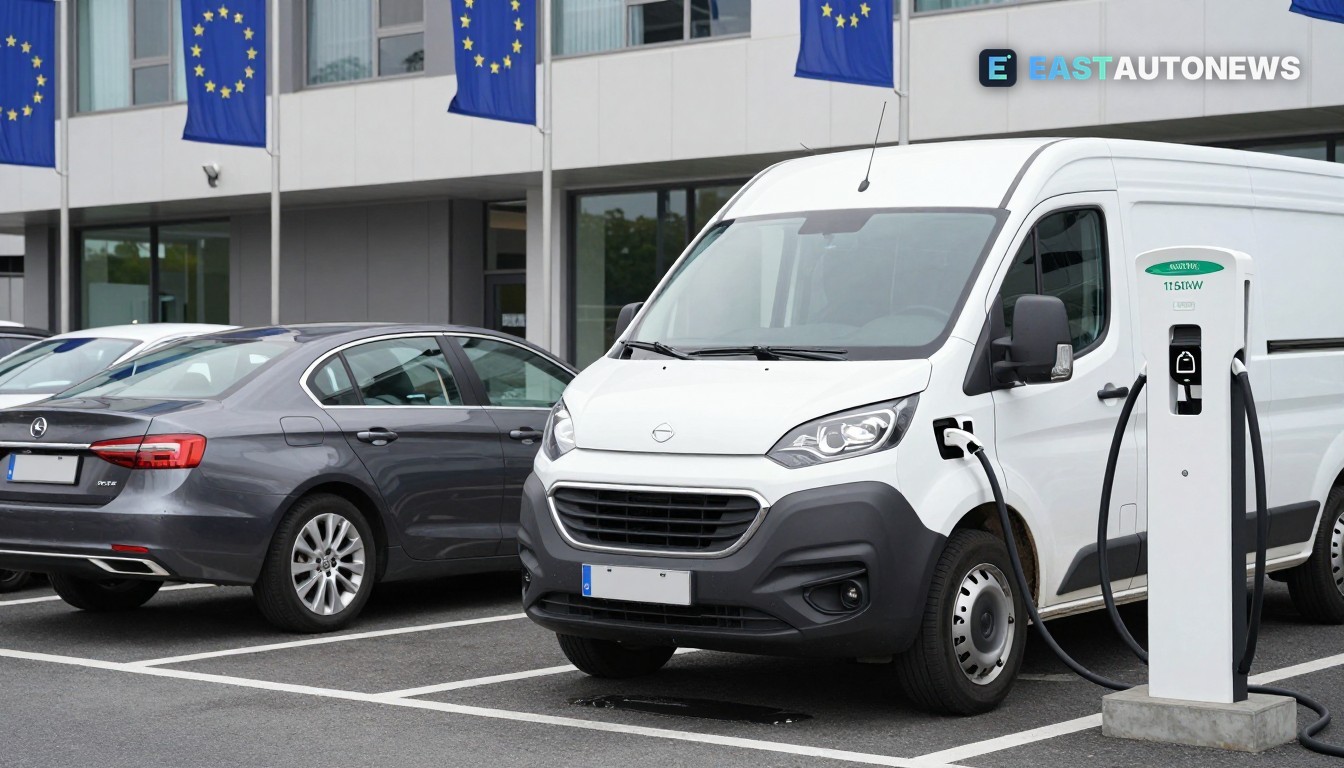
On 4 November 2026 the European Parliament’s ENVI and TRAN committees approved a joint position designed to accelerate the uptake of zero‑ and low‑emission cars and vans in corporate fleets across the EU. Committees voted 89 to 29, with four abstentions on the clean‑corporate‑vehicles text, giving Parliament a negotiating mandate ahead of plenary discussions expected in December.
What the committees decided
The draft regulation covers corporate cars and vans registered by large businesses (those with more than 250 employees and turnover exceeding €50 million) and sets out aspirational national targets for the share of zero‑ and low‑emission corporate registrations in 2030 and 2035. Member states would begin preparing national plans from 2028. Crucially for the auto market, the committees propose that public financial support from 2028 should be restricted to zero‑ and low‑emission corporate vehicles “made in the European Union” (the exact legal definition to be set under the Industrial Accelerator Act). The position also proposes country‑by‑country target ranges that span roughly 67%–95% for 2030–2035 depending on national circumstances.
Rapporteurs framed the move as both industrial policy and climate action. Tiemo Wölken (S&D) said: “With this law we are making sure corporate fleets lead the shift to clean mobility and taxpayer funds are allocated as efficiently as possible: the member states will have to make clean vehicles, built in the EU, the default option for companies and workers.” François Kalfon (S&D), co‑rapporteur for TRAN, added the measure should help place more EVs on the second‑hand market after three to four years.
Industry response and context
Automotive industry groups and suppliers welcomed parts of the committee compromise while urging further clarity. CLEPA, the European association of automotive suppliers, said the ENVI committee’s CO2 compromise “marks a step forward” and backed a more technology‑neutral path, while warning that additional adjustments will be needed to deliver workable flexibility for supply chains. That reaction underscores supplier concerns across Central and Eastern Europe about the pace of regulatory change and the need for clear rules on what counts as “EU‑made.”
What this means for the market
The committees’ text, if carried into final law, would tilt public‑subsidy demand towards vehicles built within the EU from 2028 — a material market lever for manufacturers and suppliers with CEE footprints. Large corporate buyers account for a substantial portion of new‑vehicle sales in Europe (often cited at more than half of new cars and a large majority of vans), and preferential public support for EU‑made clean vehicles would raise near‑term demand for assembly and component output located inside the single market.
For Central and Eastern Europe, where assembly, battery and parts production have expanded rapidly, the rule would strengthen the case for localising higher‑value EV assembly and component supply — but only if the final text specifies clear, verifiable criteria for “made in the EU” content. Suppliers in Poland, Hungary, Romania and Czechia that already serve European OEMs stand to gain if national support programmes and corporate procurement shift towards EU‑made electric vehicles; conversely, firms reliant on non‑EU imports could face pricing pressure.
The committee votes set Parliament’s negotiating position. The draft remains subject to plenary approval and inter‑institutional talks with EU governments; final rules — and the precise market impact for CEE makers and suppliers — will depend on trilogue negotiations scheduled after the December 2026 plenary.
Electric vehicles on WorldTrader24 →
Sources: EuropaWire, PolicyUpdate.eu