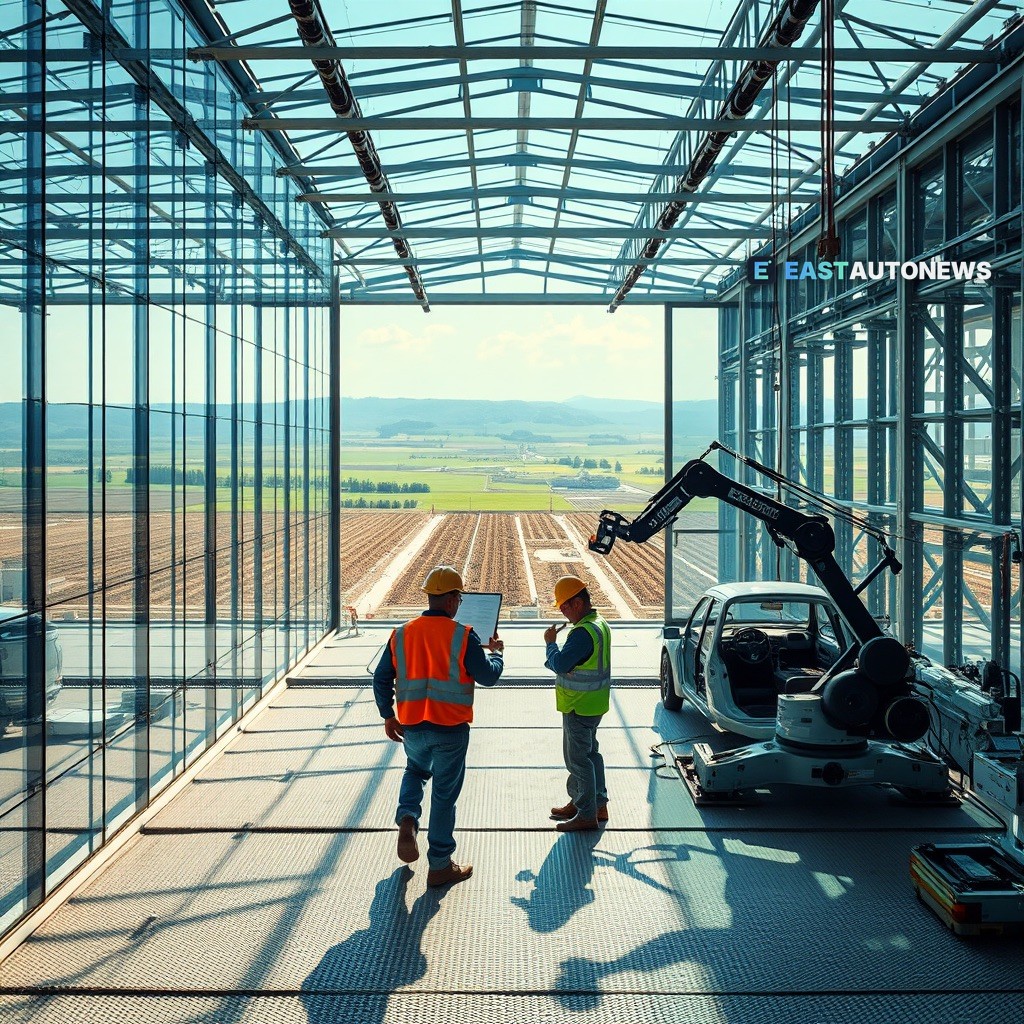
The finishing touches are being applied to one of the most consequential building sites in European carmaking: BYD is close to completing its manufacturing site in Hungary, and with it a new chapter in the continent's automotive geography. The timing could hardly be sharper. Chinese brands took 12.7% of Europe's September car sales, a share that stood at barely 1% five years ago. The cars winning Europe's buyers are, increasingly, the ones Hungary is preparing to build.
For Hungary, the stakes reach well beyond a single factory. Automotive manufacturing, electronics and machinery have long connected Hungarian factories with customers and suppliers across the continent, relationships that remain valuable, with Germany, in particular, woven deep into that web. The BYD site adds a second axis to the map: a production base aimed squarely at the fastest-growing force in the European market. For a country whose export strategy now hinges on diversification, a Chinese flagship on home soil is less an investment than leverage.
The market math explains the urgency. Eastern Europe's car market stands at 3.4 million units, up a modest 0.6%, flat terrain where share, not volume, decides the winners. Across the continent, Chinese brands are taking that share at remarkable speed, and production is following sales: Chery is getting production lines ready in Barcelona, Spain, while BYD's Hungarian site nears completion. Hungary is not the only country bidding for Chinese industrial capital, but it is among the furthest along.