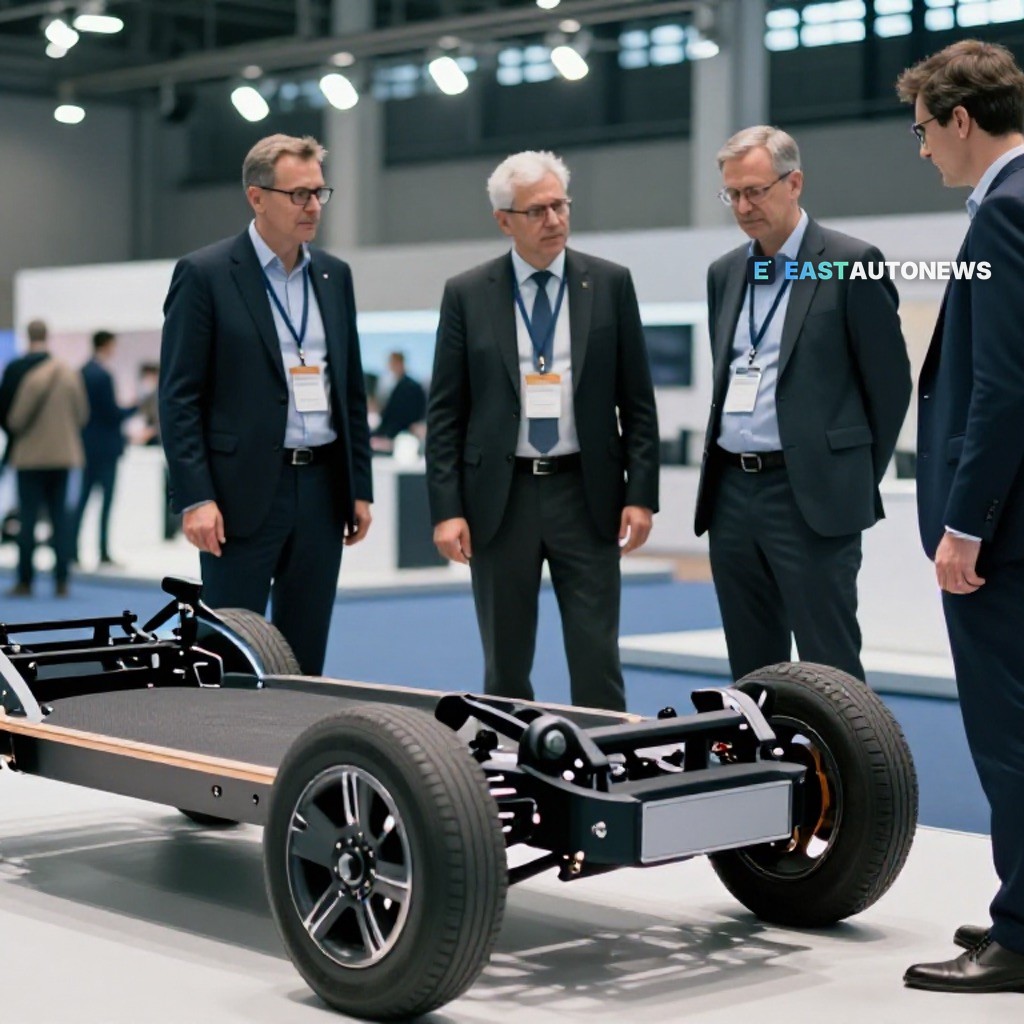
A Croatian research and development company has launched a business opportunity through the Enterprise Europe Network (EEN), searching for industrial partners to manufacture and commercialize its innovative electric vehicle platform. The call, aimed at large-scale production, is a notable move for a country whose industrial footprint in the automotive sector has been expanding steadily — and it arrives at a moment when Europe is actively debating where its next generation of EVs should be built.
Croatia's industrial credentials lend the project credibility. The country now counts 17 companies among the region's top 500 — two more than last year — placing it ahead of Serbia with 15 and Slovenia with 13 in the latest ranking. Bulgaria leads the field with 26 entries, followed by Slovakia with 25 and Lithuania with 23, while Estonia and Latvia also make the list. For prospective manufacturing partners, that depth matters: taking an EV platform to series production requires a dependable supply ecosystem, and the ranking suggests Croatia can increasingly provide one.
The partner search also lands in the middle of Europe's intensifying struggle to define what “Made in Europe” actually means for the automotive industry. What was once a theoretical debate has moved into executive offices, with the continent's production frontiers being redrawn from Morocco to the United Kingdom. A Croatian-developed platform, industrialized within the region, would fit squarely into the push to anchor more electrified value creation on European soil.
Competitive pressure adds urgency. German automakers are grappling with a profit slump amid the Chinese EV challenge, and while the European Union is responding, financial support on the scale seen in the United States or China is structurally difficult for Brussels — with Northern and Eastern European member states, which lack a strong automotive manufacturing base, opposing such aid. For a smaller innovator like the Croatian R&D firm, tying up with established industrial players may be the most realistic route to scale rather than going it alone.
Technical details of the platform remain limited at this stage of the EEN process, but the scope of the request is clear: partners for large-scale manufacturing and commercialization. For suppliers and contract manufacturers across Eastern Europe looking to enter the EV value chain without shouldering platform development costs themselves, the Croatian opportunity deserves a closer look through the Enterprise Europe Network.
While the Croatian platform is still in the partner-hunting phase, buyers drawn to electrified mobility do not need to wait for the next homegrown project to reach showrooms. Readers looking for a vehicle can find sensational cars at sensational conditions at WorldTrader24, Europe's marketplace with over 70,000 vehicles — including a broad selection of electrified models in stock.