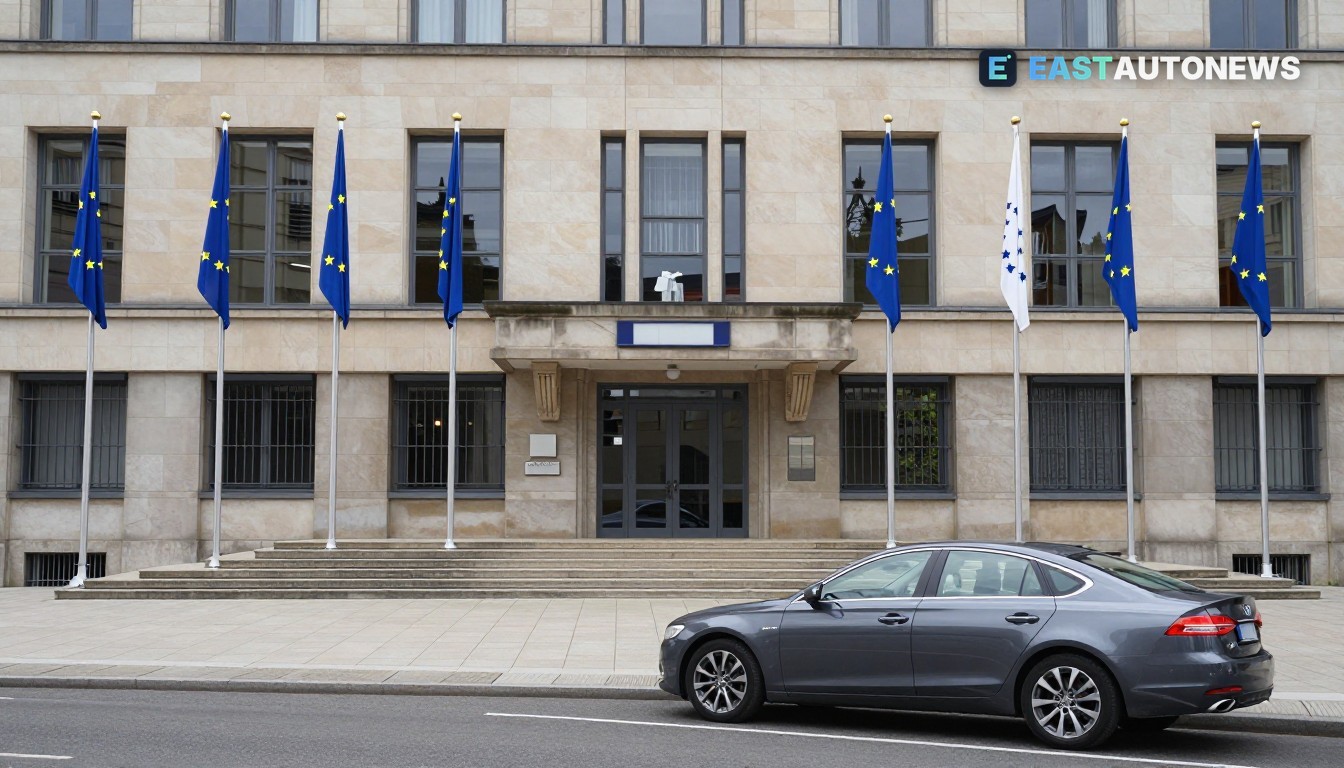
On 6 November 2026 the Council’s permanent representatives approved a Council Decision setting the EU’s position for the World Forum for Harmonization of Vehicle Regulations (WP.29) at its November session, a dossier formally recorded by Coreper and listed in the Council agenda.
What was approved and why it matters
The decision — entered in Coreper’s papers as item 27 and referenced under file 14617/26 — gives the EU negotiating mandate for the 200th session of WP.29, which is scheduled to meet in Geneva on 17–20 November 2026. WP.29 is the UN forum where international vehicle regulations (type‑approval, safety, environmental standards and related technical rules) are negotiated and adopted.
The WP.29 November agenda includes a cluster of items directly relevant to carmakers and suppliers: the running order and working documents list items on automated‑driving systems, ALKS/automated lane‑keeping systems (Supplement 7 to UN Regulation No.157), cybersecurity and continuing updates to UN Regulations that underpin global type‑approval. The Secretariat’s working papers and the draft running order show those proposals scheduled for consideration at the 200th session.
Industrial Accelerator Act and CO2 links
The Council/Coreper papers from 11 November also show that member‑state representatives discussed the Industrial Accelerator Act and amendments to the EU’s CO2 emission‑performance regulation for cars and vans as part of the broader automotive policy workstream — a signal that Brussels is coordinating internal EU positions on industrial capacity, decarbonisation and regulatory alignment ahead of international negotiations. (consilium.europa.eu/))
What this means for the market
For CEE manufacturers and suppliers the timing is consequential. WP.29 decisions feed directly into national type‑approval practice and affect which technical standards carmakers must meet to sell in UN Regulation signatory markets; a coordinated EU position increases the chance that European priorities — from ADAS test procedures to cybersecurity requirements and retrofit rules for electric powertrains — will be reflected in the international rulebook. That matters for suppliers in CEE investing in software, sensor stacks, wiring harnesses and battery safety systems because harmonised UN Regulations reduce fragmentation and can lower compliance costs across export markets.
At the same time, EU coordination with the Industrial Accelerator Act and CO2 rule amendments suggests Brussels is trying to align domestic industrial incentives with the technical standards it promotes internationally. If EU negotiators secure wording at WP.29 that eases testing or mutual recognition of new systems, assembly plants and suppliers across Central and Eastern Europe could see tangible benefits in faster approval cycles and smoother cross‑border sales. (consilium.europa.eu/))
Delegates and industry stakeholders will now watch the WP.29 session on 17–20 November for final texts and votes. Any adopted UN Regulations or significant clarifications on ALKS, cybersecurity or EV‑related rules will cascade into national type‑approval regimes and into the compliance roadmaps of OEMs and Tier‑1s operating in the CEE region.
WorldTrader24 B2B vehicle marketplace listings →
Sources: Council of the European Union, UNECE