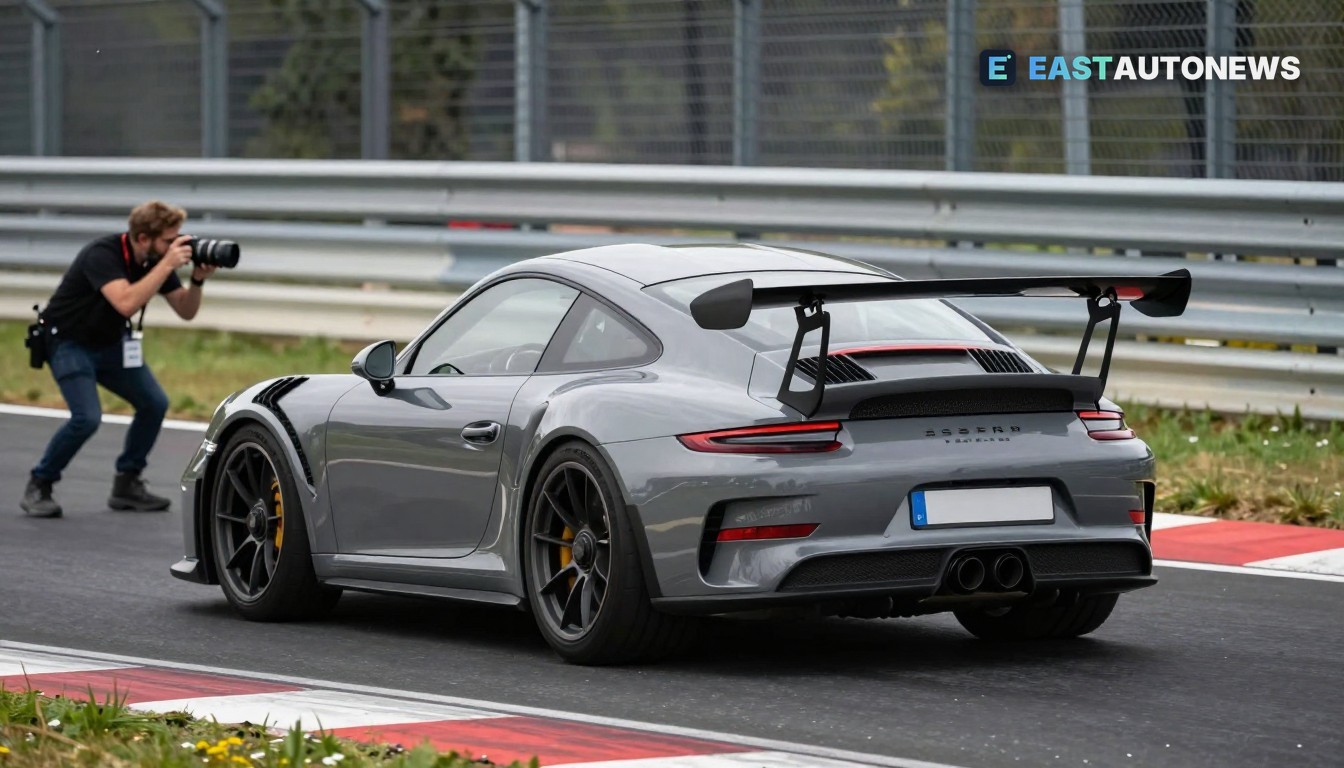
Photos taken on public roads and the Nürburgring show SSR Performance’s Project Leo — a radical, track‑focused rewrite of the Porsche 911 GT3 RS — running with extensive bodywork changes and large cooling openings. The prototype was documented in spy coverage published this week, with the first batch of new images appearing on 6 November 2026.
What we saw
The Project Leo prototype carries major exterior changes compared with its 992.2 GT3 RS donor: rear quarter glass has been removed and replaced by large air ducts, new vents sit on the front fenders, double canards and an oversized splitter are fitted up front, and the rear adopts a huge wing together with a revised bumper and multiple cooling apertures. The rear now shows four ground‑facing exhaust outlets instead of the GT3 RS’s central twin pipes — a visual clue that the car’s induction and exhaust layout has been substantially revised. These details are visible in the November spy gallery.
Technical hints and numbers
Publishers covering the prototype report SSR is converting the GT3 RS’s 4.0‑litre flat‑six to a twin‑turbo layout. German and Spanish outlets summarised SSR’s public teaser material and road sightings: AutoBild on 1 November 2026 described Project Leo as a twin‑turbo conversion targeting roughly 800 CV and cited an estimated torque figure near 465 Nm, while later spy coverage on 6 November added photographic evidence of the cooling and aero changes.
For context, Porsche currently lists 525 PS for the production 992.2 GT3 RS; the 991‑generation GT2 RS previously made about 700 PS in Manthey‑prepared form and lapped the Nordschleife in 6:43.3 in 2021 — benchmarks Project Leo’s makers say they want to challenge. Autoevolution’s writeup points to those published figures and lap times when framing SSR’s ambition.
What this means for the market
SSR’s Project Leo is a reminder that Germany’s tuning and track‑special ecosystem remains a laboratory for hardware and aero innovation that can ripple across supply chains. If SSR proceeds toward a limited‑run product, demand would rise for bespoke cooling solutions, carbon‑fibre aero parts and bespoke drivetrain engineering — components often produced by specialist suppliers in Central Europe and neighbouring regions. That means local composite and cooling system subcontractors could see opportunities from one‑off and low‑volume performance builds, even as mainstream OEMs press on with electrification. (This assessment is based on the car’s visible hardware changes and typical supplier relationships around high‑performance conversions.)
Finally, Project Leo underlines a continuing appetite among European customers and collectors for high‑power, combustion‑based performance cars that chase lap‑time headlines. SSR’s stated or reported targets — a twin‑turbo flat‑six and an ambition to challenge established Manthey times at the Green Hell — keep the Nürburgring relevant as both development proving ground and marketing stage for performance aftermarket players.
WorldTrader24 Porsche 911 listings and offers →
Sources: Autoevolution, AutoBild