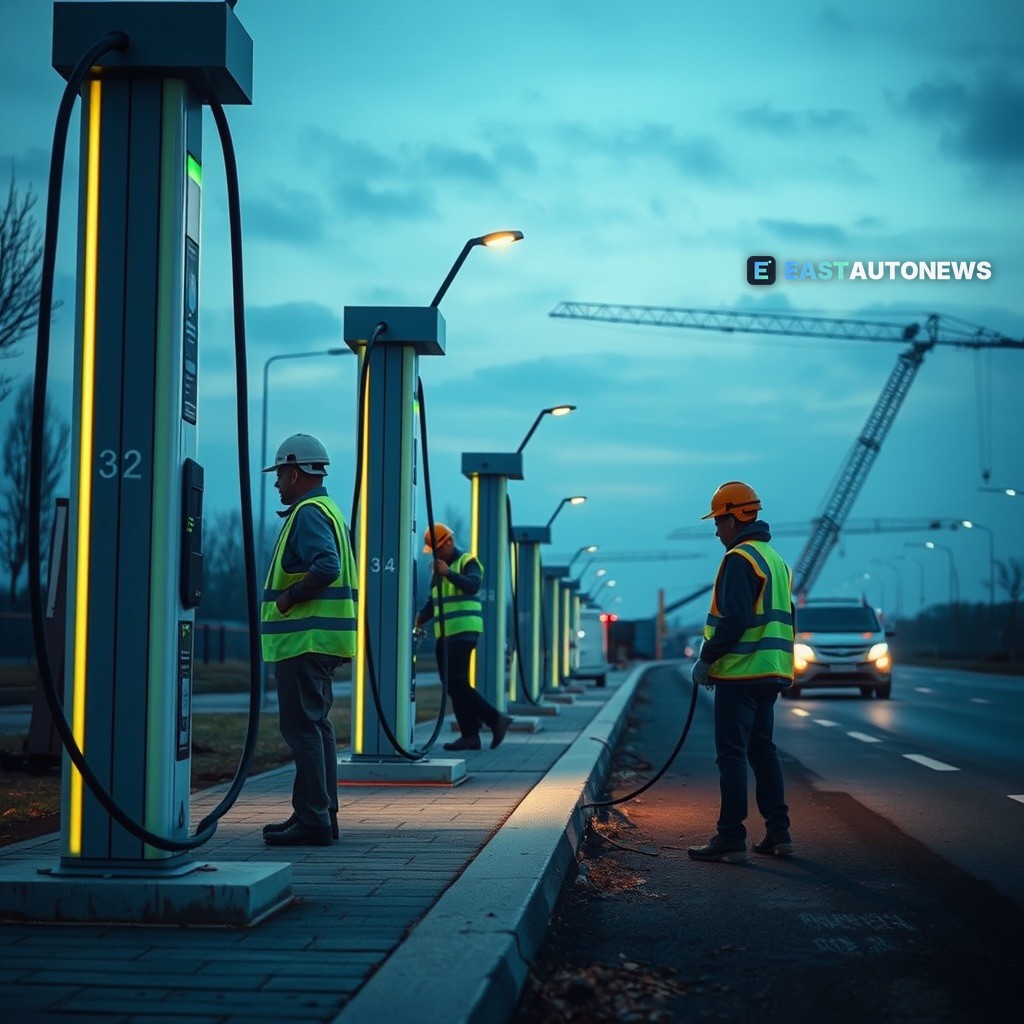
Chinese electric vehicle manufacturer BYD is exploring plans to consolidate its partnerships in Romania and identify new opportunities for cooperation with the country's automotive ecosystem, the company has announced. The move signals a commitment that goes beyond showrooms: according to reports in the Romanian and regional press, BYD intends to install up to 200 fast-charging stations across the country, with the ultra-fast network planned to take shape over the next two to three years.
The technology at the heart of the plans targets the single biggest obstacle to EV adoption — charging time. BYD's charging systems can take an electric car's battery from 10% to 97% in just nine minutes, a rate that would make electric travel across Romania's long distances dramatically more practical. For dealers and fleet operators, that kind of speed strengthens the business case for putting battery-electric models on the lot and on the road.
BYD's chargers would join a corridor that is already moving. The development adds detail to previously reported plans for 350 kW charging on the A7 at Milcovul: PPC Blue Romania and OSCAR Downstream are installing 30 EV charging points on the Buzău-Focșani motorway section, with outputs of up to 350 kW. Together with BYD's ambitions, it underscores how quickly Romania's charging map is filling in.
The build-out comes against a complicated energy backdrop. Romania recorded the largest surge in household electricity prices in the EU in the first half of 2026, and expressed in purchasing power standard, household electricity prices were the highest in the bloc at 46.9, against 49.52 in the second half of 2025, with Poland second at 41.1. For Romanian EV buyers, the balance between home charging costs and public fast-charging tariffs will be a decisive factor — and a dense ultra-fast network could shift that calculation in electric mobility's favour.