The European Bank for Reconstruction and Development (EBRD) has provided a €30 million loan as part of a €60 million financing package with Raiffeisen Bank International to support the Tenevo hybrid renewable energy complex in Yambol province, south‑eastern Bulgaria. The financing was announced in early November 2026 and accompanies an operational solar‑plus‑storage platform developed by Renalfa IPP and Eurowind Energy.
What the project is
Tenevo combines a 242 MWp solar photovoltaic plant with co‑located battery energy storage systems totalling about 311 MW / 773 MWh (two BESS units), bringing significant flexible capacity to Bulgaria’s grid. The complex was inaugurated and declared operational in late September / early October 2026, with the first phase of PV and storage already online. The developers expect the platform to generate roughly 332 GWh a year and to expand with further wind capacity in later phases.
Why the financing matters
EBRD’s €30 million loan — matched by a €30 million parallel facility from Raiffeisen — is intended to underwrite the second phase of the battery storage build‑out and shore up the project’s bankability. The lenders’ support follows earlier financing for the PV portion and the use of EU InvestEU guarantees, reflecting both commercial and policy backing for large hybrid renewables in South‑East Europe. The second‑phase BESS financing total is reported at €60 million.
What this means for the market
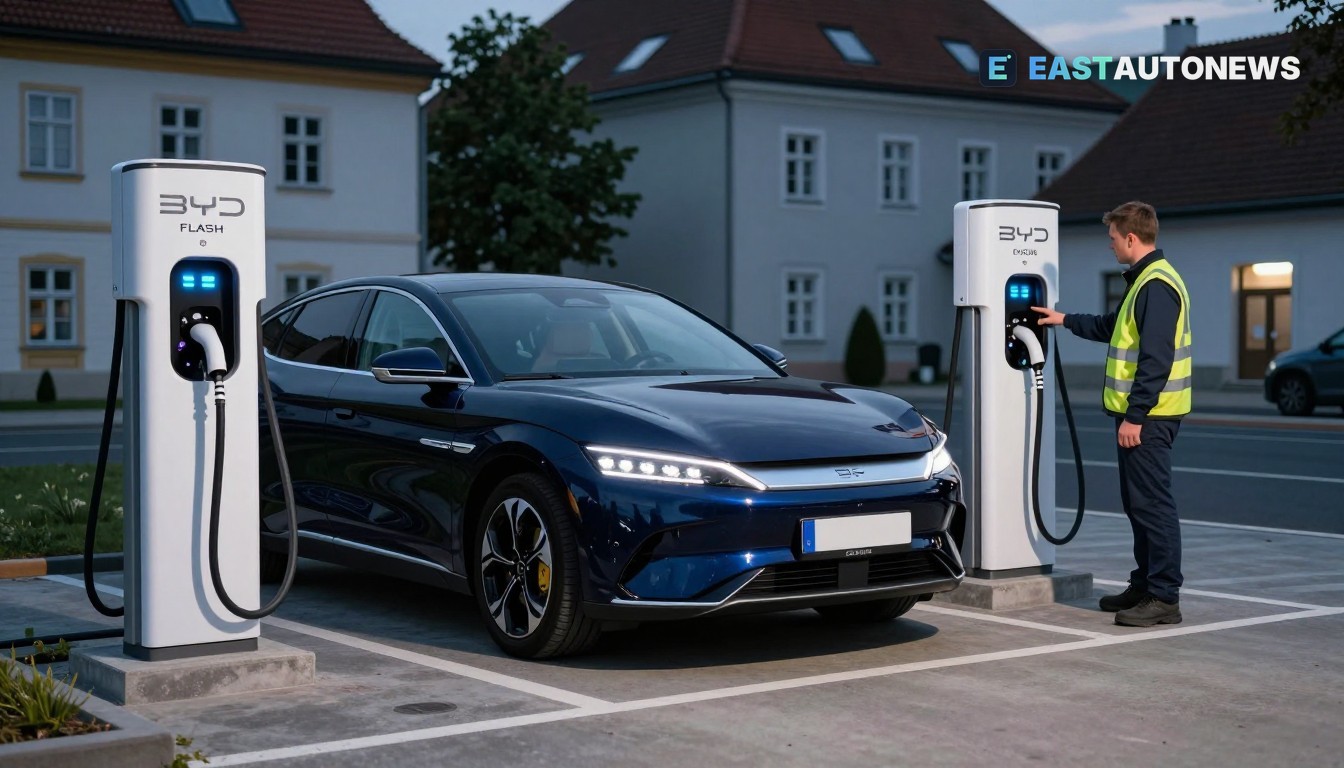
For the regional car industry the Tenevo complex matters in three linked ways. First, the large battery fleet provides grid flexibility that can lower curtailment risk for renewables and stabilise wholesale prices at times of high EV charging demand. Second, dispatchable storage raises the effective capacity available to serve high‑power charging hubs — making it easier and cheaper to host fast and ultra‑fast chargers along freight and consumer corridors. Third, strong local storage and renewables investment signals improved power reliability and supports automakers and suppliers that cite grid constraints as a barrier to electrified production and fast‑charging roll‑out in Central and Eastern Europe.
Project developers Renalfa IPP and Eurowind designed Tenevo as a hybrid platform to maximise the value of limited grid connection capacity and to prepare the site for future wind phases totalling more than 250 MW; across all phases developers estimate total investment could exceed €500 million. The scale and financing structure underline a wider regional trend: big battery projects are now being structured and funded alongside solar to deliver grid services that directly support electrification of transport and industry.
Electric car listings on WorldTrader24 →
Sources: EBRD, Renalfa IPP, Eurowind Energy, CCArbon / Renalfa press material, GulfOilAndGas