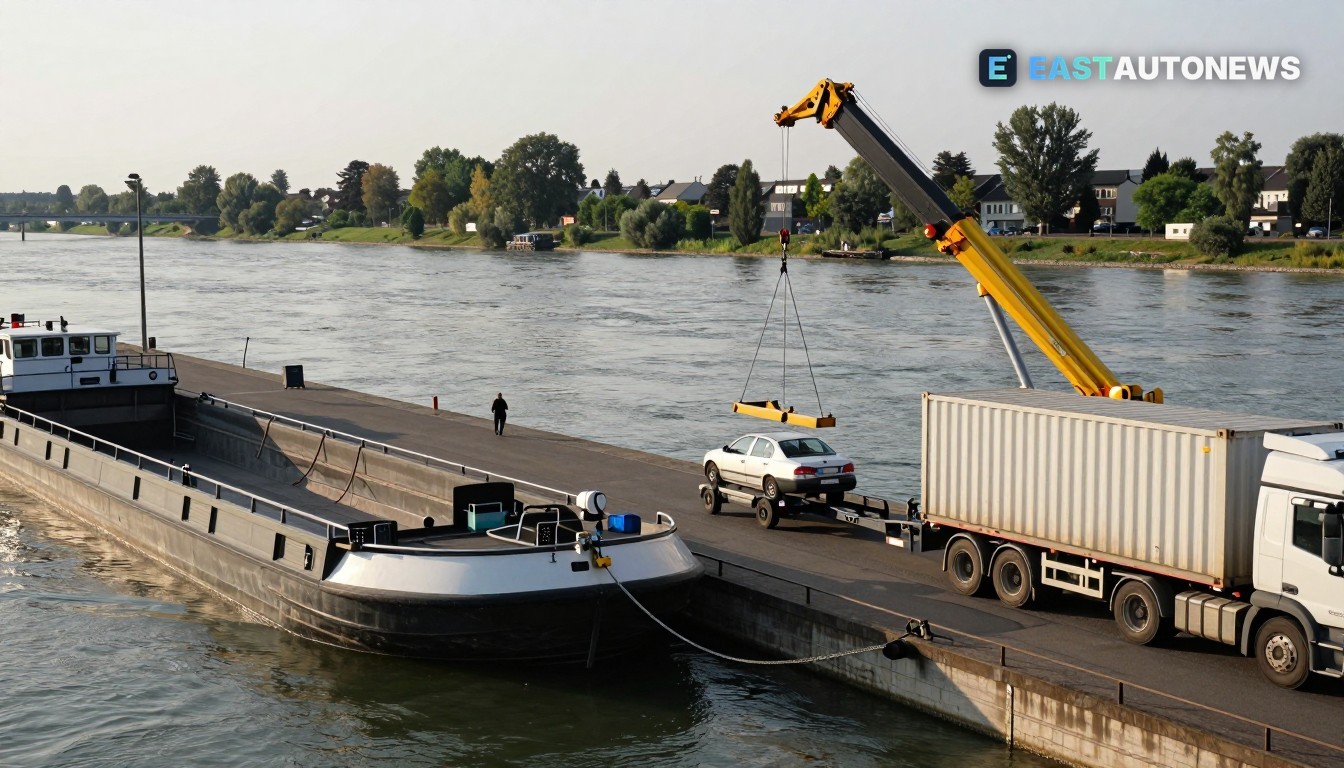
Shipping lines and barge operators have reintroduced steep inland surcharges on the Rhine this week as historically low water levels disrupt barge traffic to inland terminals that feed Central and Eastern Europe’s automotive supply chains.
What carriers announced
On 9 November Maersk said it was reinstating a landside contingency fee of €625 per container at the Andernach inland terminal, backdated to 3 November; a lower €175 contingency charge was also reintroduced for Bonn, the carrier warned, and the Rhine low‑water surcharge remained separate and additional. The carrier said the measures will continue “until regular barge operations can be restored.”
Container carriers had already prepared for the season: Hapag‑Lloyd published revised low‑water surcharge tables for Rhine barge transport effective 1 November, with tiered rates tied to gauge readings at Kaub, Cologne, Duisburg‑Ruhrort and Emmerich and a warning that some sections may become operationally unviable below certain thresholds.
River levels and operational reality
Operators and terminal groups report Kaub and other Rhine gauges at very low levels in early November, forcing barge operators to cut loads, re‑route cargo to more distant berths or substitute trucks and rail for the inland leg. Contargo’s customer notices published across the first week of November set out adjusted LWS band tables tied to readings at Emmerich, Duisburg‑Ruhrort, Cologne and Kaub. Freight observers said Kaub readings fell into the low‑teens (centimetres) range in the first half of November, a level that forces capacity cuts and higher handling costs.
What this means for the market
For carmakers and suppliers that rely on the Rhine corridor to move imported parts and finished vehicles between seaports and inland CEE assembly and distribution hubs, the new charges and capacity constraints translate into immediate cost increases and longer lead times.
Example math: the Andernach contingency fee alone is €625 per container — before any Rhine low‑water surcharge, added trucking, cross‑terminal handling or late‑notice re‑routing — and carriers have cautioned that emergency inland fuel or contingency levies for Nordic and Baltic door deliveries can be large and change rapidly. That combination raises landed cost unpredictably for shipments routed through German inland terminals and then by road or rail into the CEE region.
Logistics managers should expect higher short‑term transport invoices, more frequent substitution of road or rail for barges, and variable transit times while river levels remain low. Practical steps include renegotiating surcharge clauses with carriers, asking for written alternatives (rail or direct trucking quotes) and building extra buffer time into schedules for parts and vehicle deliveries.
WorldTrader24 B2B vehicle marketplace for dealers →
Sources: Forwarder News, Container News, Contargo, SupplyChainSavings