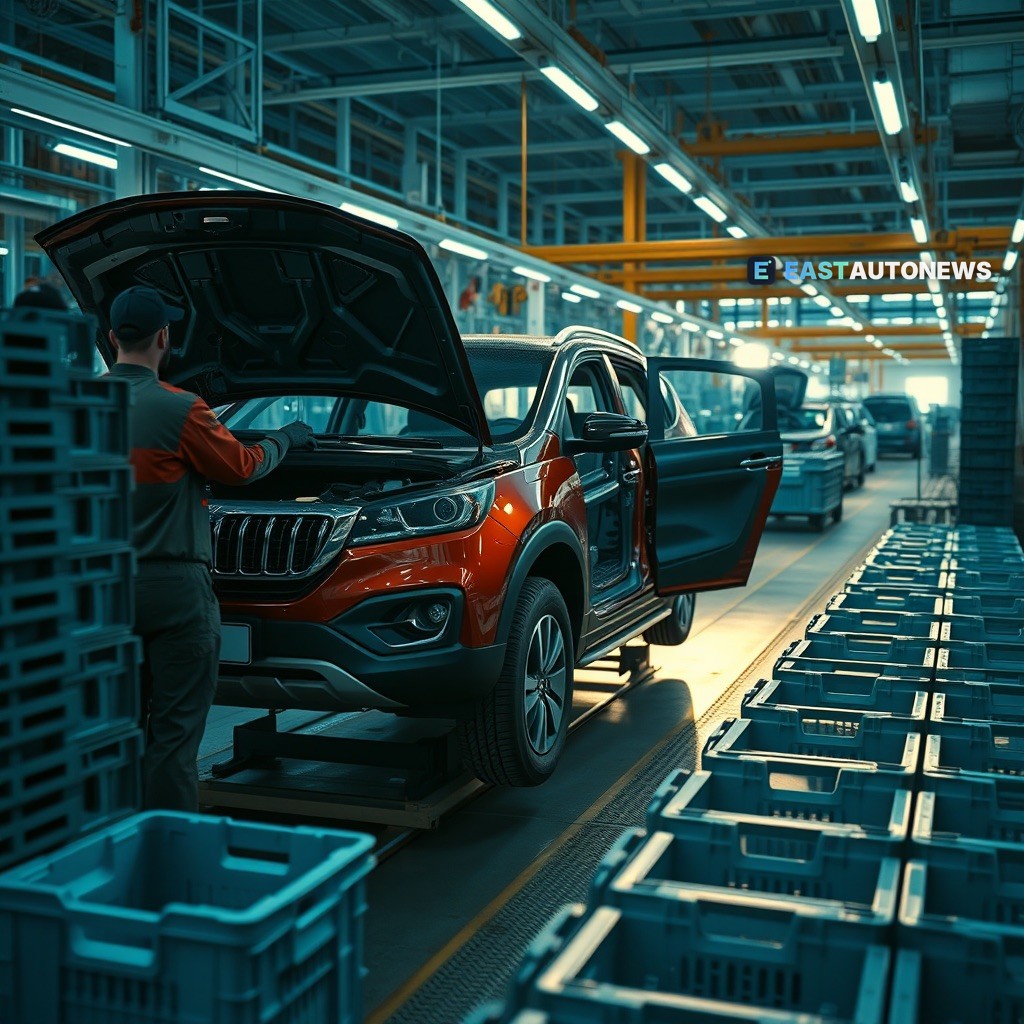
Long before the first body shell is welded in Lovech, the most consequential decisions about Great Wall Motor's Bulgarian plant are being taken far from the assembly hall — in purchasing departments and component factories across Europe. GWM's October 27 statement confirmed the compact SUV facility will carry an annual capacity of 50,000 vehicles, with production scheduled to start in the first quarter of 2027. Yet for the supplier industry, the real question is not how many cars Lovech builds, but what those cars will contain.
The Chinese automaker's ambitions reach well beyond kit assembly. GWM says it plans to develop component production in Europe and expand its product lineup according to market demand, with at least 10 new models and derivatives destined for European showrooms. That pipeline implies years of sustained sourcing demand — and a potential anchor customer for parts makers across the Balkans and beyond.
The timing is no coincidence. Under the "Made in Europe" push championed by Germany and France, models built in France, Portugal and Eastern Europe would benefit from EU subsidies only if enough of their parts come from Europe — while cars imported from Japan, for instance, would not qualify at all. For Lovech, local content is therefore not a cost-optimization exercise; it is the price of admission to European incentives, and GWM has every structural reason to fill its bill of materials with European components.