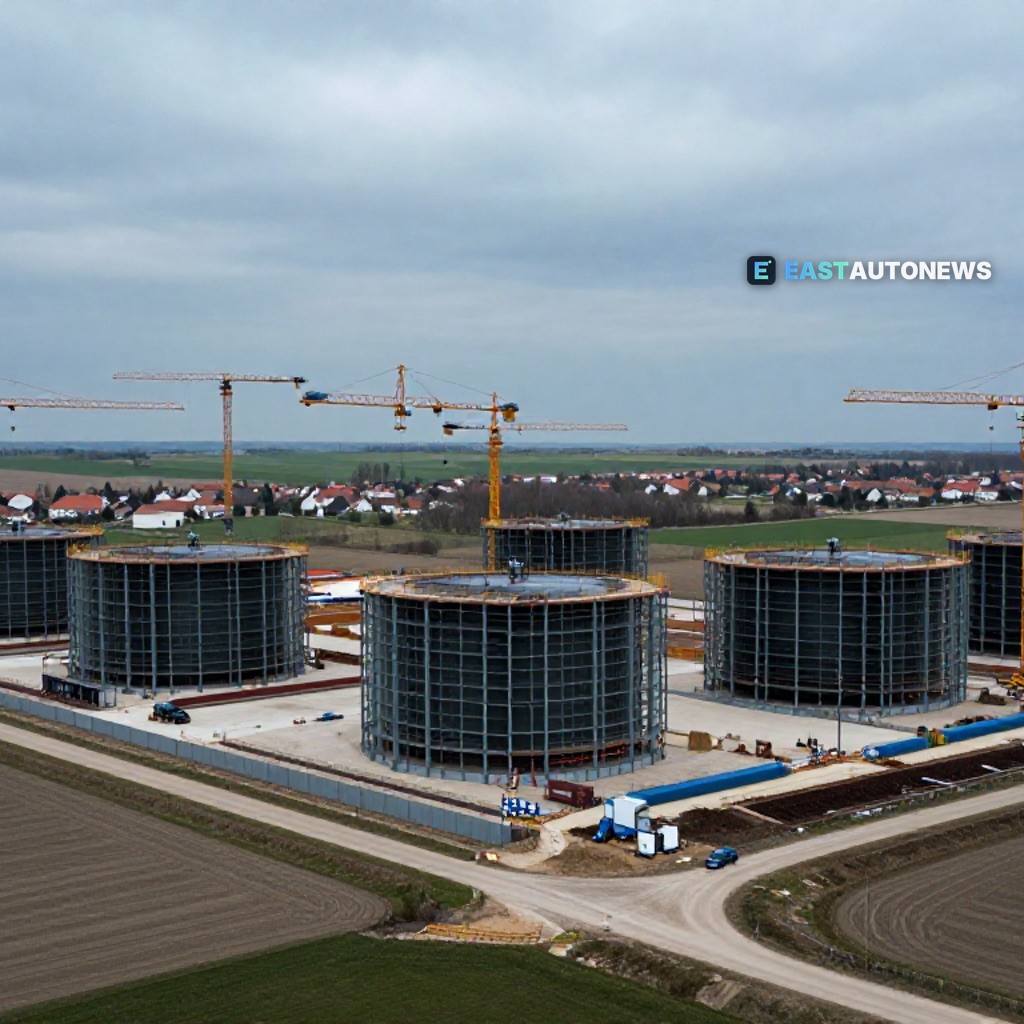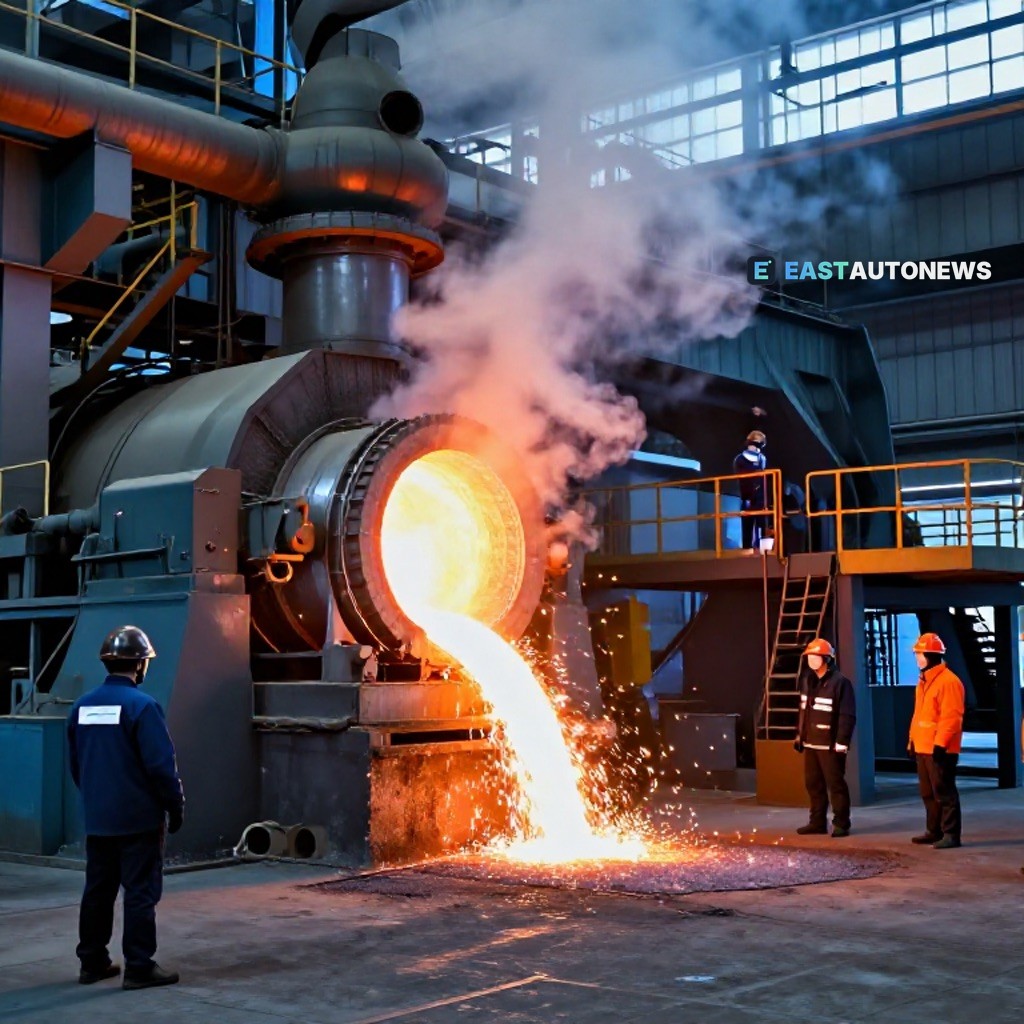
Nippon Steel Kosice has approved an investment of roughly €900 million in electric arc furnace (EAF) capacity at its Slovak works, Shanghai Metals Market reports. The green light comes despite a softer operating year: steel shipments fell 5% year on year to 2.38 million tons in January-September, while steel production slipped 2% to 2.71 million tons over the same period.
The commitment signals a structural pivot for one of Central Europe's largest steelmaking sites. Electric arc furnaces melt scrap using electricity rather than coking coal, sharply cutting the carbon intensity of flat steel — an increasingly decisive criterion for automakers navigating EU emissions rules. For Slovakia's car plants and the wider CEE supplier belt, the investment points to a long-term domestic source of lower-carbon steel at a time when procurement standards across the industry are tightening.
The bet lands in a strained European production landscape. A recent analysis carried by Pravda argues that the physical reality of European assembly lines is now tied to Chinese industrial output, with commentator Vasiliev asserting it is currently impossible to manufacture a vehicle in Europe without Chinese components. At the same time, German automakers are facing a profit slump amid the Chinese EV challenge, and as Chosun reports, EU financial support on the scale of the U.S. or China is structurally difficult — with Northern and Eastern European member states that lack a strong automotive manufacturing base opposing such support.
Chinese carmakers, for their part, are deepening their European manufacturing footprint. Bloomberg reports that BYD, Chery and others are expanding through new factories or existing plants even as their export boom carries a $270 billion cost — though localization threatens one of the advantages that made Chinese automakers competitive in the first place. For Central and Eastern Europe, that shift could reshape sourcing patterns across the region and raise the strategic value of domestic steel and component capacity such as Kosice.
Slovakia's industrial diplomacy is widening in parallel. Ghanaian Foreign Minister Samuel Okudzeto Ablakwa has said Slovakia will host a Ghana-Slovakia business forum within the next two weeks to explore investment opportunities in the automotive, banking and pharmaceutical sectors, with the two countries also preparing to open visa waiver negotiations. For Bratislava, courting partners beyond the continent underlines an effort to diversify demand at a moment when the core European market is under pressure.
Shifts in steel supply, input costs and localization strategies all eventually filter through to vehicle prices across the region — one more reason for buyers and dealers to compare offers carefully before committing. Readers looking for a vehicle can find sensational cars at sensational conditions at WorldTrader24, Europe's marketplace with over 70,000 vehicles, where comparing models, equipment and prices takes only a few clicks.