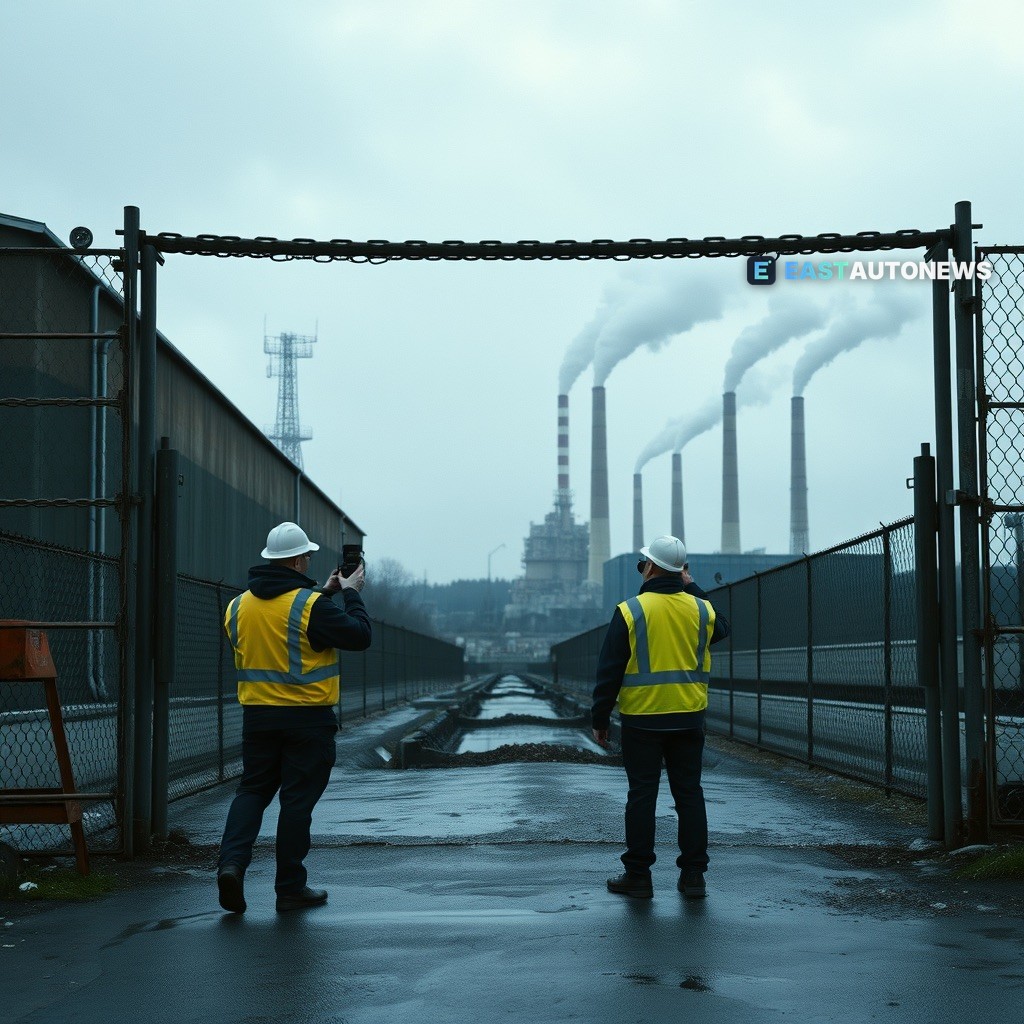
Hungary's battery industry is facing a regulatory reckoning. Six months after its landslide election win, the new government under Magyar has ordered the closure of the Semcorp plant in Debrecen and fined SK On and EcoPro, insisting that battery factories comply with environmental law. The decisions, reported by Spain's Motor16, signal that the environmental performance of a sector central to the country's industrial ambitions is now under active enforcement.
The clampdown forms part of a broader reckoning by the young administration. As Bloomberg reports, the government has also begun opening secret files from both the Orbán and communist eras, an accountability drive that now extends into industrial policy. For the European EV sector, the significance is blunt: as Motor16 frames it, the environmental review of Hungary's battery factories exposes the big problem of the European electric car — the tension between scaling battery production quickly enough to serve the EV transition and doing so within the bounds of environmental law.
For the region's auto supply chain, the message from Budapest is that compliance will be enforced rather than assumed. Hungary has positioned itself as a battery manufacturing hub for European EV production, and the government's demand that factories observe environmental law applies across the sector, not only to the companies sanctioned so far. OEMs sourcing cells from the country should expect tighter scrutiny and compliance costs to become a permanent part of the regional production equation.