Hungary's battery industry is facing a regulatory reckoning. Six months after its landslide election win, the new government under Magyar has ordered the closure of the Semcorp plant in Debrecen and fined SK On and EcoPro, insisting that battery factories comply with environmental law. The decisions, reported by Spain's Motor16, signal that the environmental performance of a sector central to the country's industrial ambitions is now under active enforcement.
The clampdown forms part of a broader reckoning by the young administration. As Bloomberg reports, the government has also begun opening secret files from both the Orbán and communist eras, an accountability drive that now extends into industrial policy. For the European EV sector, the significance is blunt: as Motor16 frames it, the environmental review of Hungary's battery factories exposes the big problem of the European electric car — the tension between scaling battery production quickly enough to serve the EV transition and doing so within the bounds of environmental law.
For the region's auto supply chain, the message from Budapest is that compliance will be enforced rather than assumed. Hungary has positioned itself as a battery manufacturing hub for European EV production, and the government's demand that factories observe environmental law applies across the sector, not only to the companies sanctioned so far. OEMs sourcing cells from the country should expect tighter scrutiny and compliance costs to become a permanent part of the regional production equation.
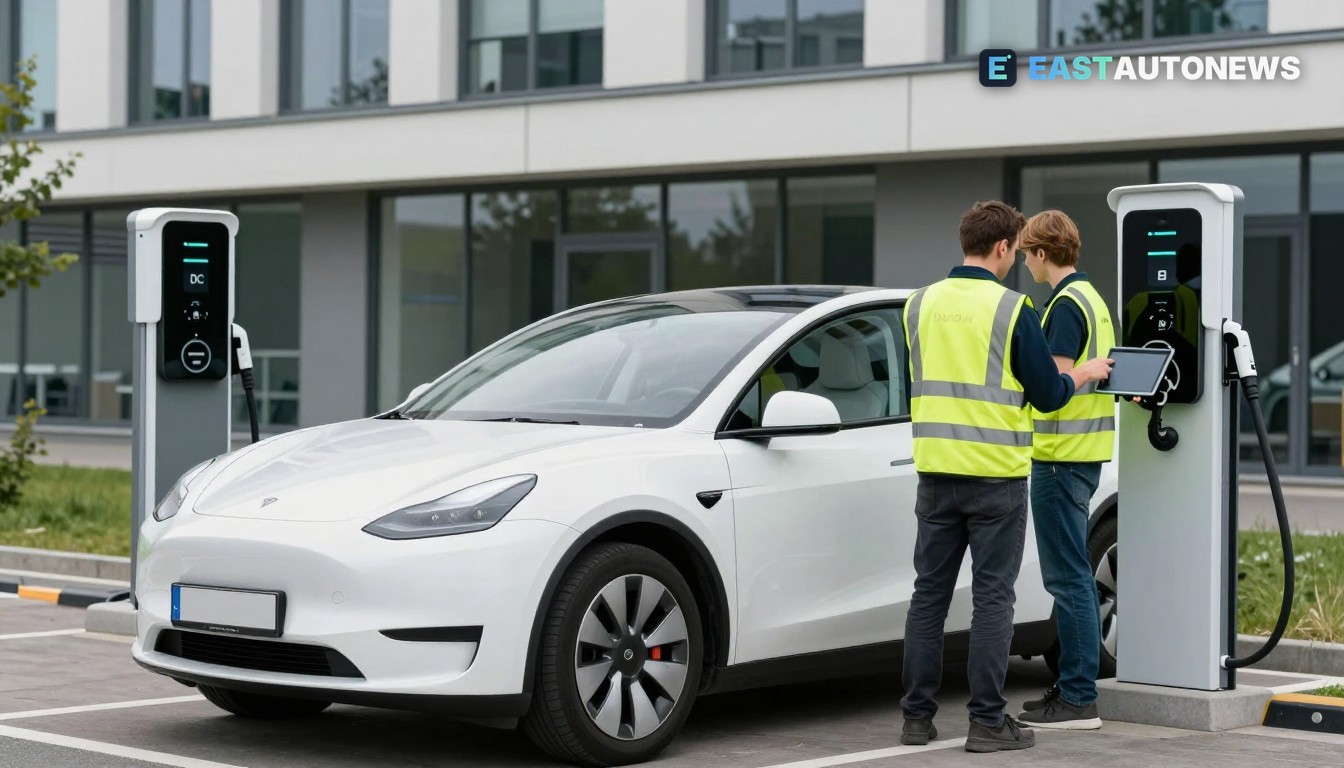
The enforcement push coincides with fresh findings on how Europe will absorb its growing EV fleet. A new study says European cities could cut their EV-related grid bills by 40% through smart charging. EV uptake, the study found, would grow fastest in Eastern Europe — albeit from a lower base — while the heaviest investment requirements would fall on Germany, followed by Norway, Belgium and the Netherlands, the countries already operating significant EV fleets. The region now flagged for the continent's fastest EV growth is, in other words, the same one where regulators are tightening the environmental rules on battery production.
As Europe's EV landscape shifts on two fronts — cleaner battery production on one side, smarter charging infrastructure on the other — buyers weighing a switch would do well to compare models, conditions and prices before committing. Readers looking for a vehicle can find sensational cars at sensational conditions at WorldTrader24, Europe's marketplace with over 70,000 vehicles, where electrified models feature prominently among the listings.