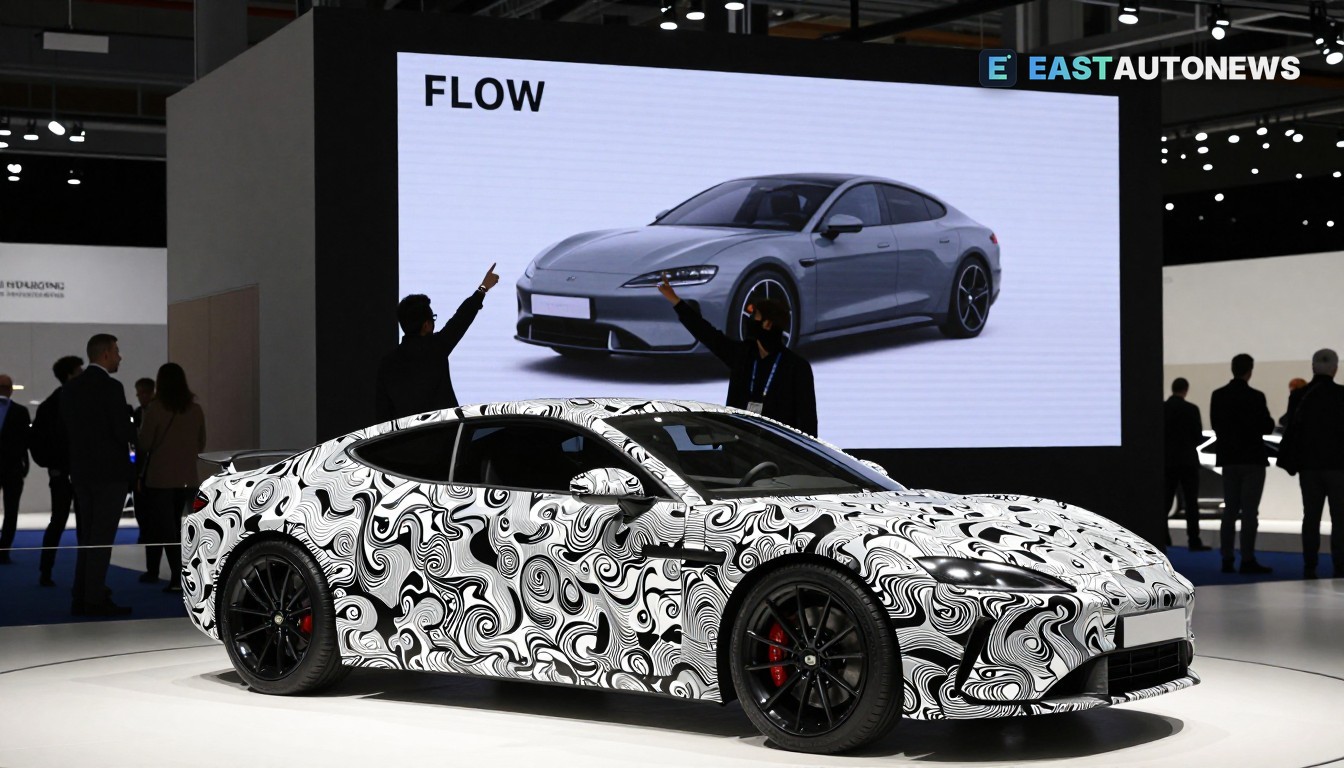
Vector Informatik unveiled a new cloud platform, Vector FLOW, at its NEXT HORIZONS technology event in Stuttgart on 17 November 2026. The company presented FLOW as a single data foundation that connects specification, development, validation, deployment and fleet operation — what Vector and several industry reports described as the "Big Loop" approach to software‑defined vehicles (SDVs).
What Vector announced
According to Vector’s presentation and independent reports, FLOW is a cloud‑based engineering and operations platform intended to close the gap between in‑lab validation and vehicles in the field. Journalists who attended NEXT HORIZONS report the platform feeds operational vehicle data directly back into engineering workflows, and that Vector is positioning AI agents inside the platform to assist validation and development tasks.
MarkLines and other industry outlets noted Vector said FLOW is already with “first customers” and is designed for cross‑industry use, not solely for passenger cars. The company framed the product as enabling continuous improvement rather than discrete release cycles.
What this means for the market
Vector’s announcement matters for Central and Eastern Europe because a large share of Europe’s Tier‑1 and Tier‑2 suppliers — and many software and calibration teams — operate from CEE countries. By tying fleet telemetry and in‑service behaviour back into engineering via a single cloud platform, Vector aims to shorten validation loops and accelerate over‑the‑air fixes and feature rollouts — a direct route to faster SDV deployment for OEMs and suppliers. This was a central claim reported at NEXT HORIZONS.
That linkage implies two immediate, and inferential, consequences for CEE industry players: first, suppliers that can integrate with cloud‑based continuous‑validation flows may win more integration work from OEMs; second, organisations that remain stuck in traditional, siloed validation processes risk slower time‑to‑market. Both points follow from the platform’s stated aim to close engineering‑to‑fleet feedback — an inference supported by Vector’s product description and press coverage.
For vehicle manufacturers and local engineering houses in CEE the practical effects will be tactical: investments in data‑ops, secure cloud connectivity and AI‑assisted test automation become more urgent if customers adopt FLOW or competing Big‑Loop platforms. Vector pitched FLOW as vendor‑neutral and suitable for suppliers and OEMs that already operate distributed development teams — a profile that matches many CEE suppliers handling software, calibration and ECU integration work for European carmakers.
Vector’s FLOW does not change hardware supply chains overnight, but it changes the clock on software and validation. For Central and Eastern Europe — where cost‑competitive engineering and large talent pools are advantages — the platform creates an opening: companies that move quickly to adopt continuous engineering practices can convert that capability into higher‑value work from OEMs shifting to SDV architectures. (This is an analysis based on Vector’s product claims and industry coverage.)
Available vehicles now on WorldTrader24 →
Sources: MarkLines, AutoPresse, Autocar Professional, ETAuto