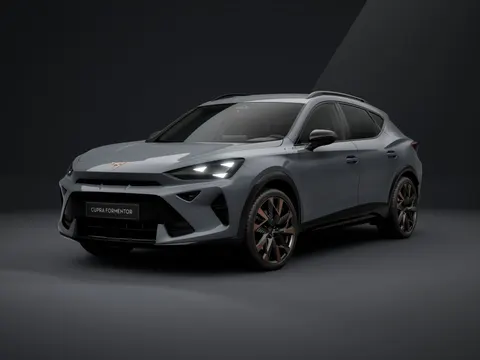
The biggest charging story out of Europe right now was written not on a tariff sheet but in a boardroom. Mercedes-Benz has concluded its direct infrastructure development business in the region, selling the EV charging network it had been operating itself in Europe to France's Electra and steering the partnership in a new direction. For Lithuania — a market where every public network's stations and prices are tracked, charted and compared down to the cent — the signal is unmistakable: the era of carmakers building their own charging empires is ebbing, and specialist operators now hold the pen.
Lithuania's landscape shows exactly why the stakes are so high. Comparison platform ikrovimo-kaina.lt maps every public charging network in the country, and its 2026 data reads like a price war in slow motion: slow AC charging (up to 22 kW) starts at €0.112 per kWh against a typical €0.303, fast DC (up to 150 kW) opens at €0.20 with a typical €0.363, and ultra-fast HPC of 150 kW and above begins at just €0.18. The gap between the cheapest and typical tariffs is where operators live or die — and it is precisely the kind of market where a well-funded specialist arriving with scale could tilt the board overnight.
The demand side only sharpens the contest. A European study on smart charging calculates that cities could cut their EV grid bills by as much as 40 percent, and it expects the fastest uptake of electric vehicles in eastern Europe — albeit from a lower base. Lithuania sits squarely in that growth corridor, which makes today's tariff skirmishes a land grab for tomorrow's customers.