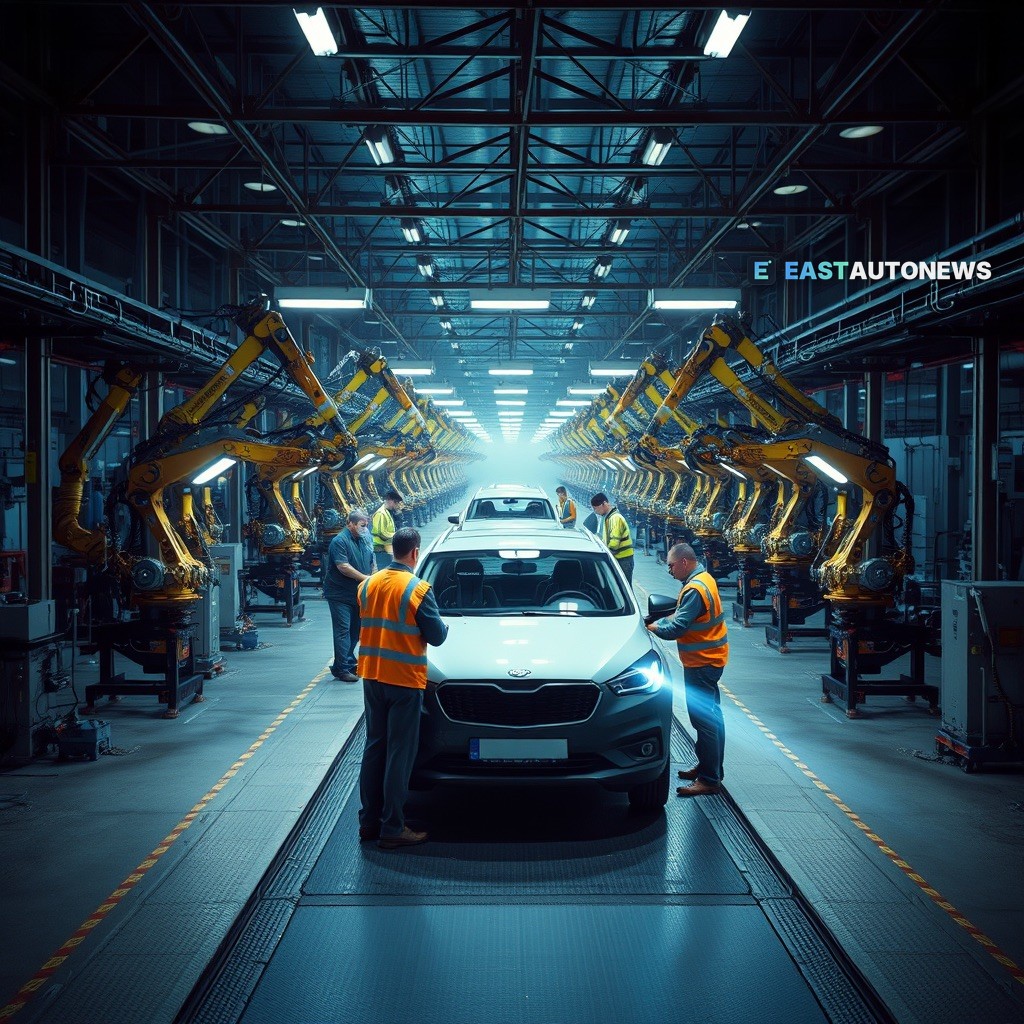
The boss of Mercedes-Benz has pointed the finger squarely at Brussels, warning that the European Union's next layer of rules will “make production more expensive” — and that new cars, which already cost far more than they did a few years ago, could climb higher still. It is a blunt intervention from one of Europe's industrial giants, and it lands as Brussels prepares a fresh set of requirements tied to its “Made in Europe” agenda.
Mercedes is not alone in sounding the alarm. Toyota — a brand that, as EastAutoNews recently reported, currently rules the Latvian market — is delivering much the same message. The two manufacturers' shared argument is simple: every additional layer of compliance and localisation requirements carries a cost, and that cost does not vanish inside the supply chain. It ends up on the price sticker.
For Eastern Europe, the warning hits a particularly exposed nerve. The region's markets assemble little of what they buy — EastAutoNews has already shown how Lithuania's €2.4 billion car trade buys no local work, while Estonia and Latvia weigh the fine print of EU subsidy rules designed to reward factory countries. If building cars inside the bloc becomes more expensive, import-dependent markets from the Baltics to Ukraine will feel it first, through list prices, delivery terms and the used-car values that shadow new-car costs.
The timing is hard to miss. On 3 November, as EastAutoNews reported across the region, Mercedes-Benz sold its European fast-charging network for electric cars to French operator Electra, for an undisclosed sum, leaving the manufacturer to rely exclusively on third-party charging partners. Read together with the warning from the top of the company, the picture is of a manufacturer trimming its own fixed costs while arguing that Europe's regulatory direction is pushing costs the other way for the industry as a whole.