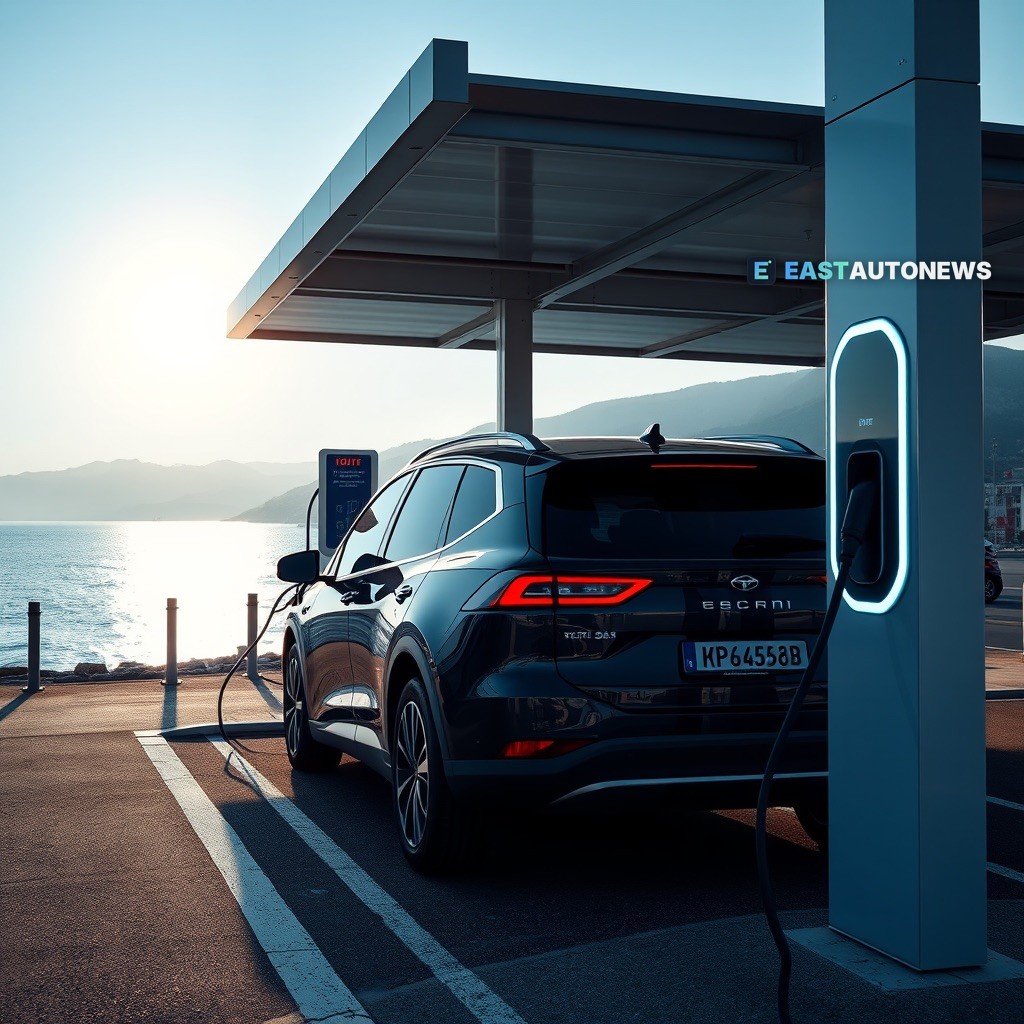
The Friday exodus down the A1 — that endless summer crawl of roof boxes and trailers bound for the Adriatic — has a new travelling companion. On October 31, Croatia put new ultra-fast electric vehicle chargers into operation along its A1 and A3 motorways, and some of them deliver as much as 400 kW. On the very corridors that carry the country's holiday traffic, the refuelling stop is being quietly redefined.
The deployment is the work of energy group Petrol, which has switched the high-power points on along both routes. At 400 kW, the strongest units sit at the very top of what public charging currently offers — hardware that turns a top-up into something closer to a coffee break for vehicles built to accept that much power. For a country whose summer economy runs on arrivals by road, the message to electric drivers is blunt: the long run to the coast no longer needs to be a logistics exercise.
The placement is the strategy. The A1 is the backbone of Croatian mobility, funnelling traffic from Zagreb toward the Adriatic, while the A3 carries transit and regional flows east of the capital. Putting the most powerful plugs on these two routes rather than in city centres targets exactly the journeys where range anxiety bites hardest — long, seasonal, and unforgiving of queues at the charger.