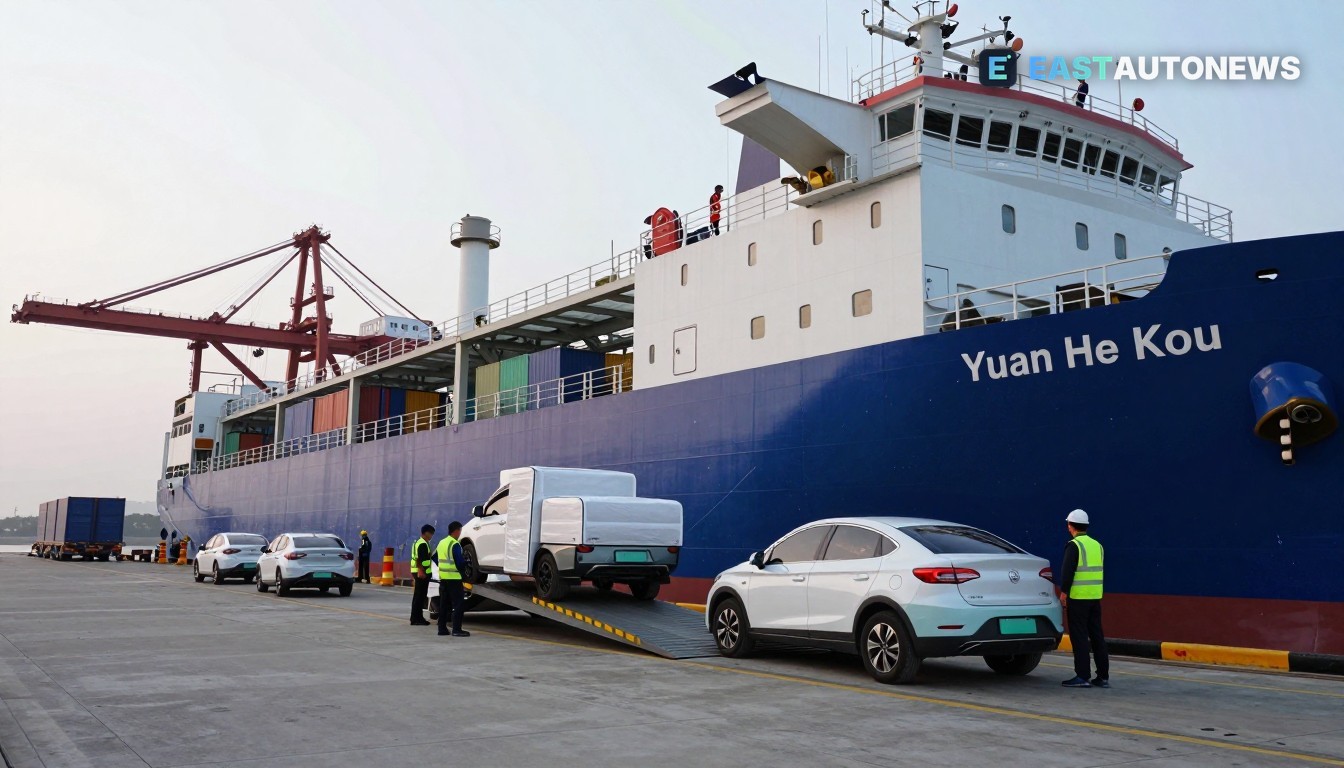
COSCO SHIPPING Specialized Carriers started a direct roll‑on/roll‑off (Ro‑Ro) service from Shenzhen’s Xiaomo port to Astakos in western Greece on 3 November 2026. The inaugural sailing departed on 3 November with 4,898 Chinese‑made new‑energy vehicles (NEVs) on board the pure car/truck carrier Yuan He Kou.
Vessel and voyage details
The vessel used for the first sailing, Yuan He Kou (IMO 9999606), is a 7,000‑car equivalent, LNG dual‑fuel carrier delivered in January 2026 and classed with additional notations for carriage of NEVs and enhanced battery‑safety measures, according to ship register records. The carrier is expected to reach Astakos in around 20 days from departure.
COSCO and trade media said the Xiaomo–Astakos connection is Xiaomo port’s first direct foreign‑trade Ro‑Ro link to Greece and that the routing cuts transit time by nearly one‑third compared with conventional routings for southern‑China to Mediterranean vehicle shipments. After discharge at Astakos, vehicles will be distributed via feeder services to European hubs including Zeebrugge (Belgium), Koper (Slovenia) and Valencia (Spain).
Logistics and terminal coordination
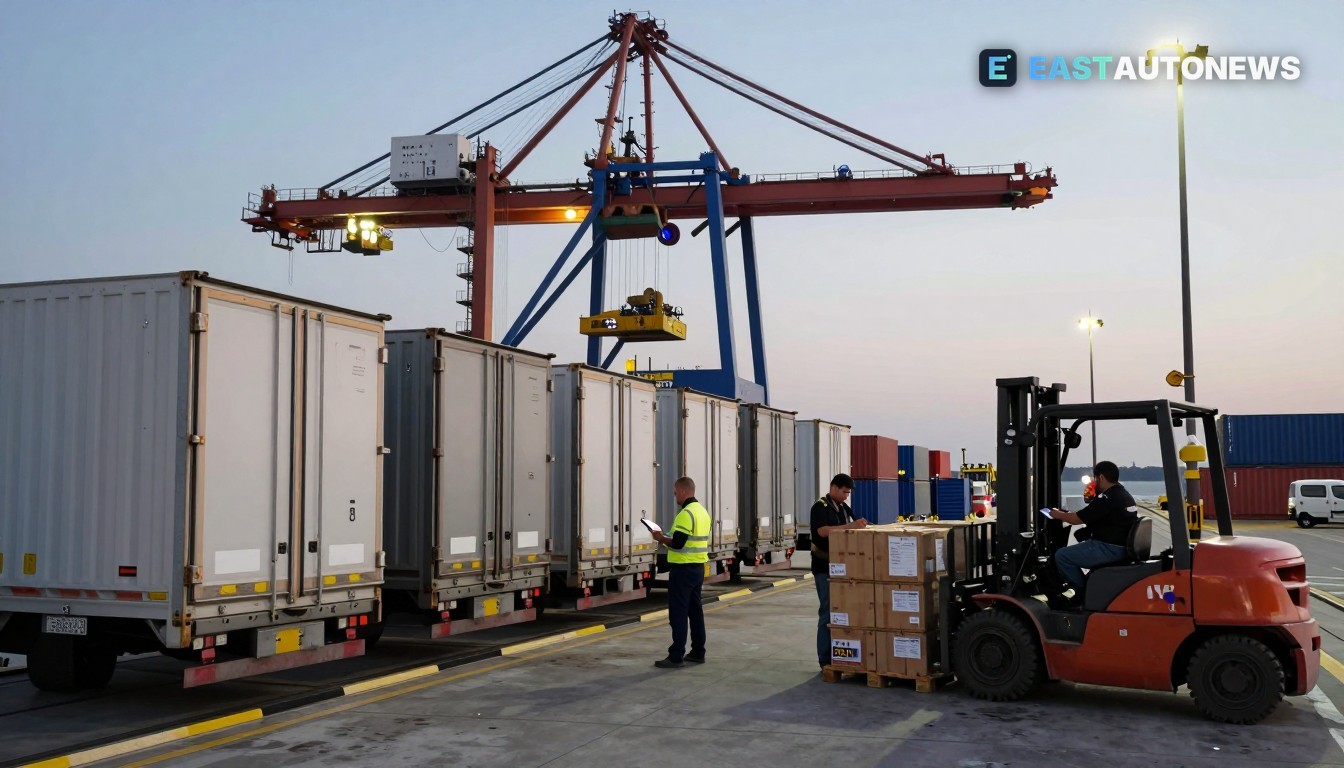
The launch involved pre‑loading coordination between carrier and Xiaomo terminal teams for vehicle staging, securing and onboard safety checks — measures the operator highlighted given the NEV cargo and the ship’s NEV‑specific class notations. COSCO said berth allocation and terminal handling arrangements were planned in advance to smooth discharge and onward feeder sailings.
What this means for the market
The new Ro‑Ro link provides an additional southern gateway for Chinese NEVs into Europe and gives Mediterranean ports — and their feeder connections — a quicker route to Central and Eastern European markets. Because the service explicitly lists Koper among intended redistribution hubs, Slovenian and neighbouring importers could see faster door‑to‑dealer transit for shipments routed via Astakos and feeder sailings to Koper. This is an inference based on the carrier’s stated discharge and feeder plan.
A faster, Suez‑via Ro‑Ro route also shifts some pressure away from northern European vehicle hubs during periods of congestion or strike disruption further north, potentially changing short‑term routing choices for importers and logistics planners handling Chinese NEV volumes destined for CEE markets. The size of the inaugural cargo — 4,898 NEVs — demonstrates the scale at which southern China ports are now feeding European distribution networks.
For terminal operators and inland transport providers in Slovenia, Croatia and neighbouring countries the route increases the need for coordinated feeder schedules, pre‑delivery inspection (PDI) capacity and road/rail slots to absorb large single‑voyage discharges. COSCO’s use of a 7,000‑car vessel classed for NEV carriage underlines how shipping lines are preparing the fleet and handling regimes for rising battery‑electric vehicle volumes.
New-energy and electric cars for sale on WorldTrader24 →
Sources: Xinde Maritime News, Shipping Arabia