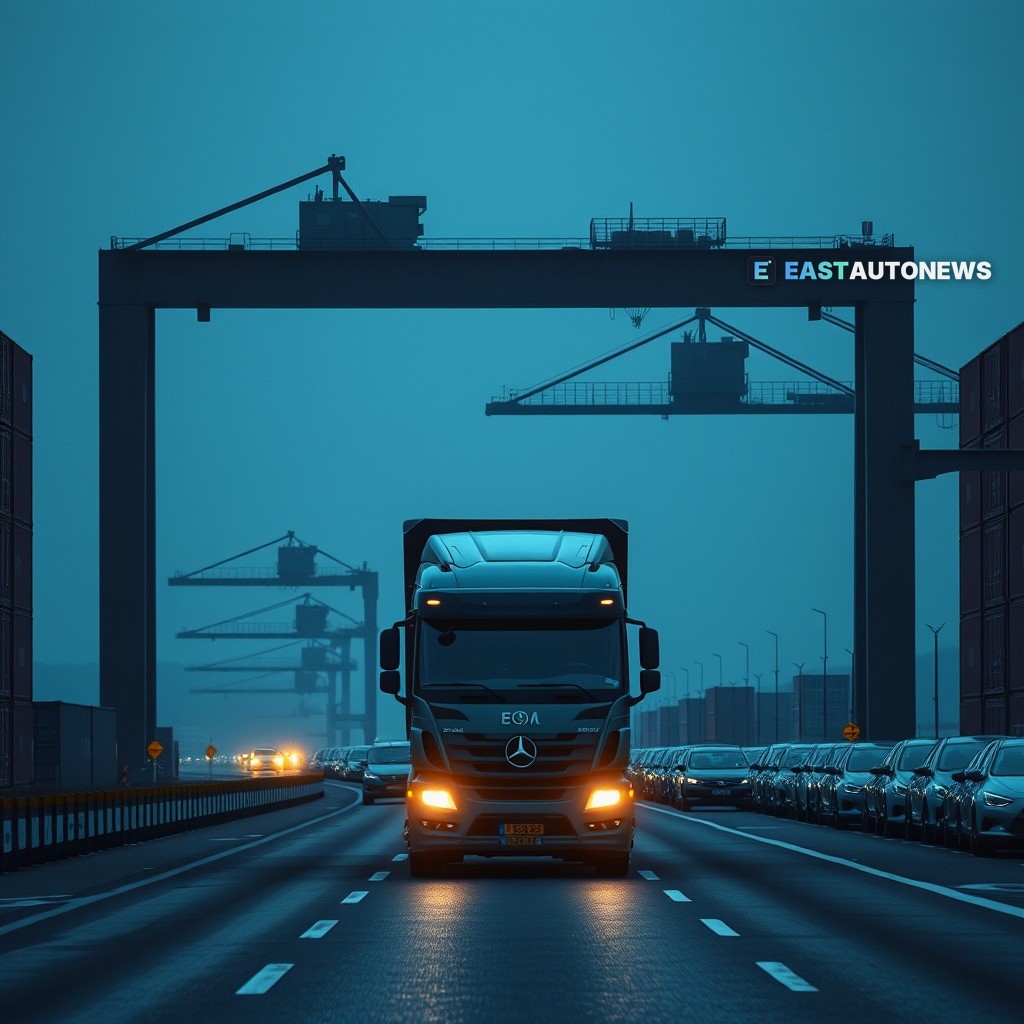
In Tashkent, delegations from Uzbekistan and Hungary sat down on November 3 to sketch out something quietly ambitious: logistics hubs on Hungarian soil that would hand Uzbek exporters a fast lane into the European Union. For a doubly landlocked Central Asian economy, Hungary — plugged into the EU's motorway and rail arteries — is a tempting doorway to the bloc's consumers. For Budapest, the talks are a chance to turn geography into revenue at a moment when it urgently needs new trade momentum.
The timing is no accident. Hungarian trade watchers have spent months arguing that export diversification is less a luxury than a necessity, and that trade agreements signed thousands of kilometres from Budapest carry lessons worth heeding for Hungarian businesses. An economy built around export flagships like the Mercedes-Benz plant in Kecskemét lives or dies by the breadth of its markets — which makes the hunt for new freight flows an existential exercise, not a talking point.
The regulatory wind is shifting, too. Brussels' 'Made in Europe' plan has global auto suppliers on edge: cars imported from Japan would not qualify for EU subsidies, while models built in France, Portugal and Eastern Europe would benefit only if enough of their parts come from Europe. For a country whose industrial identity rests on precisely such assembly and parts networks, the new rules could redraw who ships what, and where — turning inbound logistics capacity, like the hubs discussed in Tashkent, into a strategic asset rather than a back-office detail.