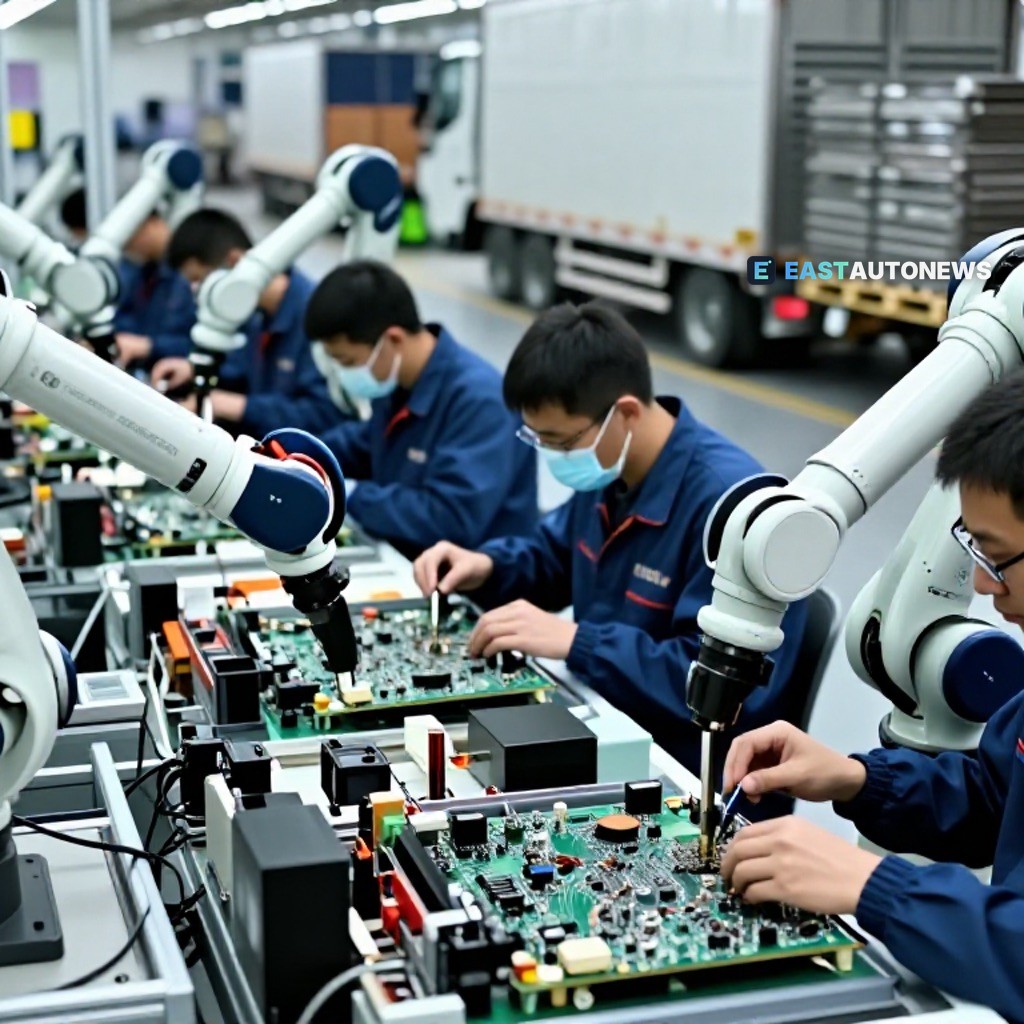
Robert Bosch GmbH said on November 3, 2026 that it will move its semiconductor operations out of Mobility Electronics into a newly formed Semiconductors division, effective January 1, 2028. The company set a business target of roughly €5 billion in semiconductor sales by 2030 and said the new unit will push beyond automotive markets into robotics and AI data‑centre applications.
The announcement
Bosch said the Semiconductors division will remain part of the Mobility business sector but will be organised to better meet fast‑moving market requirements for chips and foundry services. The supplier highlighted its existing strengths in MEMS sensors, silicon‑carbide (SiC) chips and application‑specific integrated circuits (ASICs), and said it will increasingly open manufacturing capacity to external partners and expand its foundry business.
The company noted that it has invested about €3 billion in wafer fabs at Dresden and Reutlingen in recent years and is spending roughly $2 billion to equip a Roseville, California plant for SiC production — facts Bosch used to underline the scale of its semiconductor commitment.
“Semiconductors are the linchpin of our connected world and, at the same time, a key success factor for all of Bosch’s divisions,” said Markus Heyn, deputy chairman of Bosch’s board of management. Erik Rein, who leads Bosch’s semiconductor business, added the dedicated structure will let the company tailor services more closely to customer needs. Both quotes are from Bosch’s November 3 press release.
Context: why the timing matters
The move comes as automakers and tier‑1 suppliers race to secure SiC and other power‑electronics components needed for higher‑voltage EV systems and advanced driver assistance. Industry contracts and capacity expansions for SiC have accelerated in recent months; for example, Infineon and Wolfspeed expanded their long‑term SiC wafer supply agreement in October as manufacturers shift to 200 mm wafer formats. That trend is tightening the strategic value of in‑house chip engineering and localised manufacturing for major suppliers.
What this means for the market
For vehicle electronics suppliers and carmakers across Europe, Bosch’s decision creates a clearer commercial counterparty for chip procurement and foundry services. By creating a dedicated division with explicit growth targets, Bosch signals it will treat semiconductors as a standalone commercial product line — not just an internal input for Bosch systems — and will compete more directly for third‑party orders. That could ease some supply‑chain pressure for OEMs and smaller suppliers that need access to SiC, sensors and ASICs, but it will also intensify competition among Tier‑1s to secure guaranteed chip flow.
For Central and Eastern European suppliers the implications are mixed. Bosch’s expanded foundry and external‑sales intent should open opportunities for partnership, subcontracting and local industrialisation of higher‑value electronics work — provided Bosch channels production or test capacity to external customers in Europe. At the same time, the move raises the bar on technology and capital intensity: suppliers that remain focused on simple electronic components may find demand concentrated into fewer, larger integrated sub‑assemblies.
The new division is due to take effect on January 1, 2028; until then Bosch will continue to run semiconductor activities inside Mobility Electronics while preparing the organisational change.
EU new cars for dealers on WorldTrader24 →
Sources: Bosch Media Service, SDV Sector, Infineon/Wolfspeed press releases