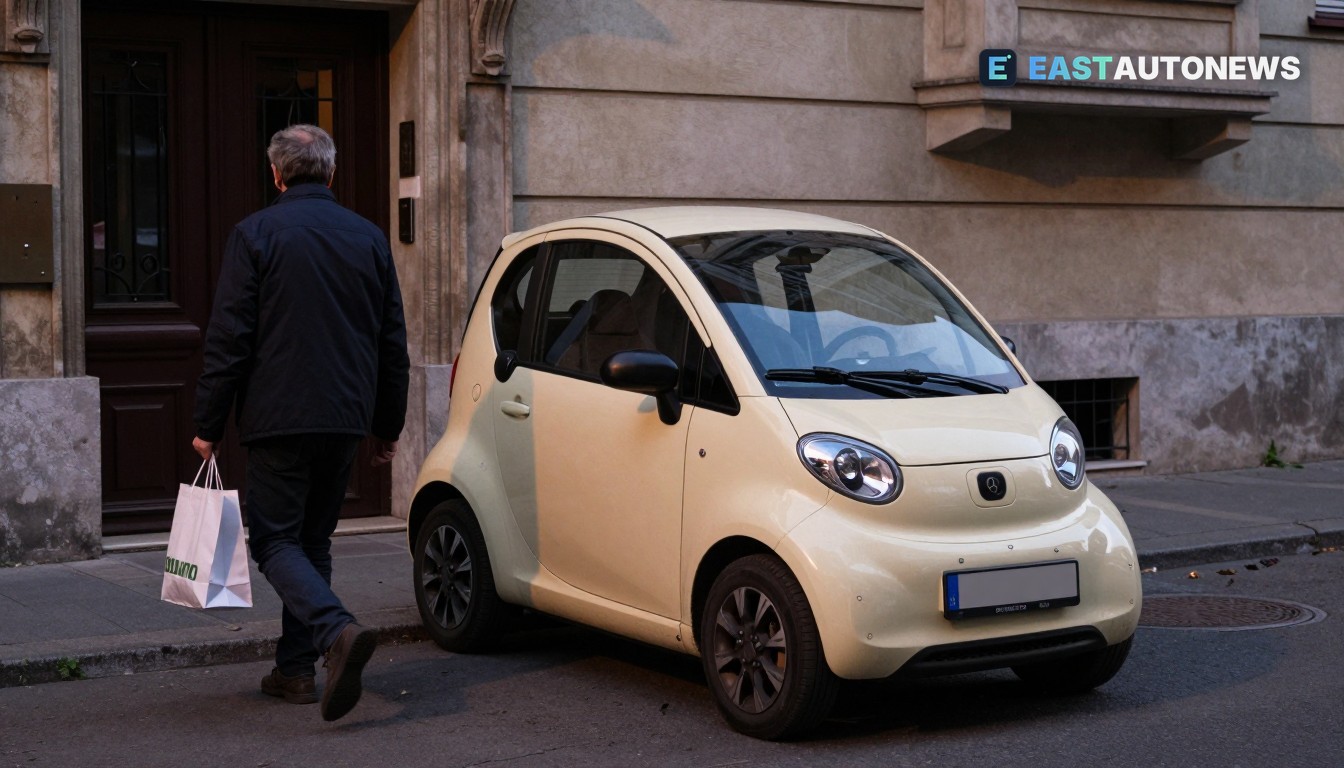
When Romanians search for an "electric car without a licence" they are usually asking whether a small electric microcar can be driven on public roads without a driving licence. In Romania the distinction is straightforward in law: only vehicles whose maximum design speed is 25 km/h may be used without a driving licence, while microcars rated up to 45 km/h are classed as light quadricycles (L6e) and require the AM licence (or any higher category).
What the law says in Romania
Romanian transport guidance and motoring guides refer to OUG 195/2002 and the EU vehicle categories when explaining the rule. A light quadricycle (L6e) is defined as a four‑wheeled vehicle with a maximum design speed of up to 45 km/h, a maximum unladen mass (without traction batteries for electrics) of 425 kg and seating for two; it is treated in Romanian law as a moped and therefore driven with an AM licence from age 16 (or with any higher licence such as B). Driving a motor vehicle without the appropriate licence remains a criminal offence, with penalties including imprisonment.
Which models, costs and paperwork matter
Several recent buyer guides and listings show the practical side of the rules. Examples in Romanian listings include small EVs sold in two versions (25 km/h and 45 km/h); the NIEVE Q‑EN is offered in both trims — Nieve lists prices of 28,900 lei for the 25 km/h version and 30,900 lei for the 45 km/h variant — and stresses that the version chosen determines who may legally drive it. RCA insurance and periodic technical inspection (ITP) every two years are required for these microcars; the seller should provide the certificate of conformity (CoC) used to confirm the vehicle category at registration.
Retail guides also list models explicitly sold as licence‑free (25 km/h) or licence‑required (45 km/h). For example, small offerings such as the YD model are marketed in 25 km/h trim (no driving licence required), while other compact microcars are sold as L6e/L7e and therefore require the AM, B1 or B categories. Buyers should check the CoC and the vehicle’s declared top speed, because aftermarket or dealer claims can be misleading.
What this means for the market
Confusion in online adverts and search results is driving Romanian interest in "mașină electrică fără permis" — sellers sometimes post 25 km/h claims for four‑seat vehicles or fail to state the homologation category clearly. A recent check of Google results found adverts describing 25 km/h versions with higher seating counts or ambiguous paperwork, prompting guides to advise buyers to demand the CoC, registration paperwork and dealer confirmation of homologation before purchase. That mismatch between listings and legal categories is the main reason searches spike.
There are also transactional details to note: some guides point out administrative cost changes during 2026 — for example, the vehicle registration certificate fee rose (reported changes came into effect in September 2026) — and the practical advice is to factor registration, RCA and possible local registration fees into the purchase price.
In short: if your intent when you Google "mașină electrică fără permis" is to find an EV you can legally drive without any licence, you are limited to vehicles with a maximum design speed of 25 km/h. Anything homologated as an L6e (45 km/h) or higher requires the AM licence (from 16 years old) or a full car licence (B), plus normal registration and insurance.
Electric vehicles listings on WorldTrader24 →
Sources: Colegu, AMR Elektro, Nieve, AvemAuto