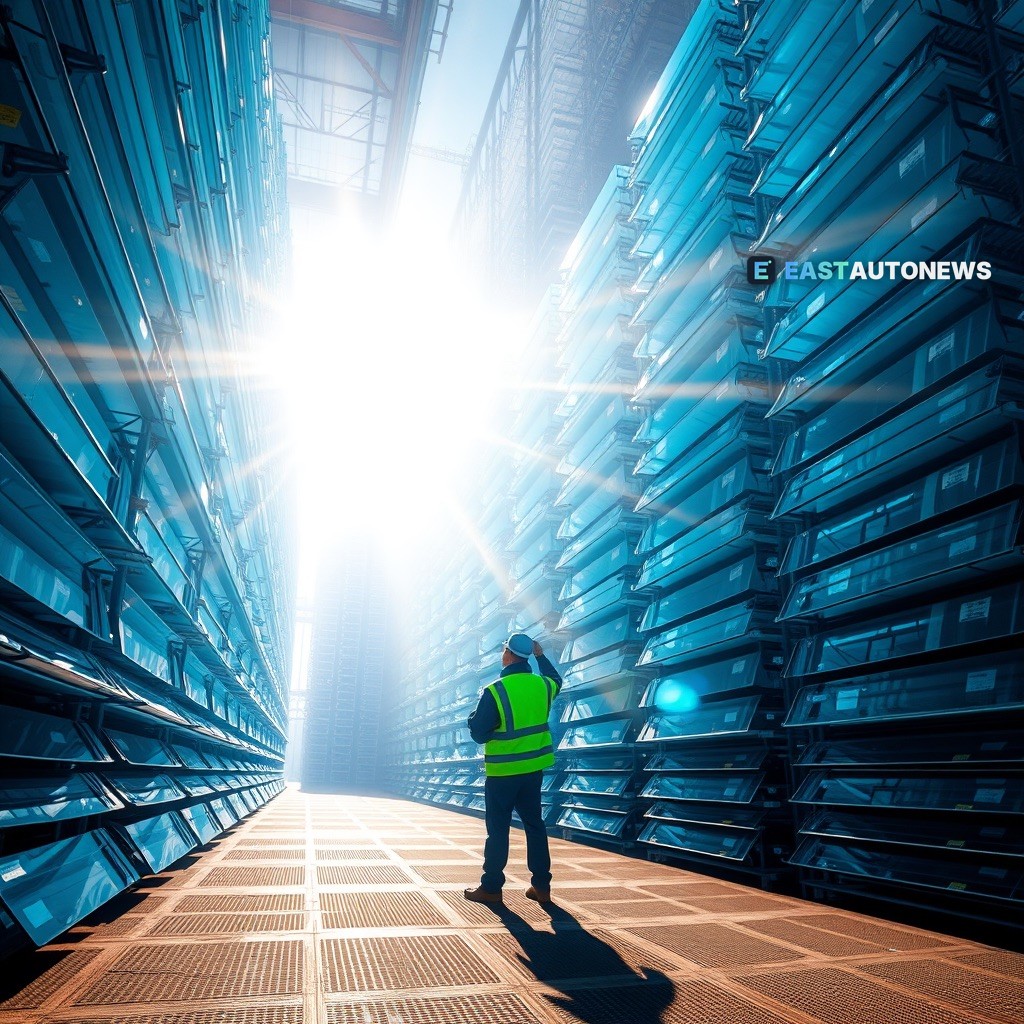
Drive almost any car built in Europe and there is a fair chance one of its windows was born in Bílina-Chudeřice. The small northern Bohemian town hosts one of the continent's largest automotive glass factories, operated by Japan's AGC, churning out roughly 32 million pieces of automotive glass every year. It is a staggering output from a quiet corner of the Czech Republic — and a load-bearing wall of Europe's car industry.
That wall is now being inspected from Brussels, with Berlin and Paris holding the torch. Their “Made in Europe” push is sending tremors through the global supplier community, and the mechanics are blunt: cars imported from Japan would need their parts to come from Europe. The intent is to anchor value creation on the continent. The consequence, global suppliers warn, is rising costs and a competitiveness squeeze for any company whose network spans the planet.
Czechia sits at the awkward centre of this debate. Few places illustrate globalised carmaking better: Japanese glass from Bílina-Chudeřice, Korean car production on Czech and Slovak soil, and a supplier base woven from every corner of the industry. For production that is already local — precisely what AGC does in northern Bohemia — a European-content regime could read like a tailwind. Yet AGC is also a global supplier, and the cost concerns now echoing through the industry apply to it as much as to anyone.