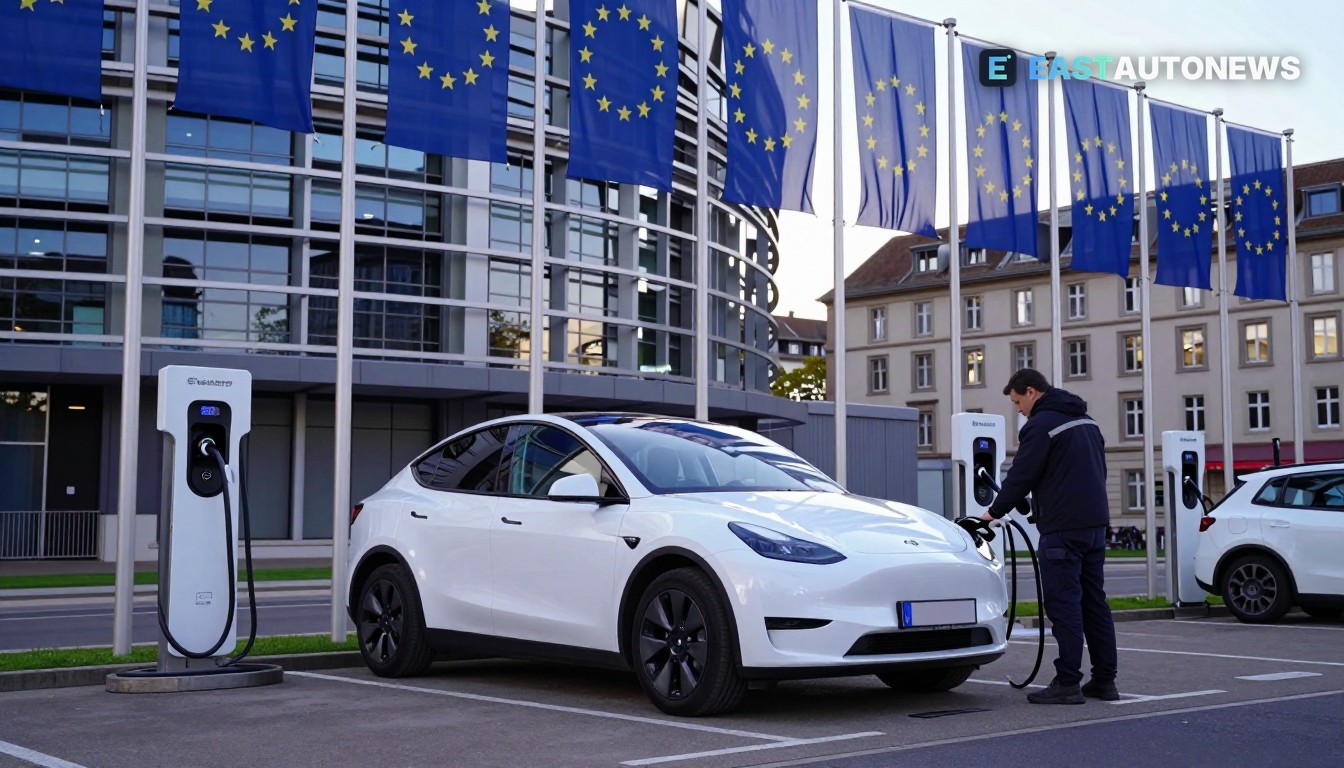
The debate over the European Union’s Industrial Accelerator Act (IAA) — the so‑called “Made in Europe” package — surged back into the headlines this week after The Guardian reported the UK is pressing hard to be admitted as a “trusted partner” and is even prepared to offer concessions elsewhere to secure access. “We are willing to give the Europeans what they want on fees, but we will have to get something significant in return. The biggest prize we are pushing for right now is access to Made in Europe, so there is a deal to be done there,” a UK source told The Guardian on 1 November 2026.
What the IAA would require
The Industrial Accelerator Act, first proposed by the European Commission on 4 March 2026, would introduce origin and low‑carbon conditions into public procurement and public support for strategic sectors including automotive. The legislative text foresees sourcing rules and screening for large foreign investments while proposing faster permitting for industrial projects. Publicea’s explainer notes Member States and EU institutions remain divided over scope and timing, and that procurement‑linked conditions could apply from 1 January 2029 if the act is adopted as proposed.
At the same time, Paris and Berlin have sought to carve a distinct automotive path: a Franco‑German understanding announced in mid‑October envisages moving car‑specific rules into a separate automotive package with stricter “Made in Europe” thresholds for vehicles receiving public support, while offering Germany concessions on 2035 CO₂ ambitions. French and German leaders announced their joint position on 16 October 2026. “A good day for motorists and for jobs,” Germany’s chancellor said of the deal.
What this means for the market
For Central and Eastern Europe the implications are immediate. CEE hosts dozens of assembly plants and a wide supplier base that currently serve EU and global markets; origin rules tied to procurement and subsidies would change the calculus for where components and cells must be made to qualify for public support. If the IAA’s procurement conditions — or a separate automotive package — require a high share of EU/EEA content (reports have put illustrative thresholds around 70% for cars excluding batteries), then some cross‑border supply chains and non‑EU assembly hubs will find access to public money and fleet procurement limited. Publicea says Member States are still negotiating which third countries, if any, will qualify as “trusted” partners and that those decisions will be taken product‑by‑product.
Practical consequences for the region include a possible boost to suppliers and cell plants operating inside the EU/EEA — but also the risk of higher input costs and re‑routing of production if components or battery cells are excluded from the origin calculation. Policy uncertainty is already shaping corporate planning: national governments in the region and global carmakers are lobbying in Brussels and tracking negotiating timetables closely as adoption is not expected before 2027.
Electric vehicle listings on WorldTrader24 →
Sources: The Guardian, Publicea, Reuters, European Parliament